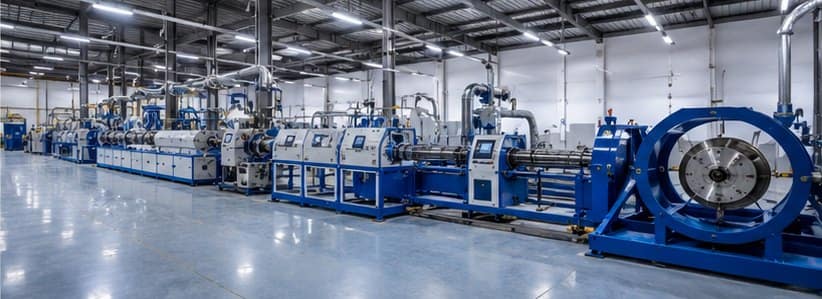
Every complete extrusion line is more than an extruder. A working line combines the extruder with a chain of cable extrusion line accessories — the pay-off, cooling, haul-off, measurement, take-up and finishing units — and each of them decides how well the finished cable meets its specification. Skimp on the auxiliary equipment and even the best extruder will underperform. This guide walks through the essential accessories on a modern wire and cable extrusion line, what each one does, how to specify it, and how they fit together.
What Counts as an Extrusion Line Accessory?
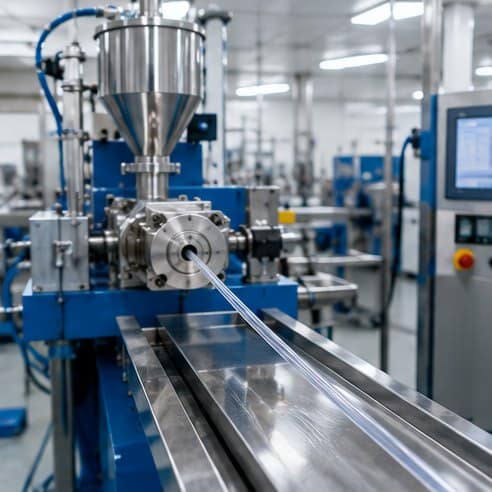
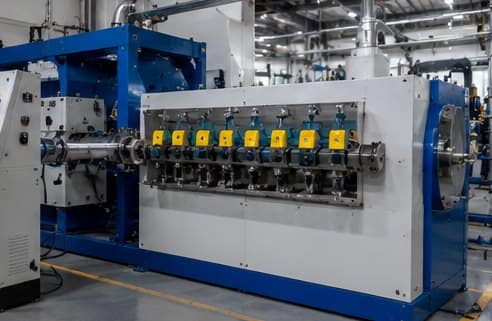
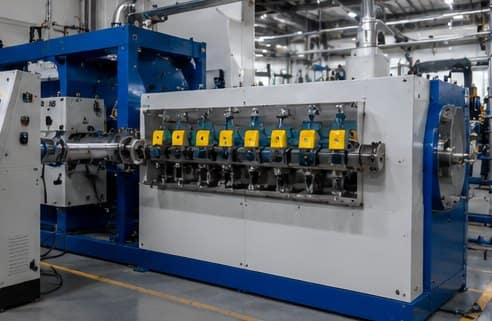
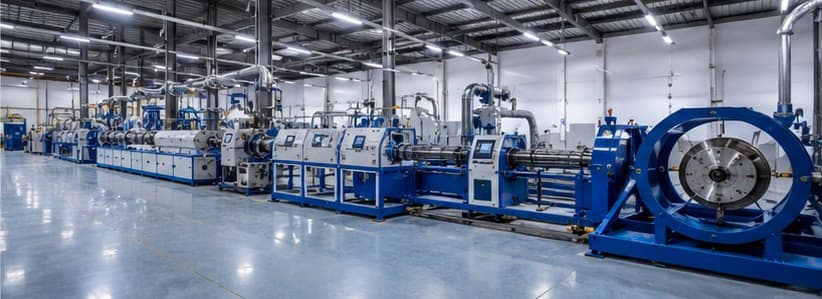
An extrusion line accessory is any auxiliary machine that supports the extruder in producing finished cable. The extruder melts polymer and forces it through a crosshead onto the conductor, but on its own it produces nothing usable. The line around the extruder feeds the conductor in, cools the melt, measures the product, pulls it at controlled speed and winds it up. In practice the accessories often cost as much as the extruder itself, and they are where most quality problems (and most avoidable stoppages) originate. For the underlying process, see our guide to how plastic extrusion works.
A Complete Line, Left to Right
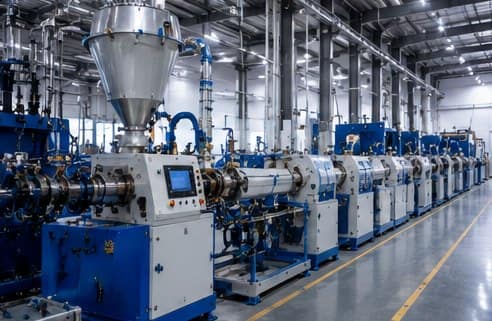
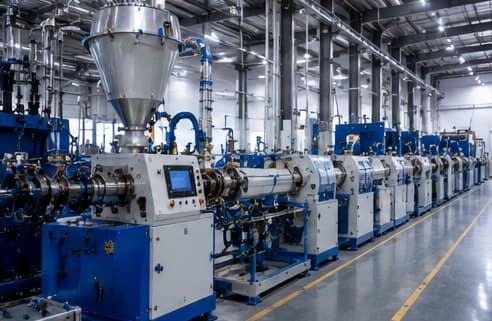
A typical wire or cable extrusion line runs in this sequence. Each stage is covered below with its own accessories.
- Pay-off — feeds bare or pre-insulated conductor into the line
- Preheater (optional) — conditions conductor temperature before the crosshead
- Extruder & crosshead — melts polymer and applies it around the conductor
- Cooling trough — solidifies the insulation
- In-line measurement — laser diameter, wall, concentricity, spark testing
- Haul-off — pulls the finished cable at controlled speed
- Powder applicator (optional) — deposits release powder for winding
- Take-up — winds the finished cable onto a drum
Pay-Off Stands
The pay-off feeds the conductor (bare copper or aluminium, or a pre-insulated core for sheathing) into the extrusion line. Its job is to deliver the wire at a controlled, constant tension so nothing else on the line drifts. Get the tension wrong and the diameter downstream will hunt, insulation concentricity will suffer, and scrap climbs.
Common configurations: portal pay-offs for large heavy drums, single-shaft motorised stands for medium reels, and swivel pay-offs for narrow lines. Match the pay-off to your drum weight, drum diameter and required tension range. See our pay-off stand configurations.
Extruder, Crosshead and Screw
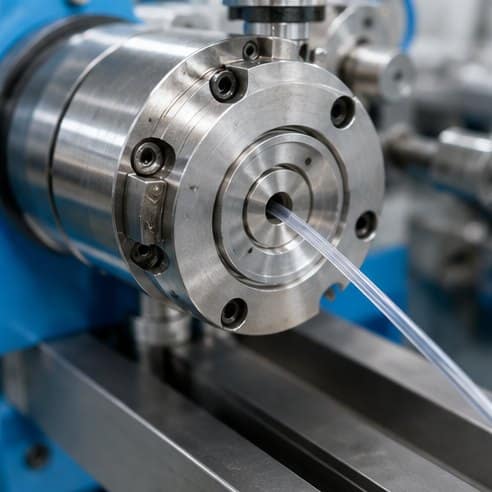
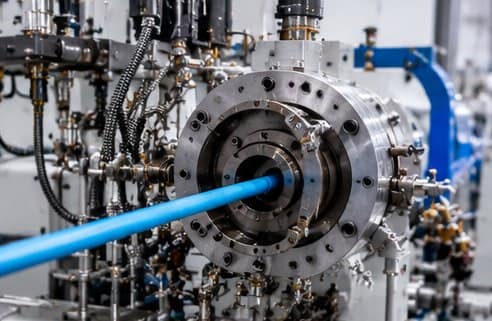
The extruder is the heart of the line, but the parts that touch the cable are the screw and barrel and the crosshead. Screw geometry decides melt quality; crosshead design decides how evenly the polymer wraps the conductor. Because these two are the largest wear items on a cable line, they are the accessories most cable manufacturers reorder most often. Nitrided screws suit PVC and PE, while bimetallic construction is the answer for XLPE, HFFR and other filled compounds.
Cooling Troughs
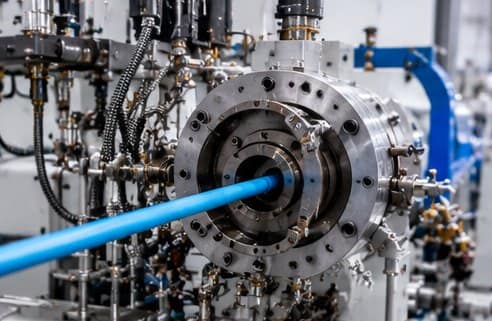
After the crosshead the insulation is molten and needs to solidify before anything else touches it. Cooling troughs are stainless-steel tanks — sometimes several metres of them — that spray or immerse the cable in water at controlled temperature. Length is the main variable: faster lines need longer troughs. Modular sections let you extend the trough as the line speed grows. See our cooling trough range for standard configurations.
Uneven cooling is a common cause of dimensional drift and residual stress in the finished cable, so a simple, well-designed trough with steady water flow beats a fancy one that is hard to keep clean.
In-Line Measurement: Laser Gauges & Spark Testers
In-line measurement is what turns quality control from a lab exercise into a running process. The two essentials on any modern cable line are a laser diameter gauge installed after the cooling trough — giving continuous OD readings that feed back into the line control — and a spark tester that runs the finished cable through a high-voltage electrode array to catch pinholes or insulation faults.
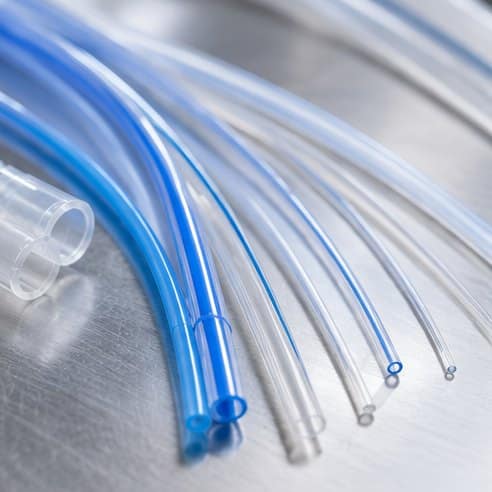
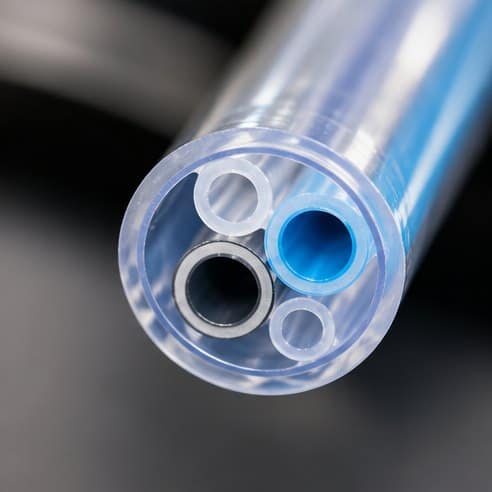
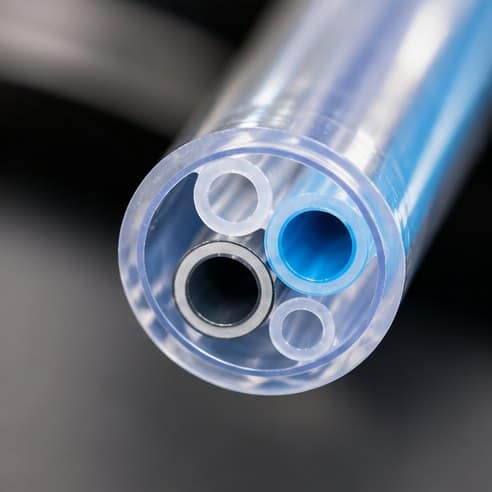
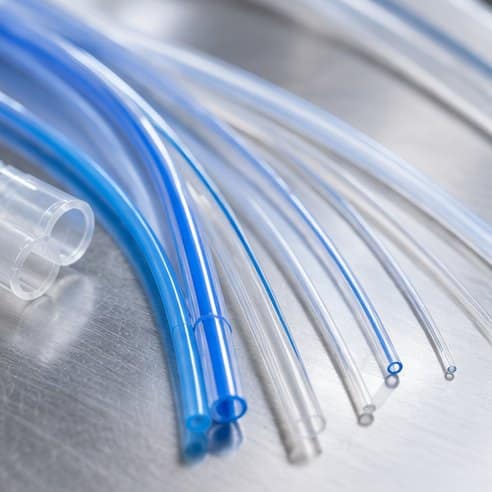
For premium and medical work, add wall-thickness measurement (ultrasonic or capacitance) and concentricity gauges. On our own medical tubing extrusion lines, laser measurement holds walls to microns. On a standard cable line, the same principle catches drift long before a bad drum is made.
Haul-Off: Caterpillar vs Capstan
The haul-off pulls the solidified cable at a constant speed and, together with the extruder output, sets the wall thickness. Two configurations dominate:
- Caterpillar haul-off — rubber belts grip the cable evenly along its length. The standard choice for insulated and sheathed cable, because it pulls without deforming the product. Dual-drive and servo-controlled versions give the smoothest speed control.
- Capstan — a driven wheel the cable wraps around. Common on bare-wire drawing and payoff sections where slip is acceptable. Not usually the primary puller on an insulation line.
For deeper detail, see our guide to caterpillar haul-off in cable extrusion.
Powder Applicator
A powder applicator deposits a thin coat of talc or release powder on the cable surface after cooling. It has two purposes: preventing the cable from sticking to itself on the drum, and preparing the surface for later jacketing or vulcanisation. On plain PVC-insulated cable it is often optional; on rubber and silicone cable it is normal; on any cable that will be over-jacketed later, it is usually essential.
Take-Up Units
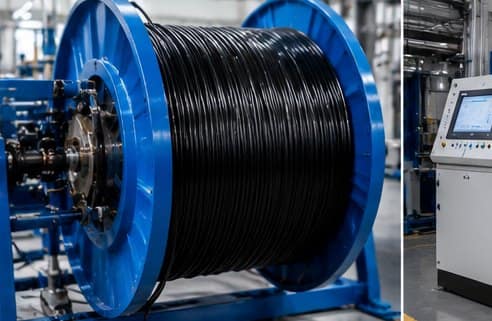
At the end of the line, the take-up unit winds the finished cable onto a drum. Configurations vary with drum size and cable weight: dual-spool take-ups let one drum fill while another is loaded (no line stoppage), portal take-ups handle very heavy drums, and single-shaft designs suit smaller reels. A well-specified take-up with the right traverse and tension control gives an evenly wound drum that unspools cleanly at the customer end — a small detail that matters more than it should to cable buyers.
Downstream Extras: Preheaters, Rewinds, Tandem Sections
Beyond the core auxiliaries, several add-ons appear on specific lines:
- Preheater — a conductor conditioning unit before the crosshead, especially on higher-speed and thicker-wall lines, improves insulation adhesion and reduces early cooling shock
- Tandem sections — two extruders in line for insulation + jacket in one pass, common on power and control cable
- Sioplas / CV curing — downstream vulcanisation for XLPE and MV cable. For the two main processes, see Sioplas vs Monosil and our Sioplas triple-layer cable line.
- Rewind and inspection stations — separate off-line units for spooling smaller shipping reels or performing detailed inspection
How to Specify the Right Set for Your Line
Five practical rules that avoid the most common accessory mistakes:
- Match everything to line speed. Cooling trough length, haul-off drive rating and take-up speed all scale with the fastest cable you plan to run — not the average.
- Size pay-off and take-up by drum weight, not diameter. A stand rated for a 500 kg drum will fail with 800 kg on it, even if the drum fits.
- Add in-line measurement from day one. Retrofitting a laser gauge is easy; retrofitting the habit of trusting live data is hard.
- Buy spares with the line, not after. The parts that wear (haul-off belts, screw and barrel, tips and dies) are cheap to hold and expensive to be without.
- Keep the layout serviceable. Every trough section and take-up needs to be reachable for cleaning and maintenance. A crowded floor plan quietly costs you uptime.
For the full commercial picture, see our page on complete cable extrusion lines and the wider guide on how to choose a cable extrusion line.
Frequently Asked Questions
What are cable extrusion line accessories?
Cable extrusion line accessories are the auxiliary machines that surround the extruder and turn it into a complete production line. They include the pay-off stand that feeds the conductor, the cooling trough that solidifies the insulation, the haul-off that pulls the cable at constant speed, the take-up that winds the finished product, plus in-line measurement, spark testers and powder applicators. The extruder alone does not make cable – the accessories decide throughput and quality.
How do I choose the right pay-off and take-up for my line?
Match them to your conductor and cable size, drum weight and line speed. A pay-off that cannot hold constant tension will pass a slack wire through the crosshead and cause diameter variation. A take-up that cannot handle the finished drum weight will bind and stop the line. Portal, single-shaft and dual-shaft configurations each suit different reel sizes. See our pay-off stands and take-up units for standard configurations.
Is a caterpillar haul-off better than a capstan?
Neither is universally better. A caterpillar haul-off uses rubber belts to grip the cable evenly along its length – the standard choice for insulated cable because it does not deform the product. A capstan uses a driven wheel and is common on bare-wire and rod-drawing sections where slip is acceptable. On a modern insulation or sheathing line, caterpillar is the norm.
What in-line measurement does a good line need?
At a minimum: a laser diameter gauge after the cooling trough for continuous OD measurement, and a spark tester for insulation integrity. Higher-end lines add wall-thickness measurement (ultrasonic or capacitance) and concentricity gauges. Measurement is what turns quality control from a batch check into a running process, so drift is corrected before scrap is made.
Do I need a powder applicator?
Only for cables that will be jacketed later or wound on a drum where sticking is a problem. A powder applicator deposits a thin coat of talc or release powder on the surface after cooling. On plain insulated house wire or standard PVC-sheathed cable, it is often optional. On rubber and silicone cable it is normal.
Can I add accessories to an existing extrusion line?
Yes, most auxiliaries can be retrofitted. The common upgrades are adding a laser diameter gauge, replacing a manual pay-off with a motorised one, or fitting a modern caterpillar haul-off. Send us your existing line details and we will specify a retrofit that matches your extruder and downstream layout.
Talk to Us About a Complete Line
If you are specifying a new wire or cable extrusion line, or retrofitting accessories to an existing one, tell us your cable range, target output and existing extruder details and our engineers will recommend the right auxiliary set. We manufacture pay-offs, cooling troughs, haul-offs, capstans, take-ups and powder applicators in-house in Faridabad, India, and export across the UAE, UK, South Africa, Bangladesh, Nepal and Sri Lanka.