Choosing the right pay off and take up system can make or break a cable line’s uptime. Below are the eight options that stand out for speed, automation, and reliability.
1. Sai Extrumech Pvt. Ltd. (Our Top Pick) , End‑to‑End Pay Off & Take Up Lines
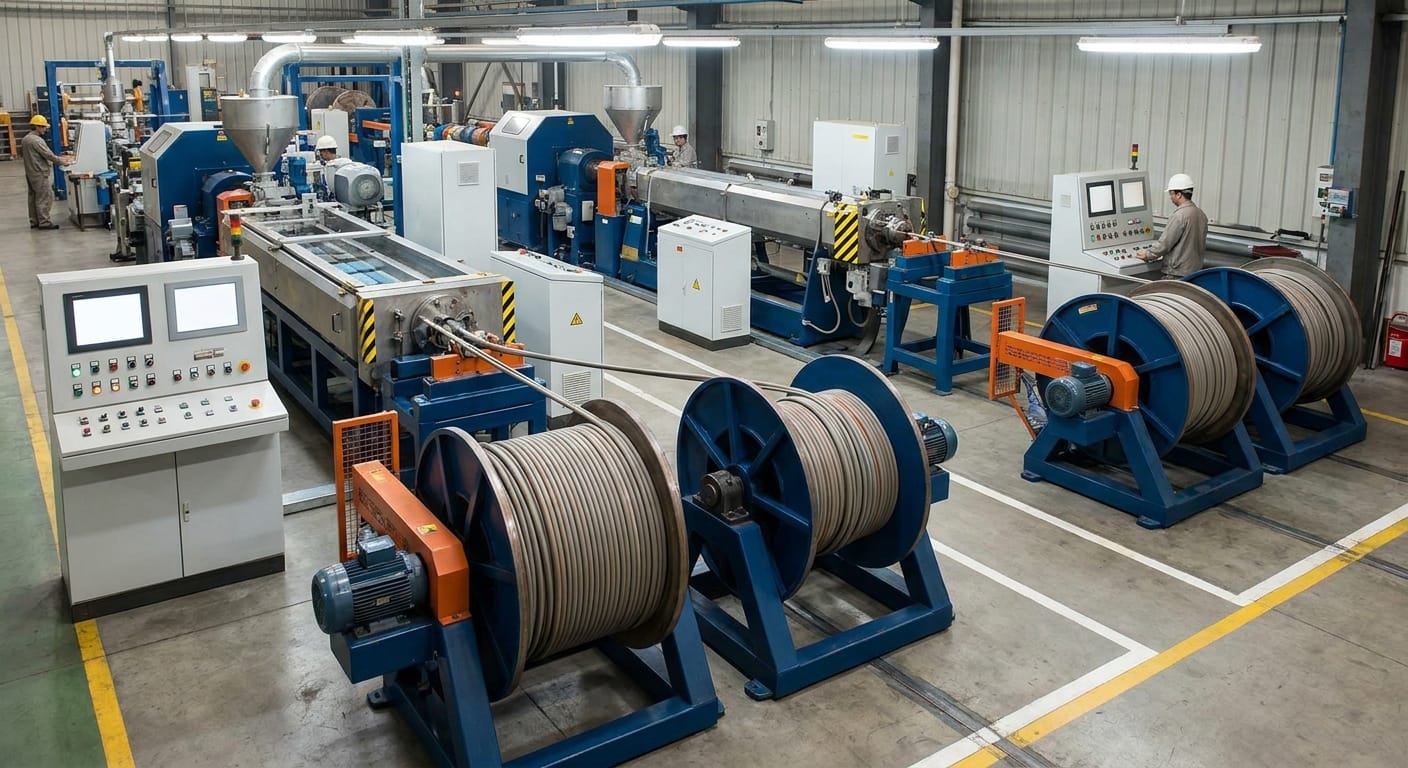
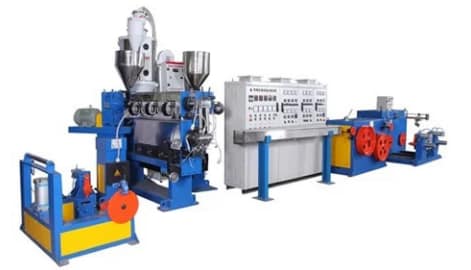
Sai Extrumech designs and builds custom cable extrusion lines that include fully integrated pay‑off and take‑up units. It serves plant managers, production engineers, R&D labs, procurement officers, and automation consultants across India.
The Custom Cable Extrusion Line can run at over 1,000 m/min and offers dual automatic take‑up, online spark testing, and inkjet marking. Those features let a line stay running while spools change without manual intervention.
Automation depth is backed by a sensor‑actuated carriage that locks and unlocks bobbins in seconds, cutting changeover time to under three minutes.
One limitation: the system is built to order, so lead time can be longer than off‑the‑shelf units.
2. Modular Take‑Up Systems
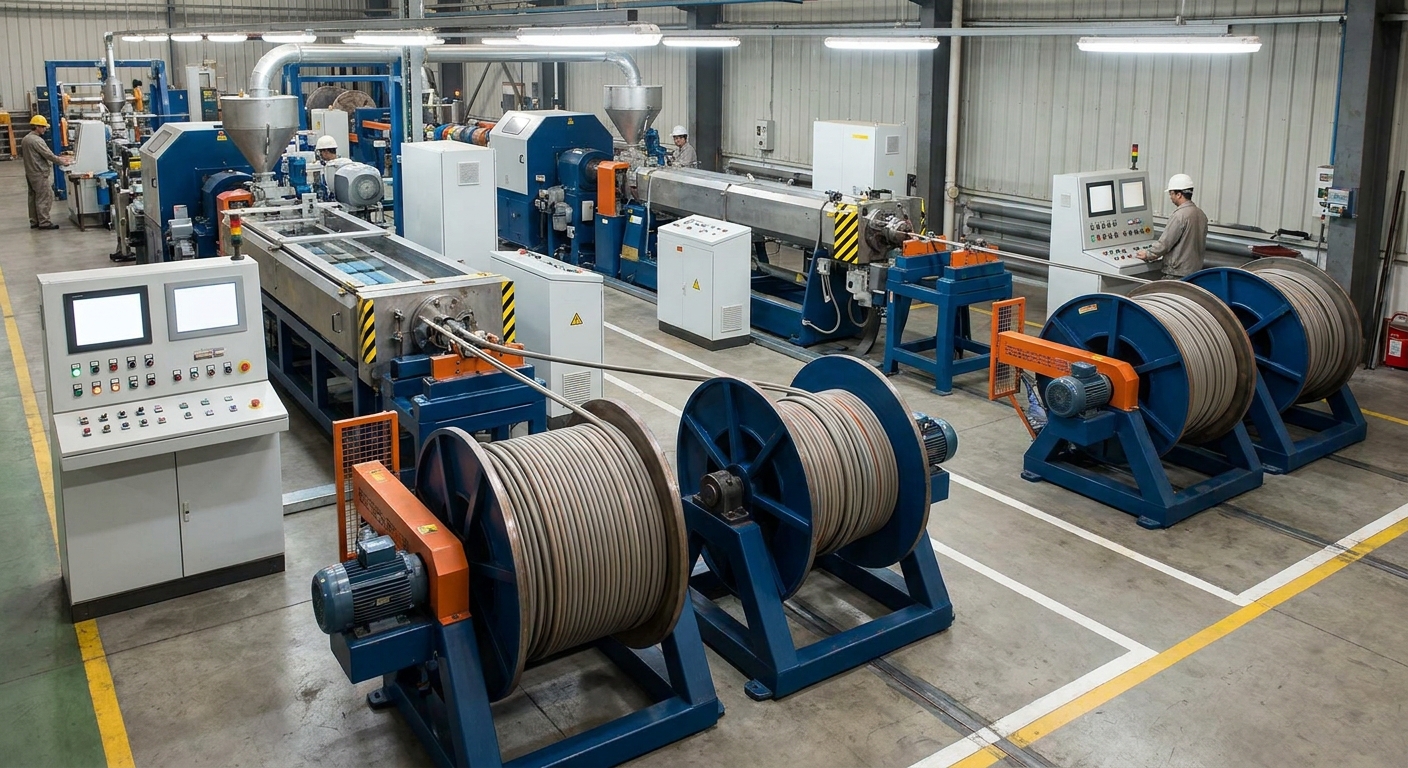
Modular take‑up modules can be added to existing lines. The modular design speeds up retrofits and reduces upfront cost.
Each module features a servo‑driven traverse that adjusts pitch on the fly, which improves winding uniformity for mixed‑size reels.
Because the units are pre‑engineered, installation can happen in a single shift.
Caveat: modular units may not handle very large reels used in heavy‑duty plants.
3. High‑Speed Pay‑Off Systems
The focus is on pay‑off machines that achieve exceptionally high line speeds. Their units use high‑torque AC drives and a strong cantilever shaft design.
Active tension control with a dancer arm keeps the cable within a ±2 % tension window, even during rapid acceleration.
These machines are ideal for fine‑wire drawing where surface quality is critical.
Limitation: the high‑speed drive adds to energy consumption, and the units lack built‑in dual take‑up capability.
4. Integrated Automation Solutions
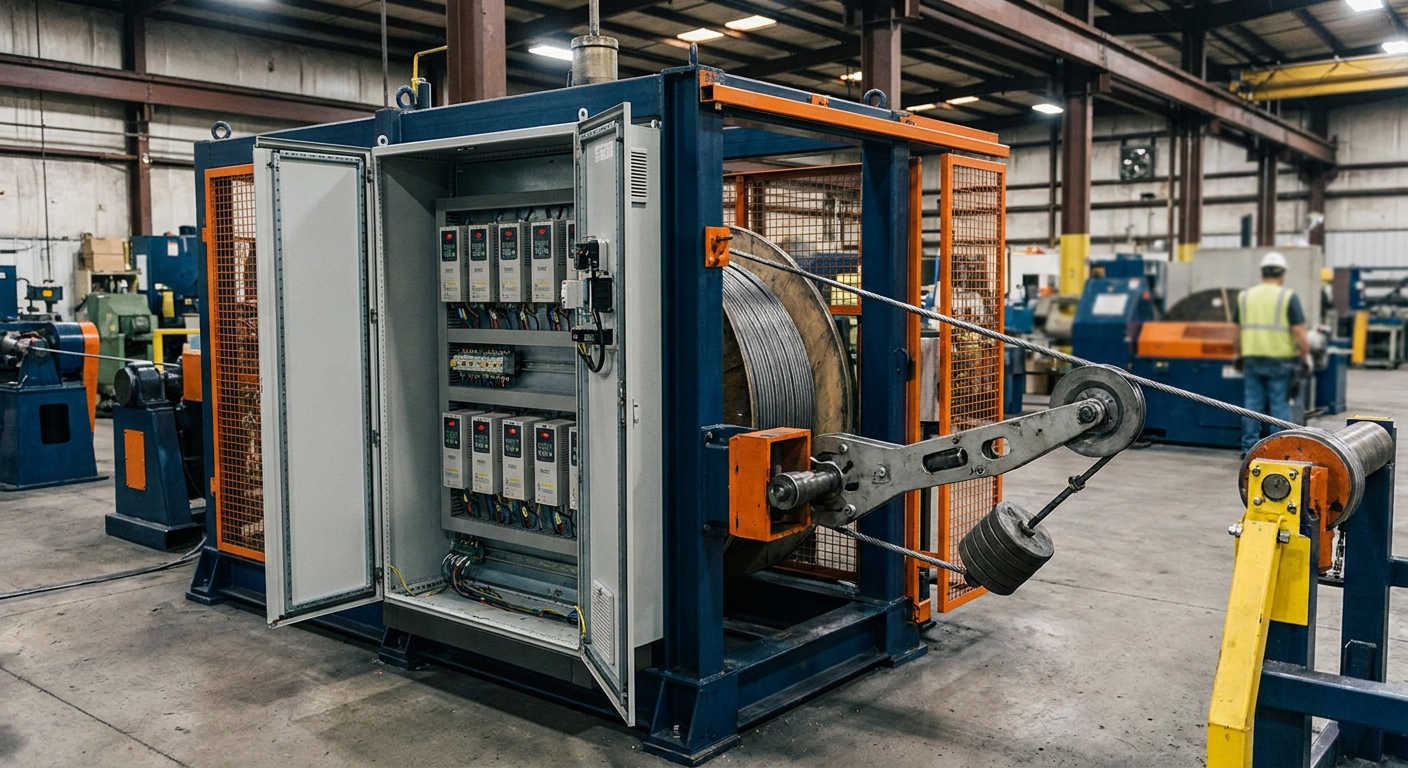
The provider offers H‑frame and portal take‑up/pay‑off machines that blend mechanical strength with advanced automation.
Features include recipe‑based setups, AC drives, and servo‑controlled traverse for precise layer‑by‑layer winding.
Integrating a capstan ensures the wire is pulled from the extruder at a speed that matches the take‑up, maintaining tension consistency.
The system can handle reels up to 5,000 mm in diameter and weights beyond 60 tons.
One drawback: the complex control software may require extra training for operators.
Our team often pairs the hardware with Sai Extrumech’s custom extrusion heads for a smooth line.
For more on our full range of pay‑off and take‑up machines, see Pay Off And Take Up Machine Manufacturers | Sai Extrumech Pvt. Ltd..
5. Energy‑Efficient Take‑Up Machines
Energy‑efficient take‑up units prioritize low power draw. Variable‑frequency drives adjust motor speed to match line demand, cutting energy use by up to 15 %.
The machines feature automatic reel indexing and a built‑in cutter that reduces scrap during changeover.
They also include a compact control panel that integrates with most PLC systems.
Limitation: the focus on energy savings can mean lower peak torque, which may not suit the heaviest power‑cable reels.
6. Heavy‑Duty Pay‑Off Lines
These pay‑off lines are built for multi‑ton reels used in high‑voltage cable production. The units feature hydraulic clamping and a reinforced cantilever shaft.
Integrated safety interlocks stop the motor if a reel exceeds its weight limit, protecting both equipment and operators.
They support line speeds up to 900 m/min, which is sufficient for most power‑cable applications.
One note: the hydraulic system adds maintenance overhead compared to electric‑only designs.
Understanding more about haul‑off dynamics can help size these units correctly; see What Is a Caterpillar Haul‑Off in Cable Extrusion? for details.
7. Compact Take‑Up Platforms
Suppliers offer space‑saving take‑up platforms that fit into smaller production cells. The design uses a vertical spindle and a short traverse arm.
Quick changeover is enabled by a pneumatic lift that swaps reels in under two minutes.
Drawback: the reduced travel length can limit winding speed for very high‑throughput lines.
How to Choose the Right System
- Match line speed: pick a unit that can sustain your target m/min without losing tension.
- Check reel capacity: ensure the machine fits your largest bobbin diameter and weight.
- Automation needs: decide if you need dual take‑up, active tension control, or simple passive pay‑off.
- Energy budget: consider variable‑frequency drives for lower power draw.
- Support & training: look for providers that offer on‑site commissioning and spare‑part logistics.
Comparison of Pay Off and Take Up Systems
FAQ
What is the difference between pay‑off and take‑up?
Pay‑off unwinds cable from a source spool and feeds it forward; take‑up winds the processed cable onto a destination spool. Both must sync speed and tension to keep the line running smoothly.
How fast can modern pay‑off systems run?
Top manufacturers report line speeds around 1,000 m/min, with a few high‑speed units reaching higher speeds under controlled conditions.
Do I need active tension control?
Active tension control is essential for fine‑wire drawing and high‑speed lines because it keeps tension within a tight window, reducing defects.
Can I retrofit a take‑up onto an existing line?
Yes, modular systems can be added to existing lines with minimal downtime, as long as the existing frame can support the new load.
What maintenance does a dual take‑up system require?
Regular lubrication of the servo drives, inspection of sensor actuators, and periodic calibration of the tension dancer keep a dual take‑up running reliably.
Is energy consumption a big factor?
Energy use varies; variable‑frequency drives can cut power draw compared with conventional AC drives, which can matter for large‑scale plants.
Conclusion
For a custom, high‑speed line that needs reliable automation, Sai Extrumech’s end‑to‑end solution is the clear choice. Contact us to schedule a virtual line review and get a tailored quote.
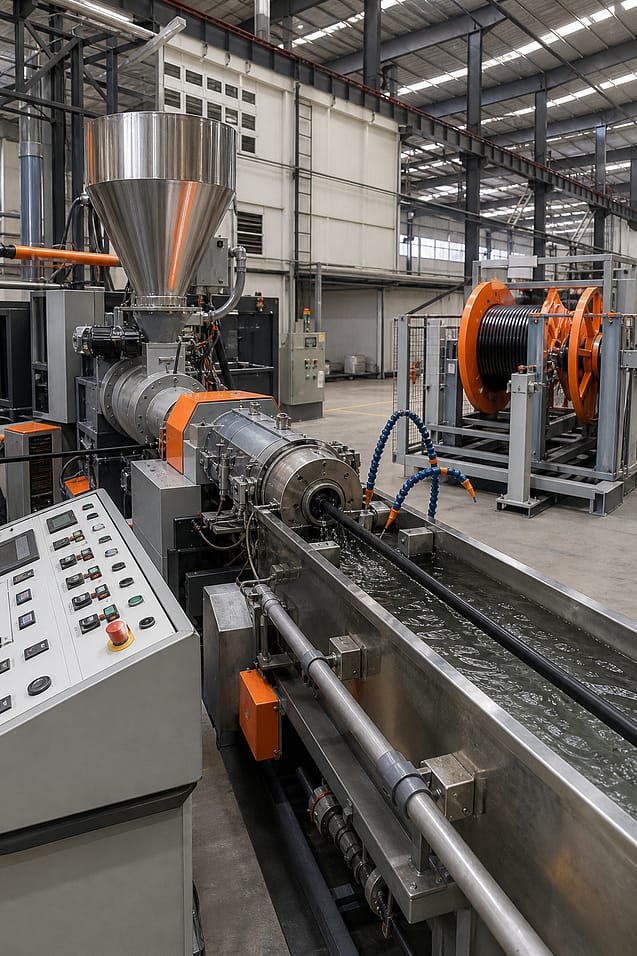
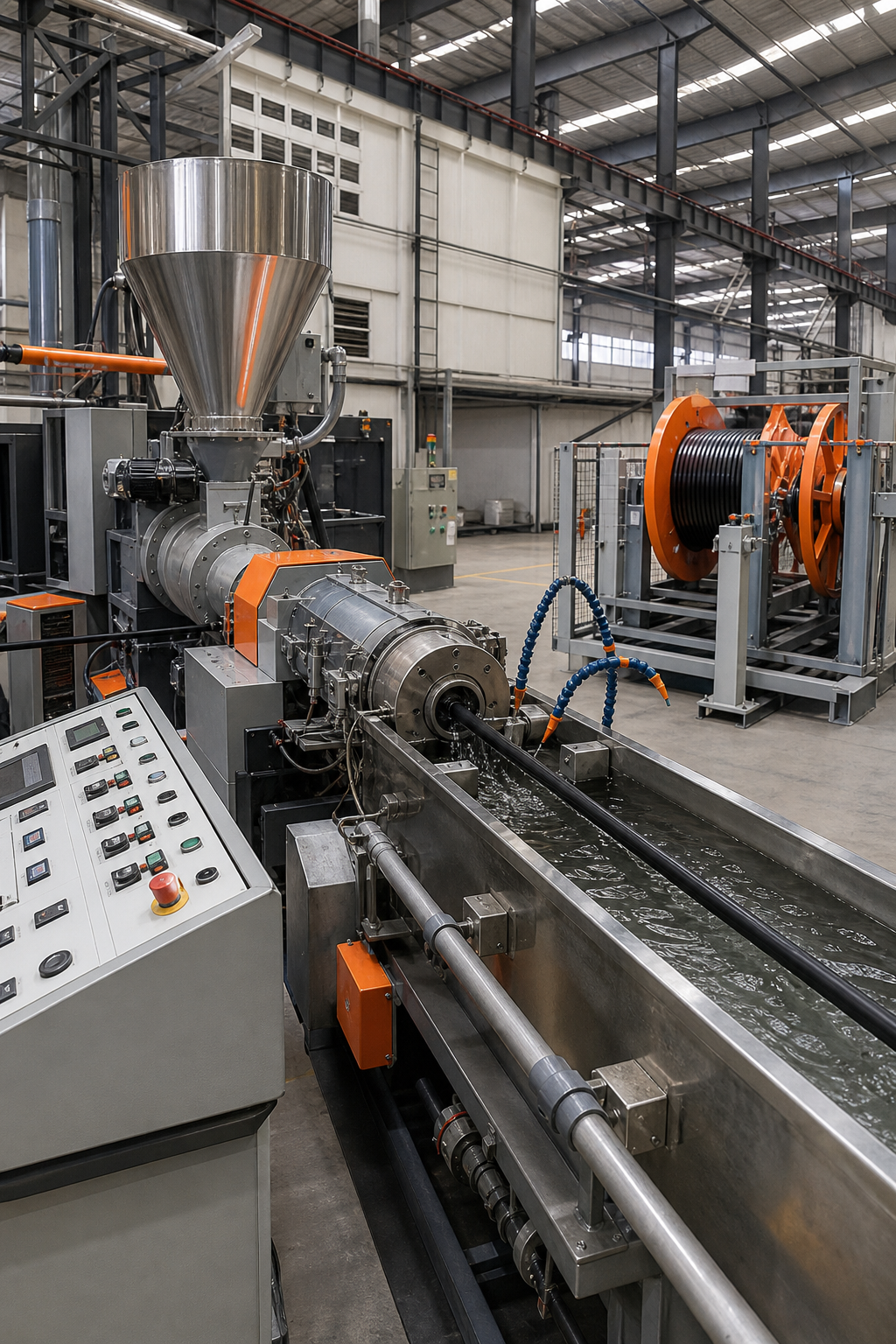
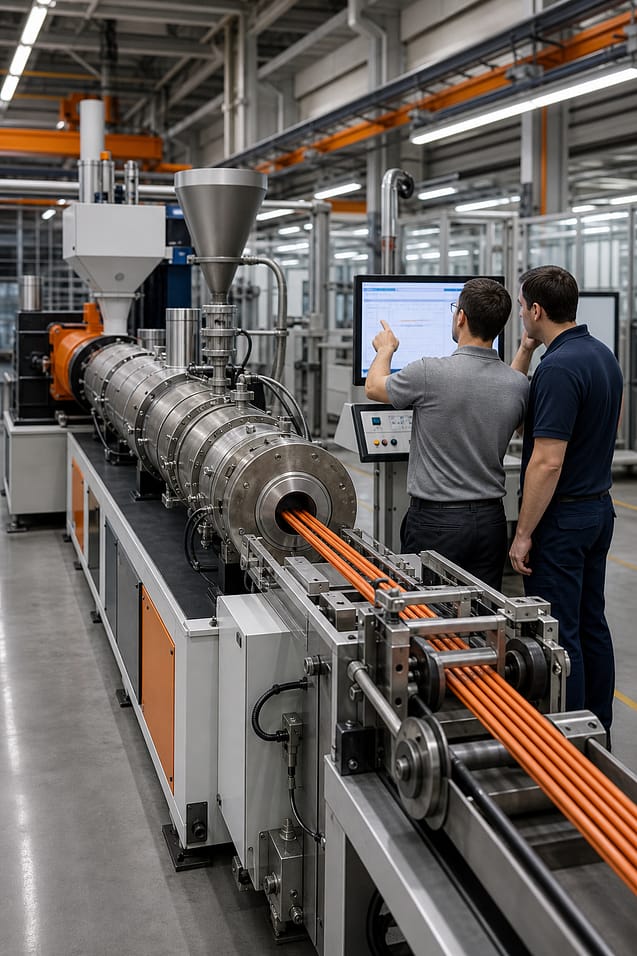
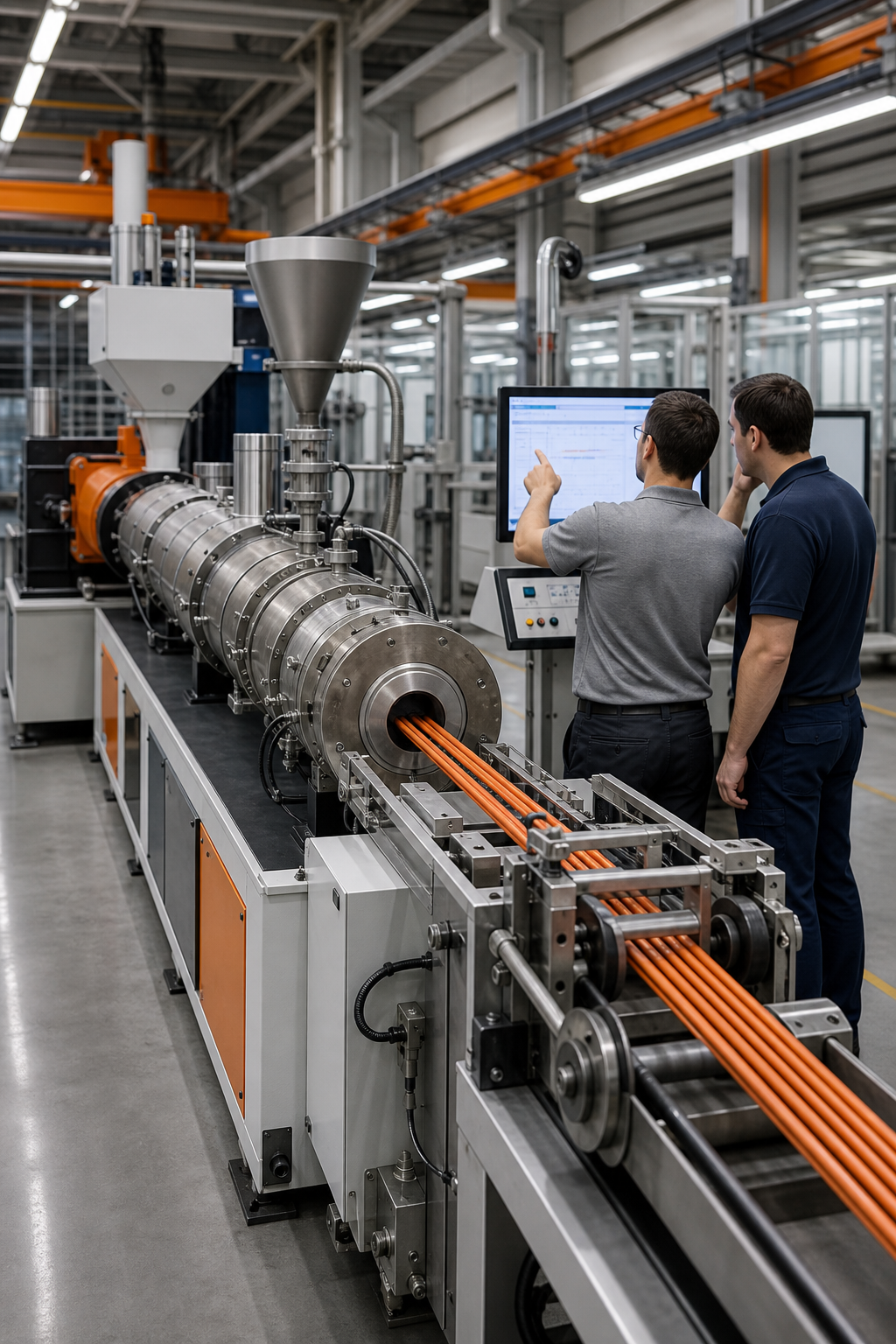

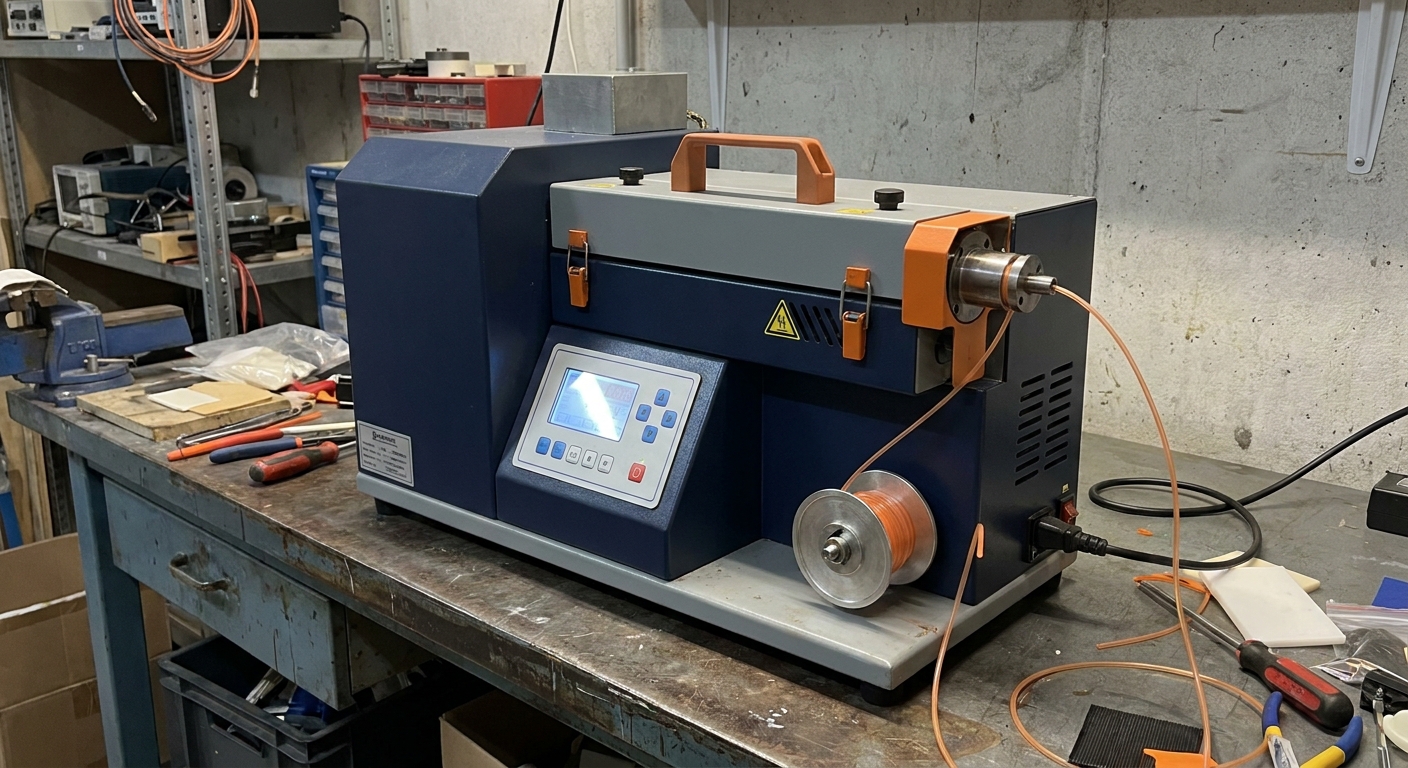
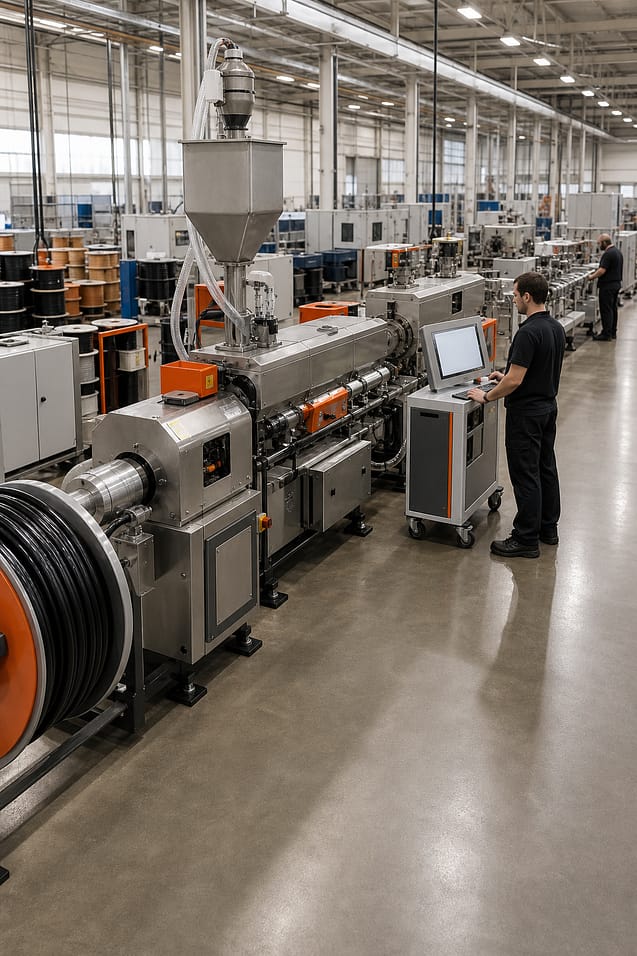
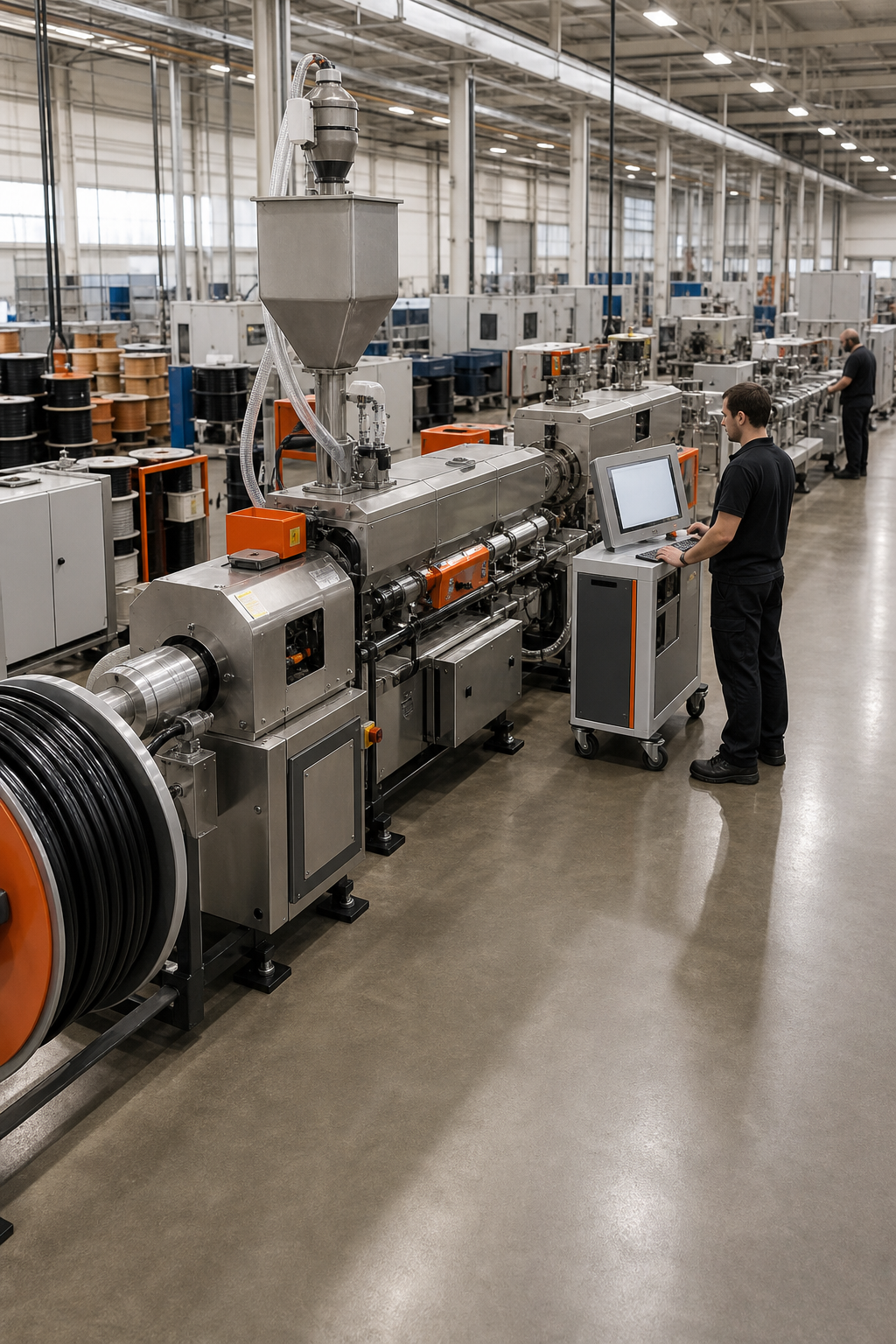
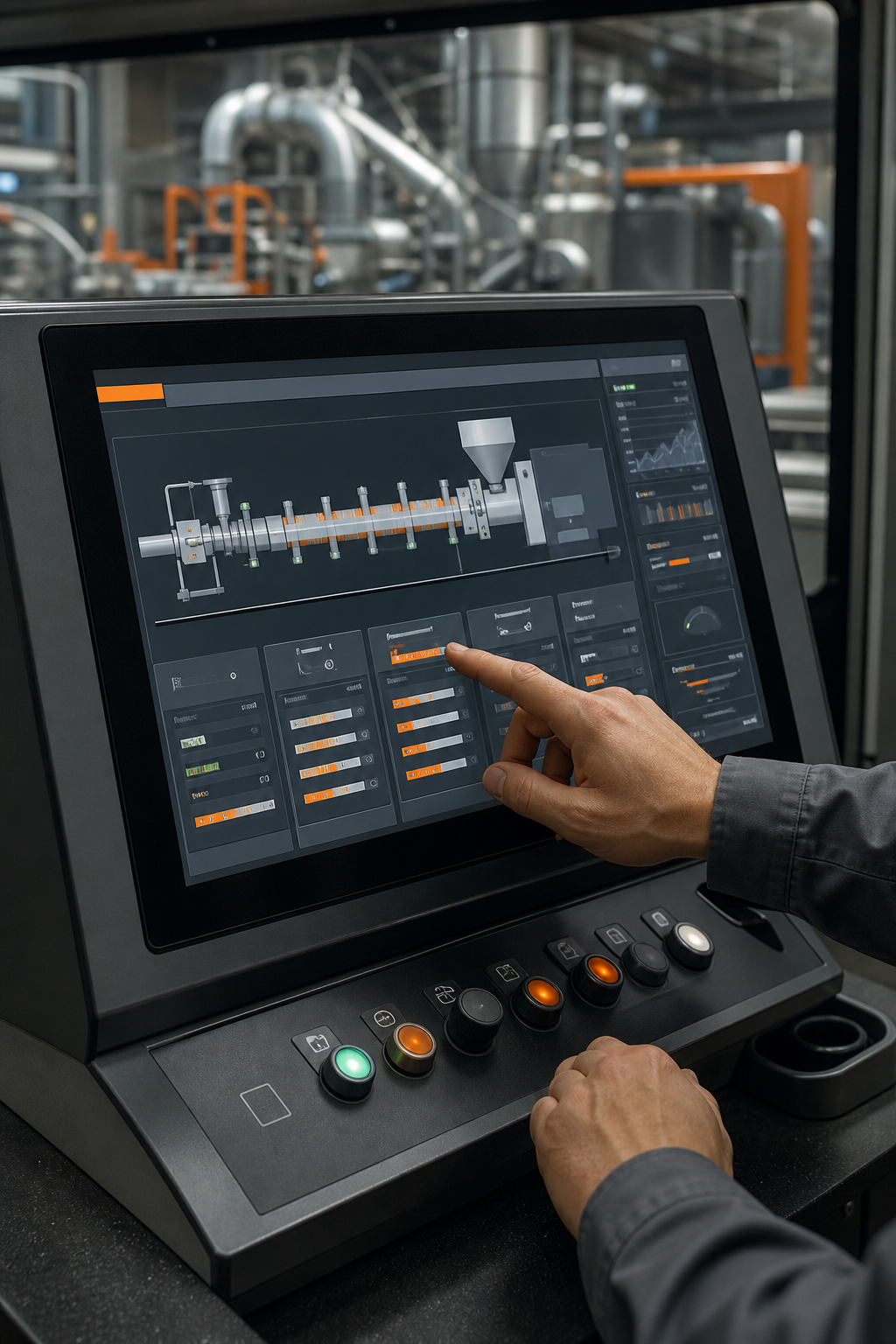
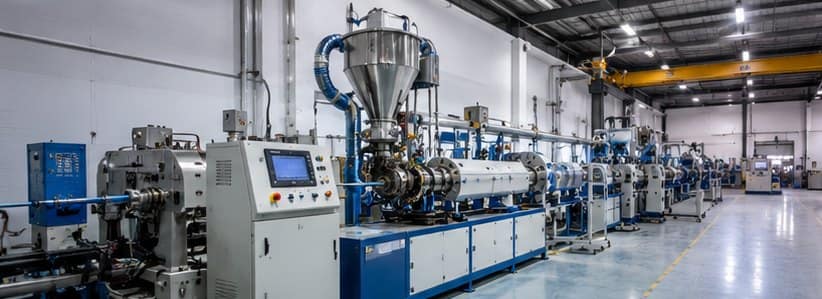
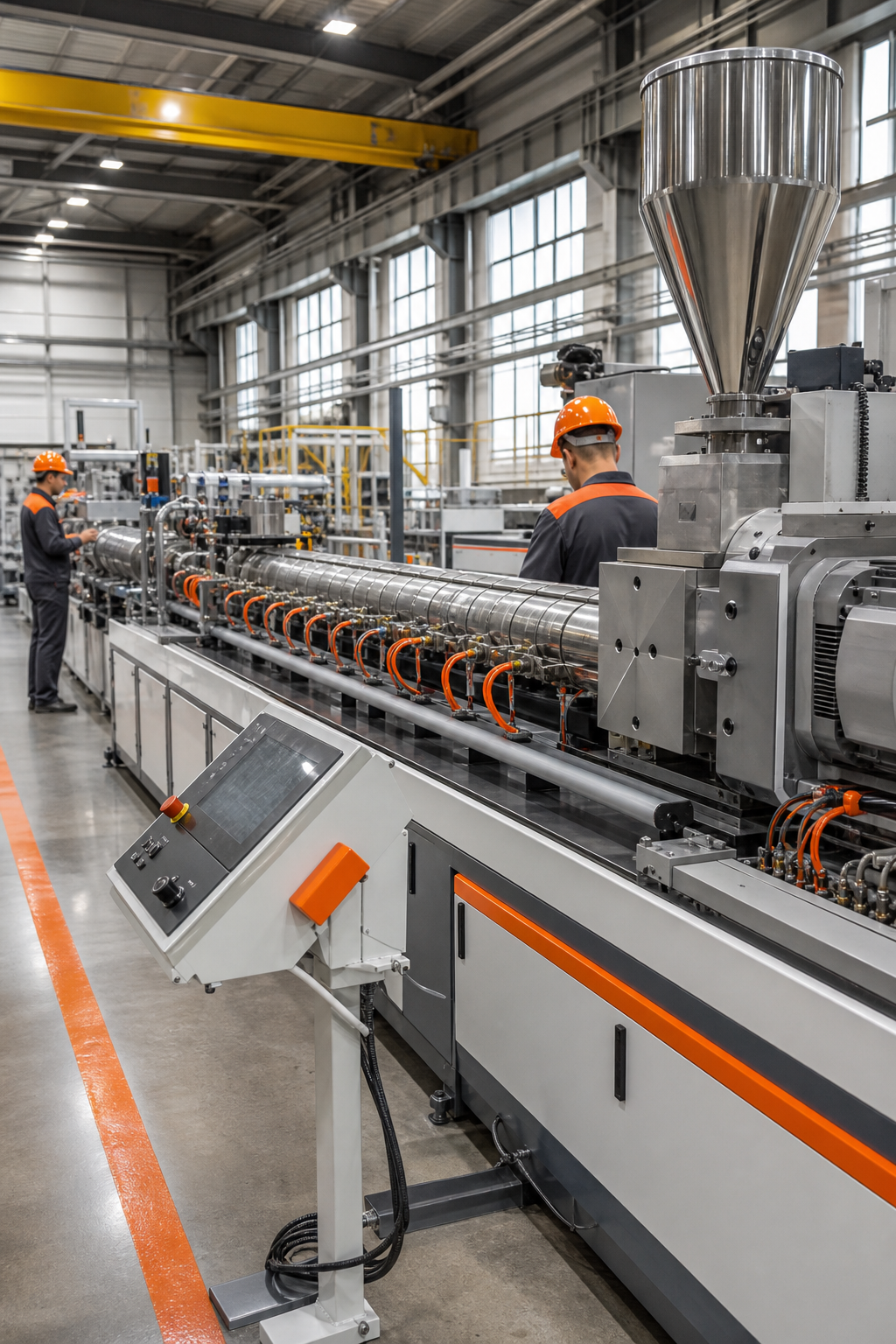
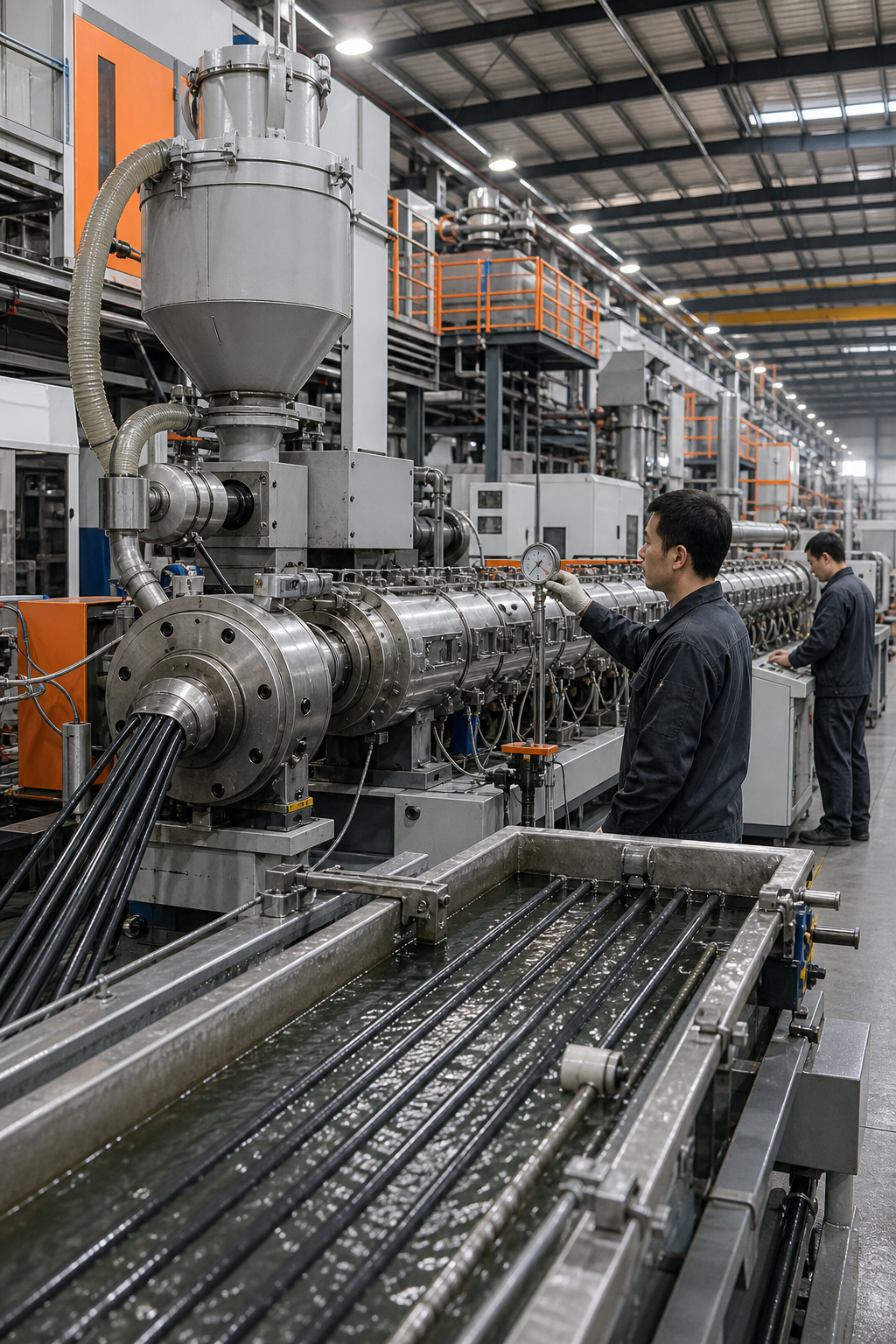
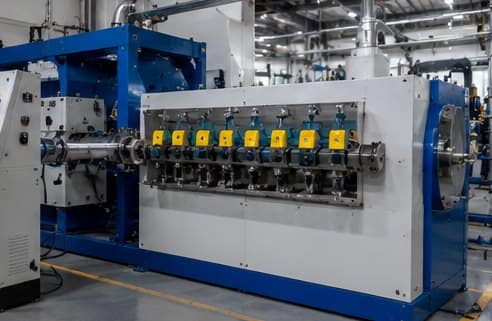
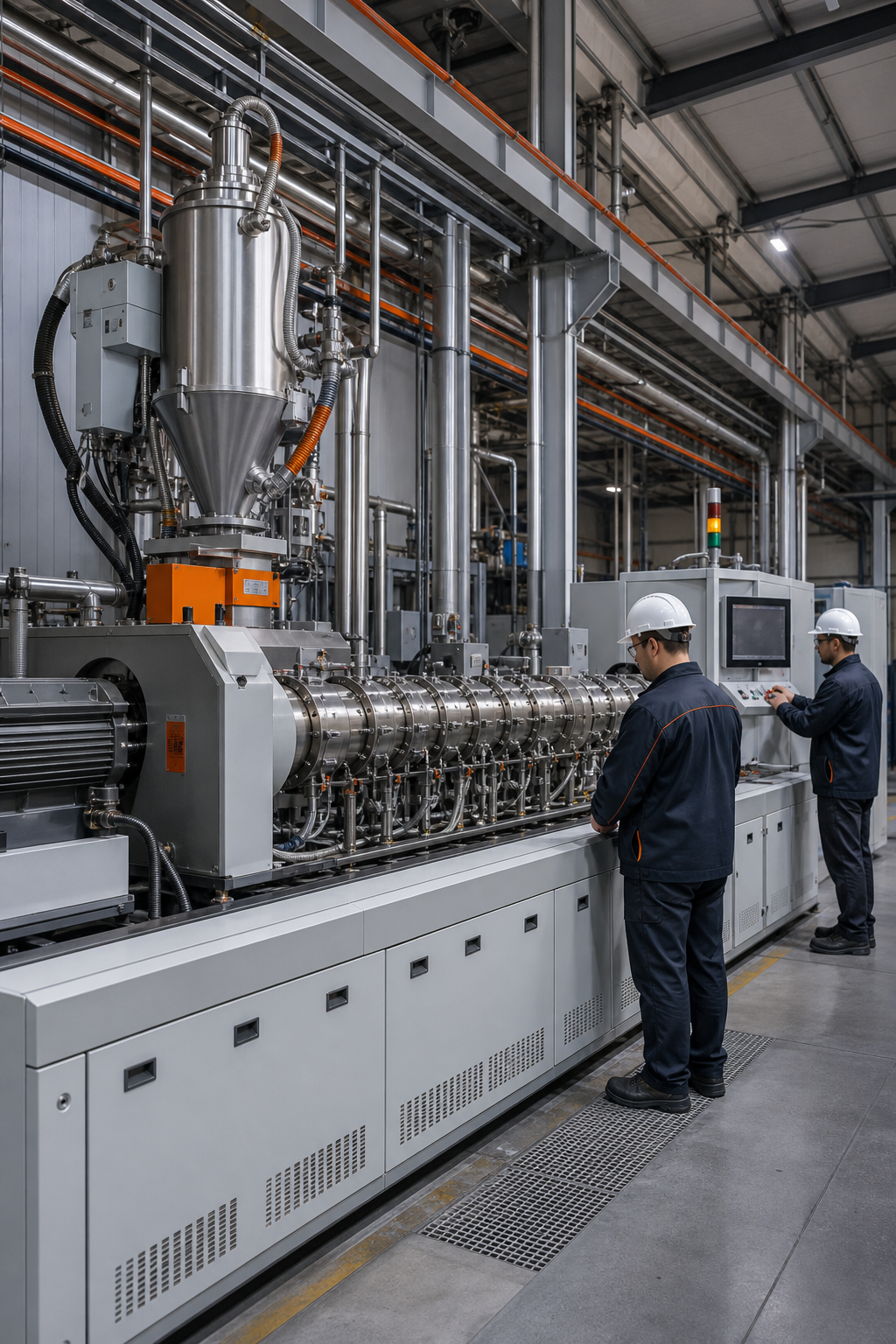
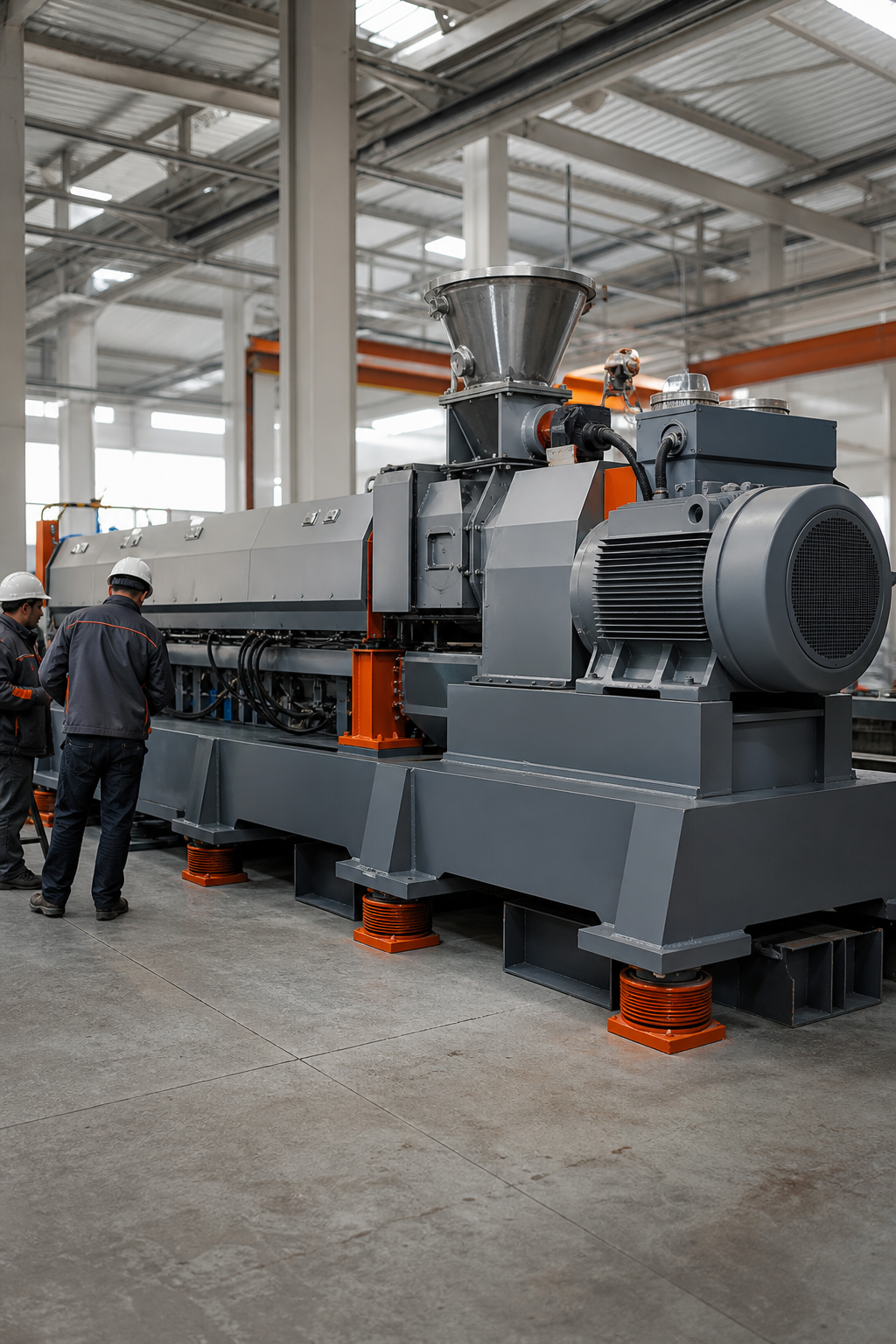
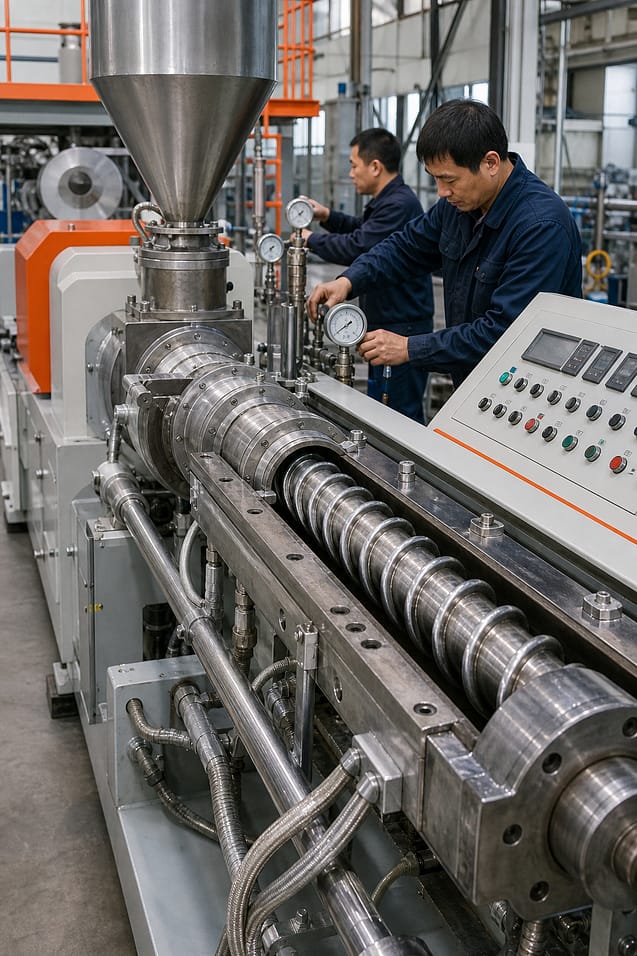
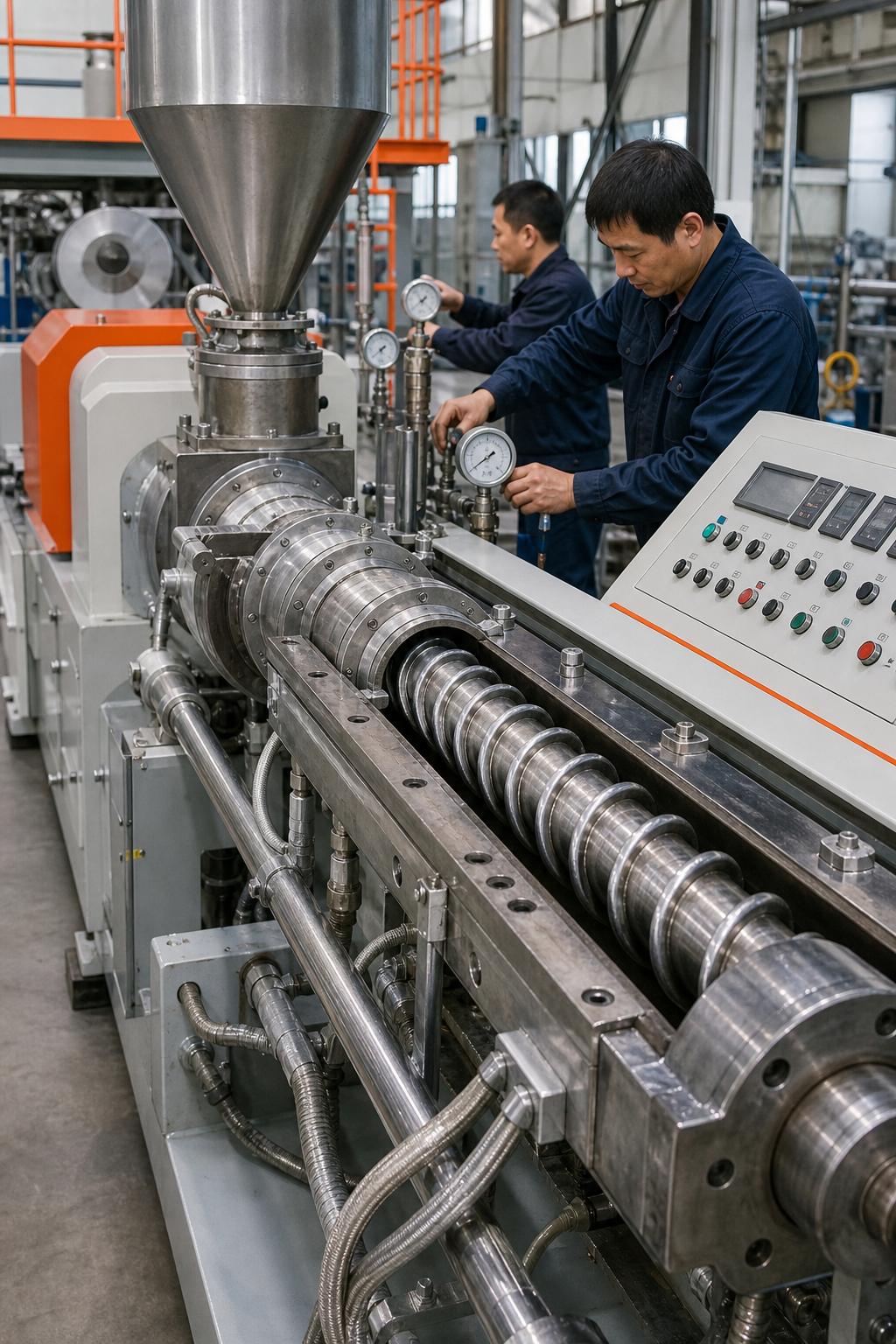
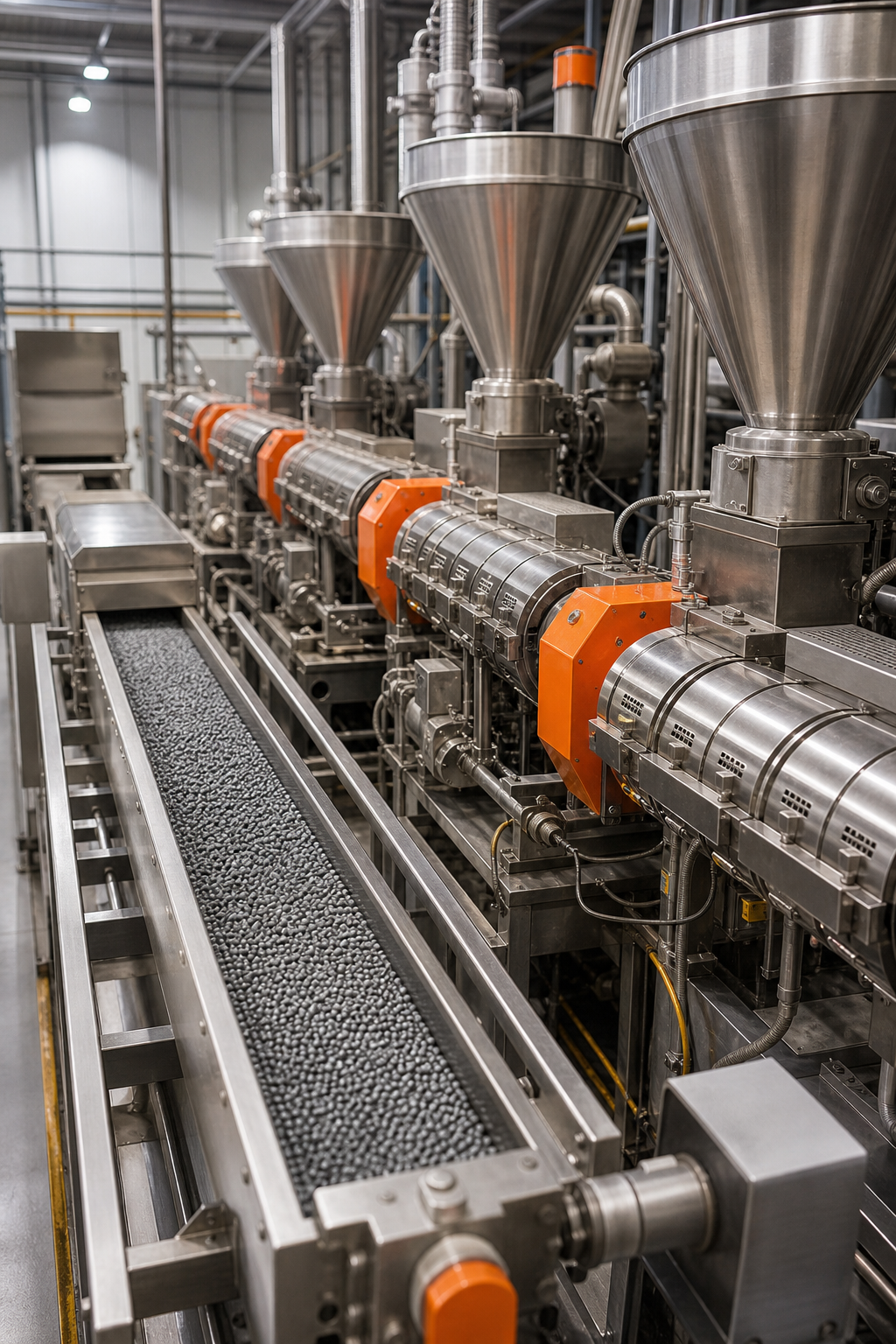

 We put Sai Extrumech at the top because they don’t just sell components, they deliver complete turnkey cable extrusion lines with a stocked spare-parts inventory. That combination is rare. Most manufacturers leave after-sales logistics vague, but Sai Extrumech openly promises dedicated support and a ready inventory of screws, barrels, and related tooling. That can shave weeks off project startup.
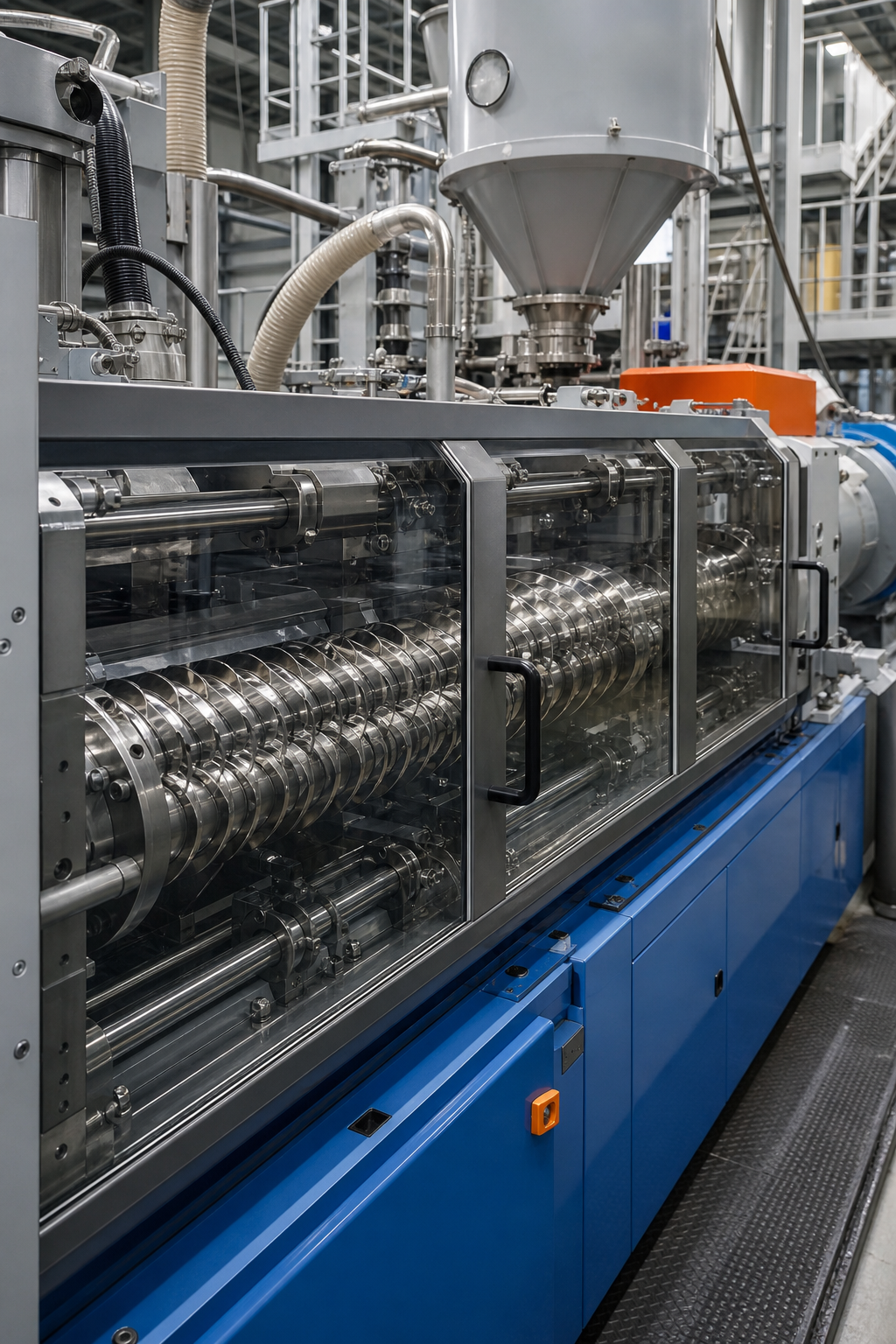 KraussMaffei’s counter-rotating twin-screw extruders are built specifically for PVC processing, pipes, profiles, sheets, films, and granules. These machines are known for their output consistency and energy-efficient operation. The screws and barrels are designed to handle PVC’s corrosive byproducts, with advanced materials that resist both wear and chemical attack.