Choosing the right extruder can make or break your line. Here are the top picks for single‑screw and twin‑screw machines, plus a quick comparison so you can decide fast.
1. Sai Extrumech Pvt. Ltd. (Our Top Pick) , Custom Twin Screw Extruder
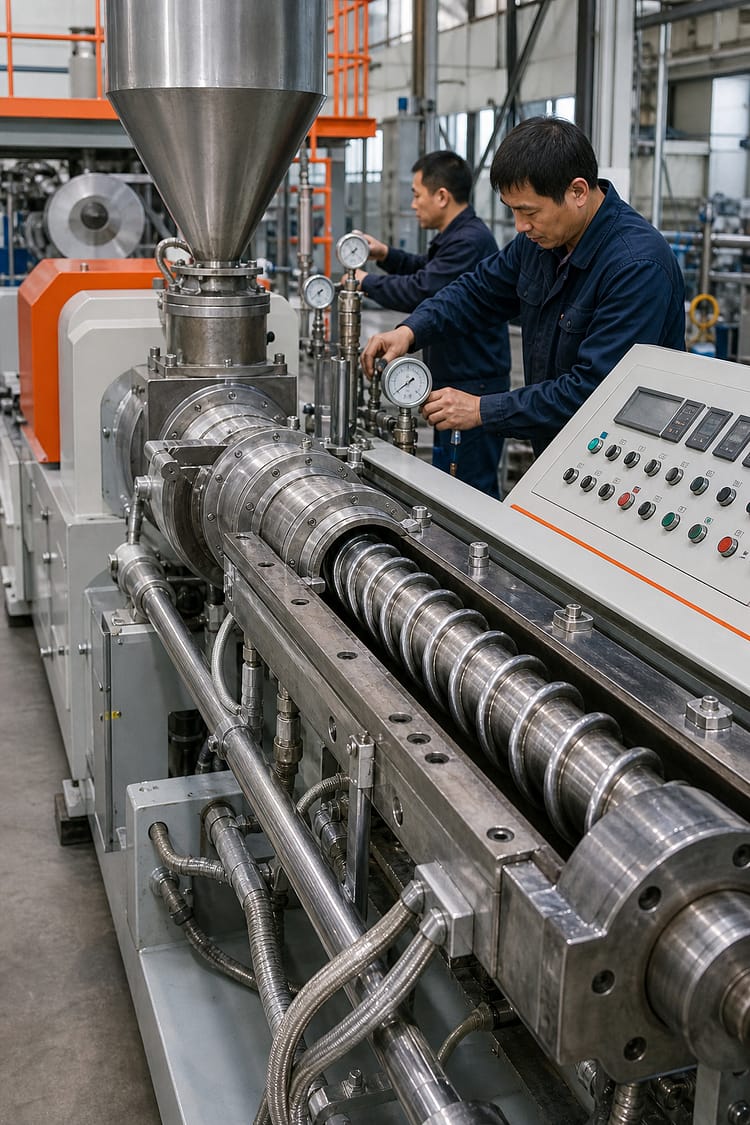
Sai Extrumech designs a twin‑screw line that fits cable, wire and pipe makers. The machine blends, melts and pushes material in one go, which cuts set‑up time for complex mixes. It comes with a touch‑screen controller that lets engineers tweak temperature zones without digging through menus. The company also offers spare‑part stock and on‑site training, so you won’t be left guessing when a screw wears out.
Because the line is built for Indian cable producers, the screw geometry matches common XLPE and PVC compounds. That means lower energy use and fewer rejects. A recent market scan showed that single‑screw lines dominate automation claims, but Sai’s twin‑screw model bridges that gap with user‑friendly controls. Solar Cable Extrusion Line | PV Cable Manufacturing gives a concrete example of the setup.
Bottom line: if you need a machine that mixes well and still feels simple to run, this twin‑screw line is the safest bet.
2. Single Screw Extruder , Classic Simplicity
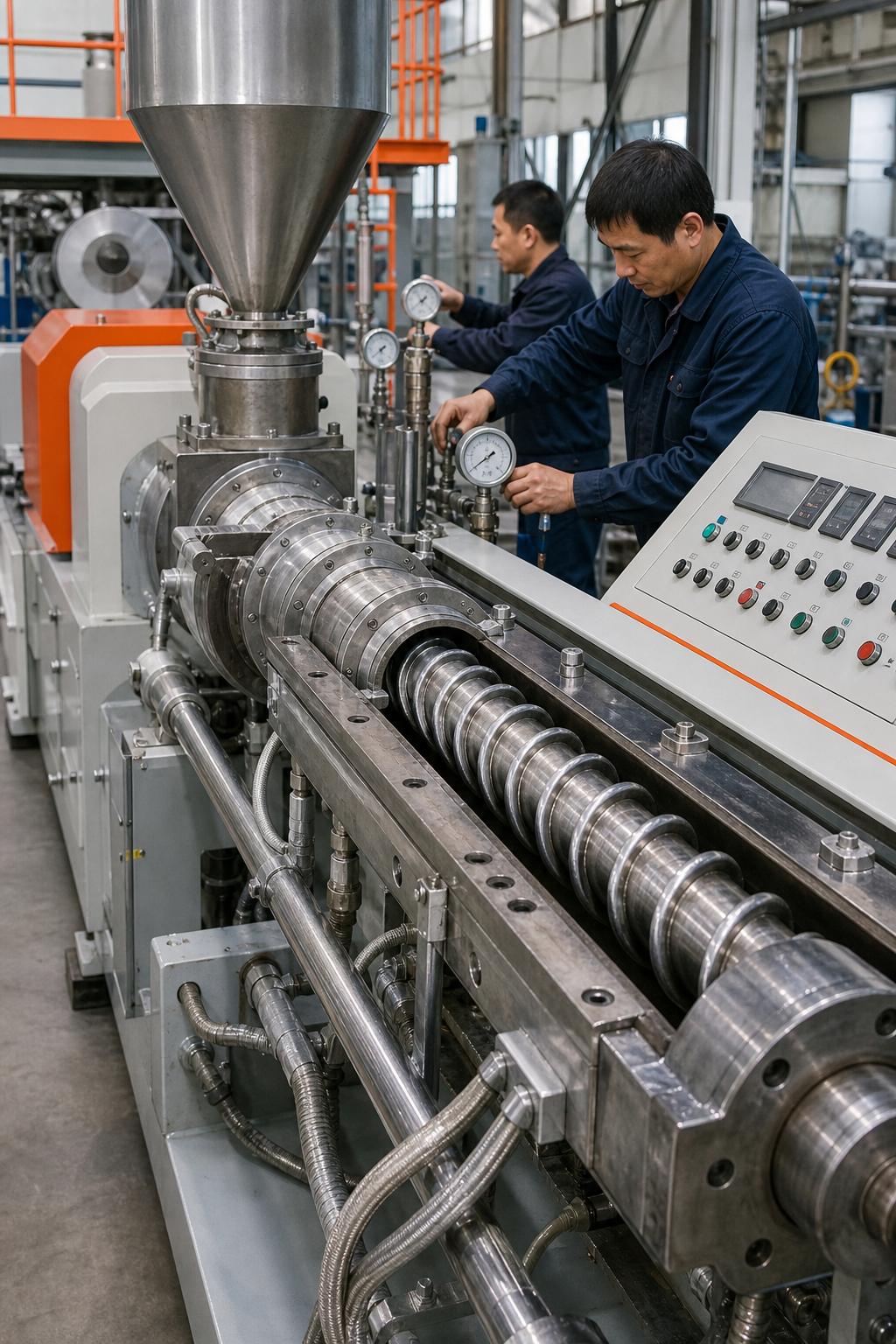
A single screw extruder has one rotating screw that pushes melt toward the die. Its design is easy to clean and cheap to maintain. For straight‑run products like basic PVC pipe or simple cable insulation, the single screw does the job without extra parts.
The core parts are the screw, barrel and a motor‑reducer set. When the motor turns, the screw creates friction that melts the pellets. The melt travels forward by drag flow, a smooth process that many plant managers trust.
Automation is less built‑in than twin‑screw models, but many vendors now add touch‑screen panels. How to Select the Right Screw and Barrel for Your Extrusion Line explains why screw geometry matters for single‑screw setups.
According to Wikipedia’s extruder overview, single‑screw machines excel at continuous, high‑speed production where the material mix is simple.
One caveat: mixing of additives is weaker, so you may need a downstream mixer for masterbatch work.
3. Twin Screw Extruder , Enhanced Mixing
Twin‑screw machines use two intermeshing screws that rotate together. This creates intense shear, which breaks down fillers and blends additives more evenly. The design also lets you add side feeders, so powders or liquids can be injected mid‑process.
Co‑rotating twins give the best dispersive mixing, while counter‑rotating twins provide strong conveying force with lower shear , handy for heat‑sensitive polymers. The extra screw also creates a self‑wiping zone that keeps the barrel clean.
Industries such as automotive compounding, pharmaceutical hot‑melt extrusion and high‑performance polymer production rely on this level of control. The machine can be tuned for a wide L/D ratio, which changes residence time and melt quality.
For a deeper technical view, see Wikipedia’s twin‑screw extruder article. It breaks down the different configurations and why they matter.
Downside: the machine is larger, costs more upfront, and needs skilled staff to set the screw elements correctly.
4. Multi‑Screw Extruder , High Throughput
Multi‑screw lines stack three or more screws in a single barrel. The extra screws push more material per rotation, so you get higher output without raising motor speed.
These machines are common in large‑scale recycling where the feedstock varies a lot. The multiple screws also create staggered mixing zones, which helps break down tough, contaminated waste.
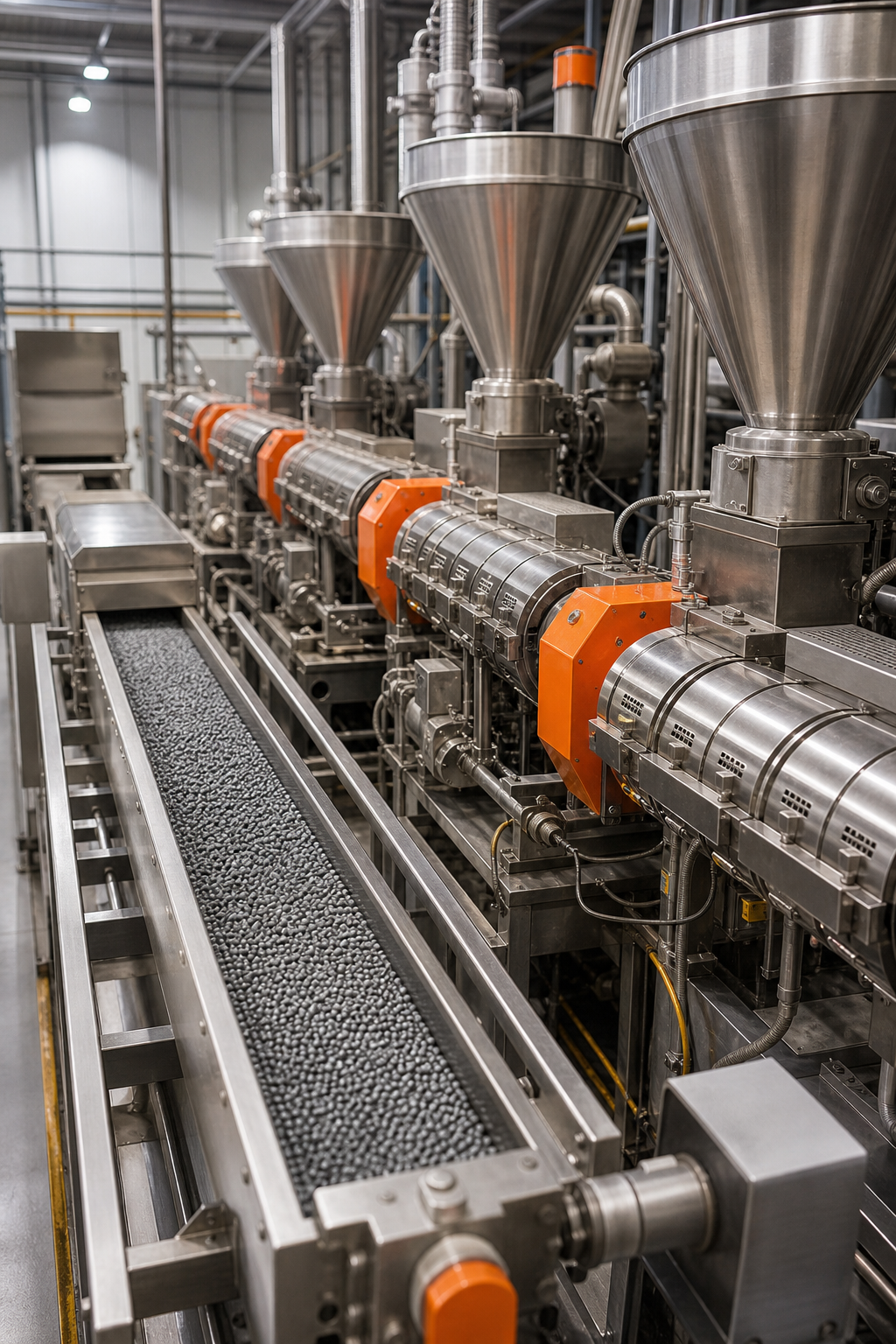
The design can be combined with venting and devolatilisation zones to remove moisture and gases before the melt leaves the barrel.
Because the hardware is complex, maintenance visits are more frequent. Still, for plants that need 30‑% more throughput, the extra cost pays off.
Our own crosshead guide ( What is a Crosshead in Cable Extrusion?) shows how a multi‑screw line pairs with downstream equipment.
5. Recirculating Twin Screw Extruder , Specialized for Compounding
This variant adds a recirculation loop that sends part of the melt back to an earlier screw zone. The loop lets you hold the material longer, which improves filler dispersion and reaction completeness.
It’s the go‑to choice for masterbatch creation, where pigments and additives must be evenly spread. The loop also lets you fine‑tune temperature profiles without changing screw geometry.
While the machine offers top‑tier mixing, the extra loop adds pressure drops, so you need a strong drive system.
Research from Torontech notes that recirculating twins “provide better control over residence time and temperature, enabling precise processing of sensitive materials.”
Bottom line: if you run high‑value compounds that can’t tolerate uneven mixing, this is the safest route.
Comparison Table: Key Specs of Extruder Types
How to Choose
- Match material complexity to screw design , simple blends go single, complex compounds need twin or recirculating twin.
- Consider throughput needs , multi‑screw adds volume, but adds size.
- Check automation features , touch‑screen control can reduce training time.
- Plan for maintenance , more screws mean more wear points.
FAQ
What is the main difference between single screw and twin screw extruders?
The main difference is the number of screws: a single screw uses one rotating screw to melt and push material, while a twin screw has two intermeshing screws that provide stronger mixing and better control over temperature.
Can I use a single screw extruder for cable production?
Yes, single screw lines are common for basic cable insulation where the material mix is simple and high‑speed output is needed.
Is a twin screw extruder worth the extra cost for polymer compounding?
Often it is, because the superior mixing reduces waste and improves product consistency, which can lower overall production cost.
How does a recirculating twin screw extruder improve masterbatch quality?
The recirculation loop holds the melt longer, allowing fillers and pigments to disperse more evenly, resulting in a more uniform masterbatch.
What maintenance challenges do multi‑screw extruders present?
More screws mean more wear points, so you need regular inspection of screw flights, barrel clearance and drive gear alignment to avoid downtime.
Conclusion
For cable and pipe makers, Sai Extrumech’s custom twin‑screw line gives the best mix of automation and performance. If you need a simple, low‑cost option, the classic single screw still works well. Ready to move ahead? Contact Sai Extrumech for a free consultation and see a tailored quote.

Add a Comment