
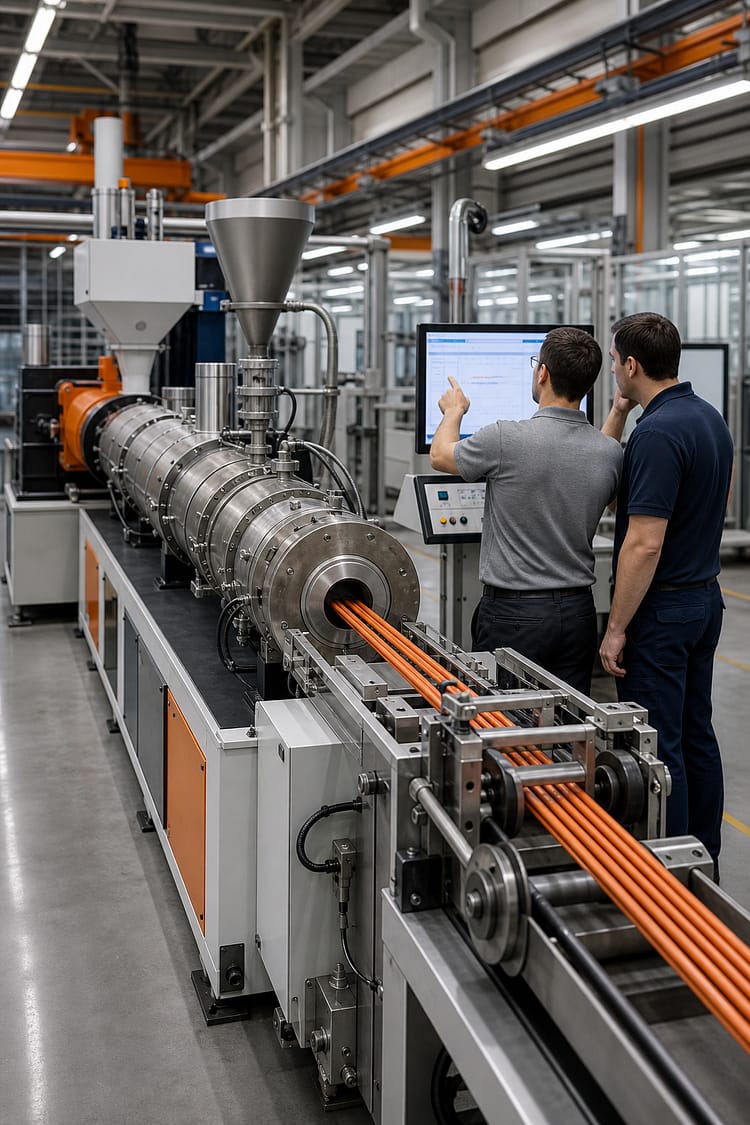
Choosing between Sioplas and Monosil can feel like walking a tightrope. One side promises high‑precision polymer blending, the other offers a clear line‑speed figure. Below are six options that let you match the process to your plant’s needs.
1. Sai Extrumech Pvt. Ltd. (Our Top Pick) , Custom extrusion lines for Sioplas & Monosil
Sai Extrumech designs and builds turnkey extrusion lines that handle both Sioplas and Monosil chemistries. The company works from concept to installation, so you get a line that fits your floor layout, power budget, and production volume. Engineers benefit from a modular crosshead, a precision screw‑and‑barrel, and a control system that logs temperature, pressure, and speed in real time.
Because the line is custom, you can specify a melt‑flow index that matches the silane‑crosslinked XLPE you plan to use. That reduces barrel wear and keeps energy use stable. The team also offers a spare‑parts inventory that ships within days, limiting downtime.
One caveat: a fully custom line takes longer to engineer than an off‑the‑shelf unit. If you need a fast rollout, plan the project at least six months ahead.
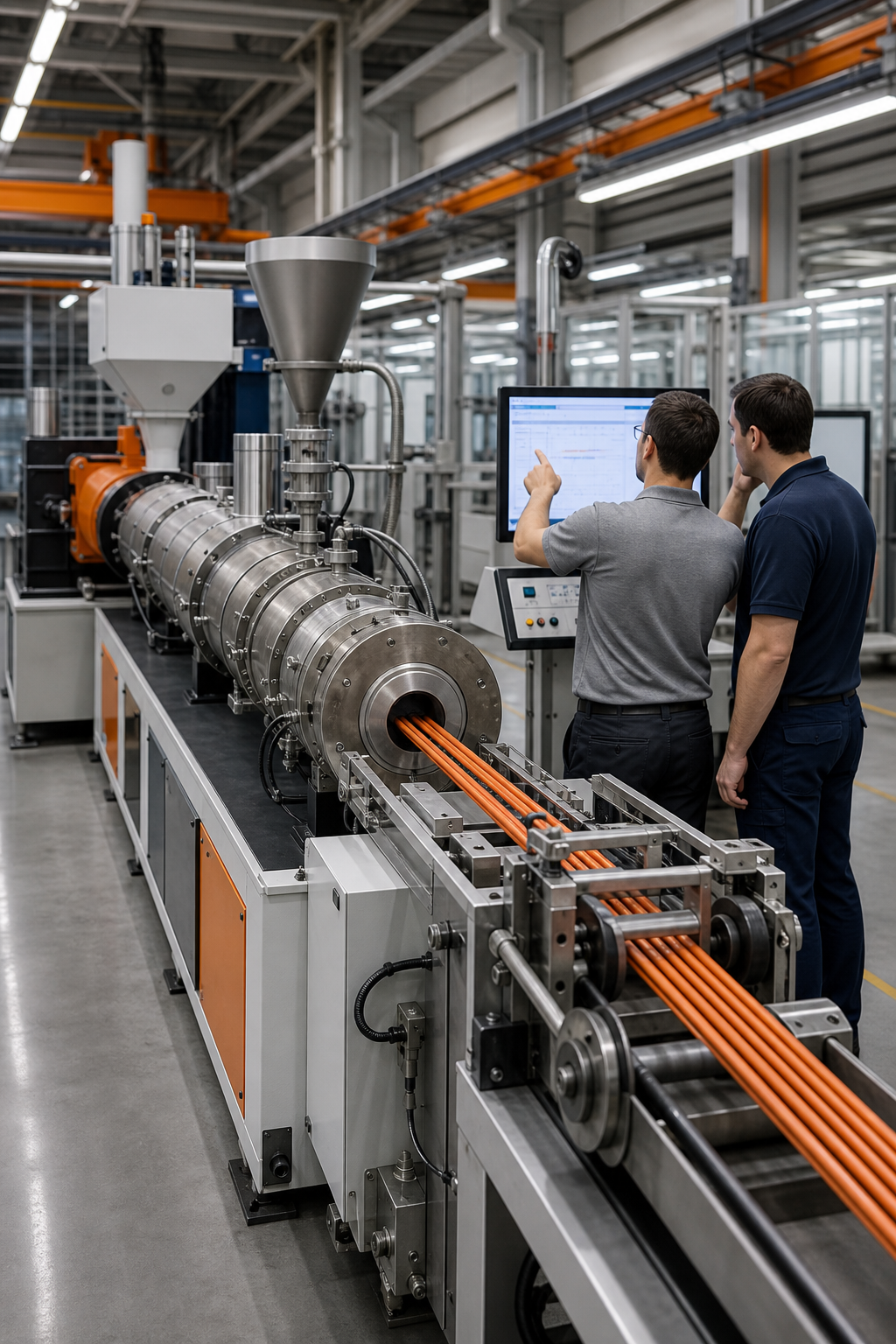
For a deeper look at the Sioplas machine family, see our Sioplas cable extrusion machine page.
2. Sioplas Process , High‑precision polymer blending for cable production
The Sioplas method blends a silane‑grafted masterbatch with base polyethylene inside the extruder. Moisture in the water bath triggers the siloxane cross‑linking, which gives the insulation excellent thermal stability.
It excels when you need tight control over layer thickness. Sensors monitor melt temperature to ±1 °C, and the die can be swapped quickly for different cable sizes. The process works well for medium‑voltage (MV) cables where long‑term dielectric performance matters.
However, the public data on Sioplas lines is thin. Neither speed nor energy draw is disclosed by manufacturers, which makes cost‑of‑ownership calculations tricky. Speed can vary widely depending on screw design and polymer melt viscosity.
For plants that prioritize consistent quality over raw throughput, Sioplas remains a solid choice.
3. Monosil Process , Continuous single‑silicon extrusion for high‑speed wire
Monosil skips the costly silane‑grafted masterbatch. Instead, liquid silane is added directly in the extruder barrel, cutting material costs. The process still achieves the same cross‑linked network after a moisture cure.
What sets Monosil apart is its ability to achieve high line speeds suitable for medium‑voltage cables, giving plant managers a clear benchmark for throughput planning.
Because the process uses basic polyethylene, the raw material cost is lower than Sioplas. The trade‑off is a slightly higher need for precise temperature control to avoid incomplete cross‑linking.
One limitation: the liquid silane can be sensitive to moisture contamination in the feedstock, so you need good raw‑material handling.
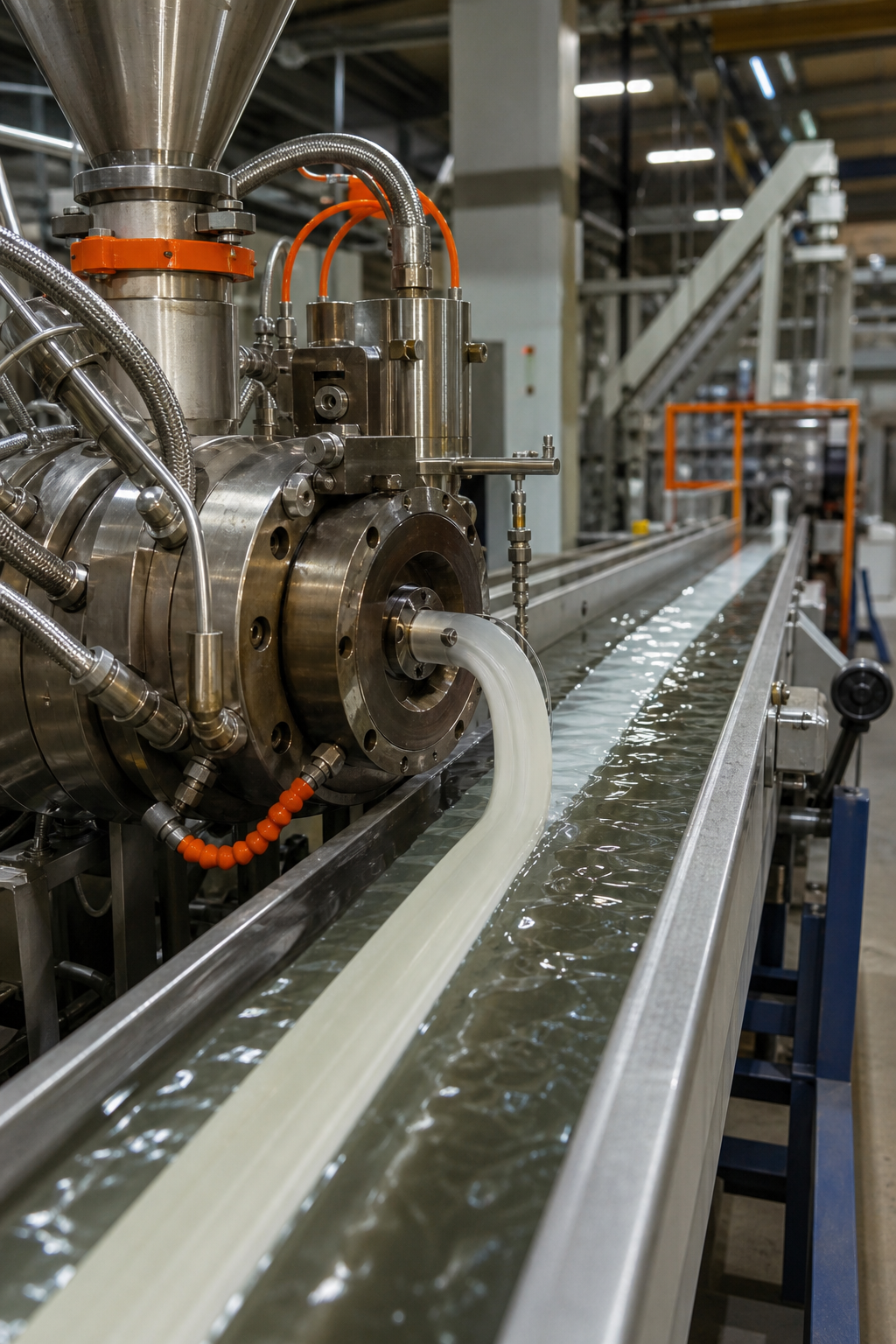
For more on the chemistry behind Monosil, see the process overview.
4. Hybrid extrusion system – Combined flexibility and speed
A hybrid line can operate with different feedstocks, allowing switching between a bulk mode for high‑volume runs and a high‑spec mode for specialized MV cables.
The system uses a dual‑feed hopper that can switch feedstock on the fly, significantly reducing change‑over time.
Because it provides two process windows in one line, the capital cost is higher than a single‑purpose line, and operators need training on both processes.
For a look at how modern extrusion tech supports hybrid setups, read Advancements in cable extrusion technology.
5. Standard Batch Extrusion , Reliable for low‑volume runs
Batch extrusion runs a fixed amount of polymer before stopping the screw. It’s simple, cheap, and works well for custom or prototype cables where you only need a few meters.
The process uses a single‑screw extruder, a basic die, and a water‑bath cooler. Because you run the line in short bursts, you can test new formulations without committing to a full‑scale line.
Energy use per kilogram is higher than continuous lines, as the machine cycles on and off. Wear on the screw and barrel also spikes during start‑up, so schedule regular inspections.
Our experience shows that a batch line can be set up in a weekend, making it ideal for R&D labs.
6. Advanced Multi‑Layer Extrusion , Premium for complex cable designs
Multi‑layer extrusion adds two or more polymer skins in a single pass. You can combine XLPE, PVC, and fire‑retardant layers without extra dies.
This approach is perfect for cables that need a halogen‑free outer sheath, a moisture‑barrier middle layer, and a high‑temperature XLPE core. The line uses a twin‑screw extruder for thorough mixing, followed by a precision co‑extruder that builds each layer.
The downside is a higher upfront cost and more complex maintenance. Twin‑screw machines wear faster and need skilled technicians.
For a clear comparison of single‑ and twin‑screw options, see our single vs twin screw extruder comparison.
How to Choose the Right Process , Key Decision Factors
Start with your target voltage class. Medium‑voltage (MV) cables benefit from silane cross‑linking, which both Sioplas and Monosil provide.
Next, check your throughput target. Monosil’s 12.5 m/min speed gives a concrete number; Sioplas lacks a public figure, so you’ll need a pilot run to estimate.
Consider raw‑material cost. Monosil uses plain polyethylene plus liquid silane, which is cheaper than the pre‑grafted masterbatch Sioplas needs.
Factor in plant expertise. Sioplas requires a moisture‑cure bath and careful humidity control, while Monosil needs precise temperature management for the liquid silane injection.
Finally, think about future flexibility. A hybrid line or a multi‑layer system can future‑proof your plant if you expect product diversification.
Comparison Table , Feature & Performance Snapshot
FAQ
What is the main difference between Sioplas and Monosil?
The main difference is how silane is introduced. Sioplas uses a pre‑grafted masterbatch that cures in a moisture bath, while Monosil injects liquid silane directly into the extruder and cures later.
Which process offers the highest line speed?
Monosil provides a published speed of 12.5 m/min, making it the fastest option with a clear benchmark.
Can I switch between Sioplas and Monosil on the same line?
A hybrid line can be built to handle both chemistries, but you need dual feed systems and operators trained on both processes.
Is the Sioplas process more expensive?
Yes, because it requires silane‑grafted masterbatch, which costs more than plain polyethylene used in Monosil.
Do I need special equipment for the moisture cure?
Sioplas needs a water or steam bath after extrusion to complete the cross‑linking, adding space and control requirements.
Which option is best for low‑volume, custom cables?
Standard batch extrusion is the most economical for short runs and prototype work.
Ready to boost your plant’s productivity? Try Sai Extrumech Pvt. Ltd. free →
Start by contacting Sai Extrumech for a free feasibility study and see which line fits your plant best.
For a full breakdown of insulation materials, see our guide to PVC vs XLPE cables.

Add a Comment