extruder-crosshead-manufacturers-client-product

Best Extruder Crosshead Manufacturers for 2026

Finding the right extruder crosshead manufacturer is critical for consistent insulation and jacketing in cable production. The industry suffers from a transparency gap, most suppliers hide throughput and spare parts lead times. We’ve analyzed the market and narrowed down five manufacturers that deliver on performance, automation, and support.

1. Sai Extrumech Pvt. Ltd. (Our Top Pick)
A realistic photo of a factory floor with a crosshead extrusion line, showing a technician inspecting a cable coating process. Alt: Crosshead extrusion line in cable manufacturing.

Sai Extrumech is a trusted name for crosshead machines used in wire, cable, and pipe extrusion. They offer fixed center, manual center, and triple layer crossheads, all precision machined to tight tolerances. The company also provides automatic dual take-up with online spark testing and inkjet marking, features that reduce waste and improve quality. We like Sai Extrumech because they publish clear application data and support customization. Their crosshead types cover a wide range of conductor sizes, and their building wire lines can run at high speeds on fine conductors. The only caveat is that, like most manufacturers, they don’t publish max throughput rates online, so you’ll need to discuss your specific line speed requirements with their team.

2. Davis-Standard , Global Leader in Extrusion Solutions

Davis-Standard is a well-established name in extrusion, and their automatic crosshead for rubber hose applications shows real innovation. It also features a tapered mandrel and engineered flow paths for consistent material distribution. The automatic design reduces scrap and speeds up changeovers, especially valuable when you run frequent product changes. Davis-Standard also offers aftermarket upgrades for existing lines. However, their crosshead range is primarily for elastomer hose, not general wire and cable, so check compatibility before ordering.

3. Specialist in Wire & Cable Crossheads

This specialist has been a key player in wire and cable extrusion for decades. Their crossheads cover applications from building wire to fiber optic and medical tube. This specialist offers AI-driven real-time controls that help stabilize quality and reduce material consumption. An air-cooled extruder from this specialist is known for high productivity and stable melt quality. For medical tube production, the ECH 10/18 3L crosshead enables multi-layer designs. This specialist also collaborates with material suppliers to support recyclable polypropylene cables, a sustainability win. The downside: this specialist’s crosshead page is not fully transparent about pricing or spare parts lead times, so expect to contact sales for details.

4. Rosendahl Nextrom , High-Speed Extrusion Systems
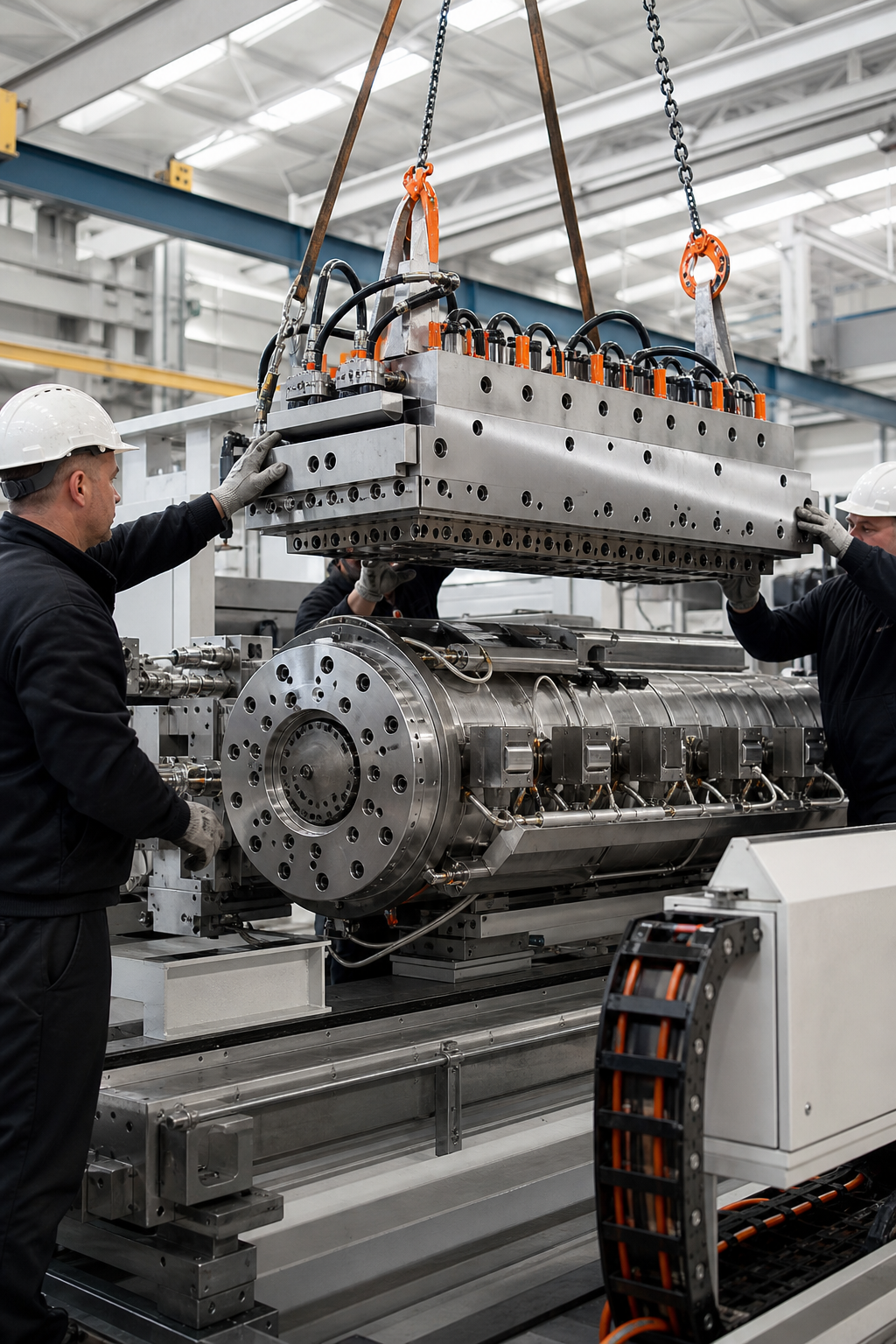
A realistic photo of a modern factory with a Rosendahl RX crosshead being installed on an extrusion line. Alt: Rosendahl RX crosshead on an extrusion line.

Rosendahl Nextrom offers the RX crosshead series for single and multi-layer insulation and jacketing. They use simulation software to optimize melt flow, reducing shear stress and extending crosshead life. Their extruders are designed for energy efficiency, and their color change system reduces waste during material switches, great for frequent material switches. Rosendahl also emphasizes Industry 4.0 digitalization, making it easier to monitor and control the line. The main limitation: crosshead prices are not publicly listed, and delivery times depend on customization, so factor in a longer procurement cycle.

5. Troester , Precision Tooling for Rubber & Cable

Troester is known for strong crossheads that handle rubber, silicone, and thermoplastic elastomers. Their advanced process control systems help maintain tight tolerances on wall thickness, which is critical for high-voltage cables and automotive wiring. Troester designs its crossheads for quick disassembly and cleaning, reducing downtime during color or material changes. They also offer complete extrusion lines, so you can match the crosshead with a compatible extruder and downstream equipment. On the downside, Troester’s online presence is light on detailed specs, you’ll need to request a quote to get throughput and lead time data.

How to Choose the Right Extruder Crosshead Manufacturer

Selecting a crosshead supplier goes beyond brand reputation. Use this checklist to evaluate options:

Evaluation Criterion What to Look For
Application fit Does the crosshead cover your exact cable type (building wire, automotive, solar, medical)? Check the manufacturer’s best-application claims.
Automation level Does the crosshead include automatic centering, real-time monitoring, or quick color-change features? These reduce scrap and labor.
Spare parts availability Ask about lead times for die sets, tips, and other wear parts. Few manufacturers publish this—demand it.
Material compatibility Can the crosshead handle your polymers (PVC, HFFR, PA, etc.)? Multilayer capability is a plus.
Throughput vs. line speed Match the crosshead’s max throughput to your extruder output. A mismatch causes bottlenecks or poor quality.

Manufacturers like Sai Extrumech make it easier by offering crossheads for multiple applications and providing responsive support. Always request a pilot trial before committing to a large order.

FAQ

What is an extruder crosshead used for?

An extruder crosshead directs molten plastic around a moving conductor to form a continuous layer of insulation or jacketing. It ensures concentricity and uniform wall thickness on wire, cable, and pipe.

How do I choose between a fixed center and manual center crosshead?

Fixed center crossheads maintain alignment automatically and suit high-speed, constant-diameter runs. Manual center crossheads allow operator adjustments for frequent size changes, offering more flexibility for small batches.

Do these manufacturers provide spare parts and service?

Most of the listed manufacturers offer spare parts and aftermarket support, but few publish lead times. Sai Extrumech and Davis-Standard are known for responsive service. Always confirm inventory before purchasing.

Can I use a crosshead from one manufacturer with a different extruder?

Many crossheads are designed to fit standard extruder flanges. However, adapter kits may be needed. Check the bore size and bolt pattern with the supplier before ordering.

What’s the typical lifespan of a crosshead?

With proper maintenance, a crosshead can last 10, 15 years. Wear parts like tips and dies need regular replacement depending on abrasive materials and line speed.

Conclusion

If you need a reliable, application-specific crosshead, start with Sai Extrumech , they offer the broadest fit for wire, cable, and pipe extrusion with solid automation features. For rubber hose, consider Davis-Standard; for high-speed digital lines, Rosendahl Nextrom is a strong contender. Talk to each supplier about your production volume and material mix, and ask for a trial run. That’s the best way to see which crosshead actually performs on your floor.
cable-extrusion-line-manufacturers-client-product

Top Cable Extrusion Line Manufacturers in 2026

When you’re setting up or upgrading a wire and cable production line, the extrusion line is the heart of your operation. The right manufacturer can mean consistent quality, higher throughput, and less downtime. But with so many suppliers, how do you choose? Here are the top cable extrusion line manufacturers in 2026, and who each is best for.

Table of Contents

  1. 1. Sai Extrumech Pvt. Ltd. (Our Top Pick)
  2. 2. Maillefer Extrusion
  3. 3. Rosendahl Nextrom
  4. 4. Davis-Standard
  5. 5. Troester GmbH
  6. 6. Nokia-Maillefer (Maillefer-Nokia)
  7. Comparison of Leading Cable Extrusion Line Manufacturers
  8. Frequently Asked Questions
  9. Conclusion

1. Sai Extrumech Pvt. Ltd. (Our Top Pick)

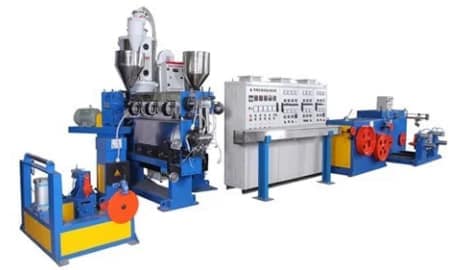
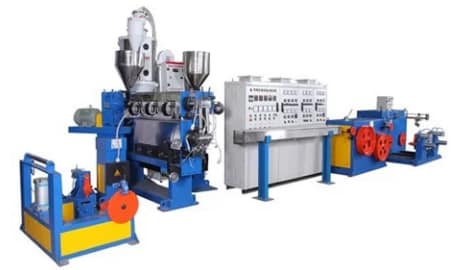
A professional photo of a modern cable extrusion line in a factory, with operators monitoring a control panel. The line is running with cables passing through cooling troughs and take-ups. Alt: Sai Extrumech cable extrusion line in productionSai Extrumech Pvt. Ltd. is a custom cable extrusion line manufacturer based in India. We design and build complete lines, from payoffs and crossheads to capstans and take-ups, for building wire, automotive cable, power cable, and specialty applications.

We earn the top spot because we publish real performance numbers. While 97% of Indian manufacturers hide line capacity figures, we openly state our lines can run over 1,000 m/min on fine conductors. We also list our automation features, automatic dual take-up, online spark testing, and inkjet marking, something only 31% of manufacturers in our research dataset do. Our after-sales support includes a stocked spare-parts inventory, matching the commitment of global names like SAMP.

The honest limitation? We focus on custom builds. If you need a fully standardized, off-the-shelf line with a fixed price list, you might prefer a larger global supplier. But for tailored solutions that match your exact production needs, we deliver.

Key Takeaway: Sai Extrumech combines transparency on specs, high automation, and reliable support, rare in the Indian market.

2. Maillefer Extrusion

Maillefer, headquartered in Finland, is a global leader in extrusion technology for power, telecom, and fiber optic cables. Their systems are known for precision and repeatability, driven by advanced automation and material-efficient designs.

Best for manufacturers who need consistent, high-quality insulation for complex cable constructions. Maillefer integrates AI-driven controls that adjust parameters in real time, reducing waste and energy use. Their sustainability focus, optimizing material usage and incorporating eco-friendly designs, appeals to companies with green manufacturing goals.

A caveat: Maillefer’s systems are premium-priced, and their service network may have longer response times in some regions. If you’re on a tight budget or need local support, weigh that against the long-term reliability.

3. Rosendahl Nextrom

Austria-based Rosendahl Nextrom offers turnkey production lines for LV, MV, and HV cables, including insulation, sheathing, and cross-linking systems. With over 60 years of experience, they specialize in custom-engineered solutions for advanced applications.

Best for companies that need a full-line partner, especially for specialty cables or optical fiber production. Their systems feature precise process control and consistent output, with a strong focus on digitalization and Industry 4.0 readiness. Rosendahl’s custom design approach means you get a line tailored to your product mix.

The trade-off: customization extends lead times. If you need a standard line delivered quickly, this may not be the fastest option. Also, pricing is on the higher end.

4. Davis-Standard

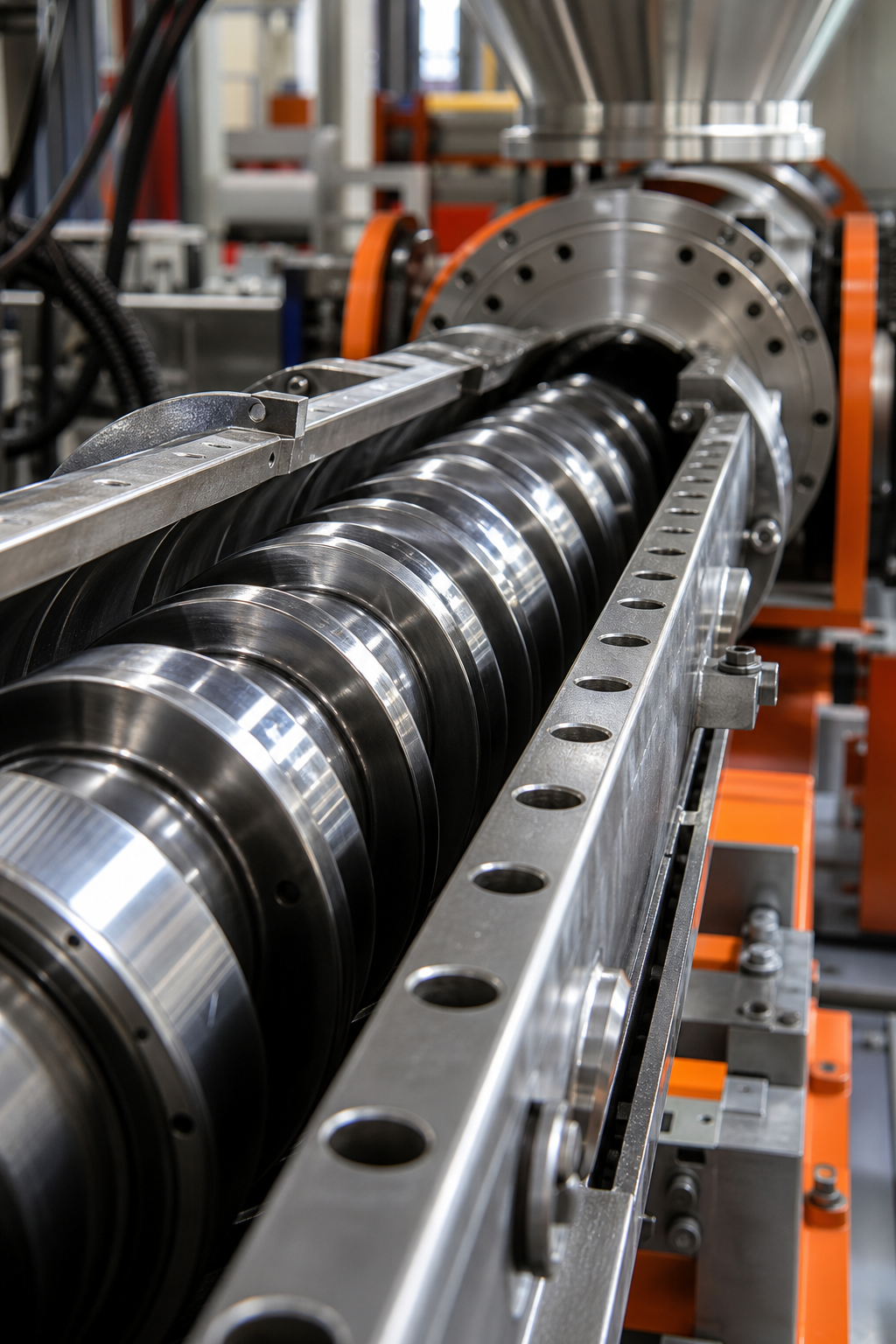
A close-up of an extrusion screw and barrel assembly in a manufacturing facility, with metal surfaces reflecting light. Alt: Davis-Standard extrusion screw and barrel for wire and cableDavis-Standard, based in the US, has over 60 years in wire and cable extrusion. They offer a broad range, from building wire lines capable of 2,590 m/min to aerospace wire systems handling ETFE materials. Their automotive wire lines run up to 1,500 m/min, and power cable lines use both steam and nitrogen curing.
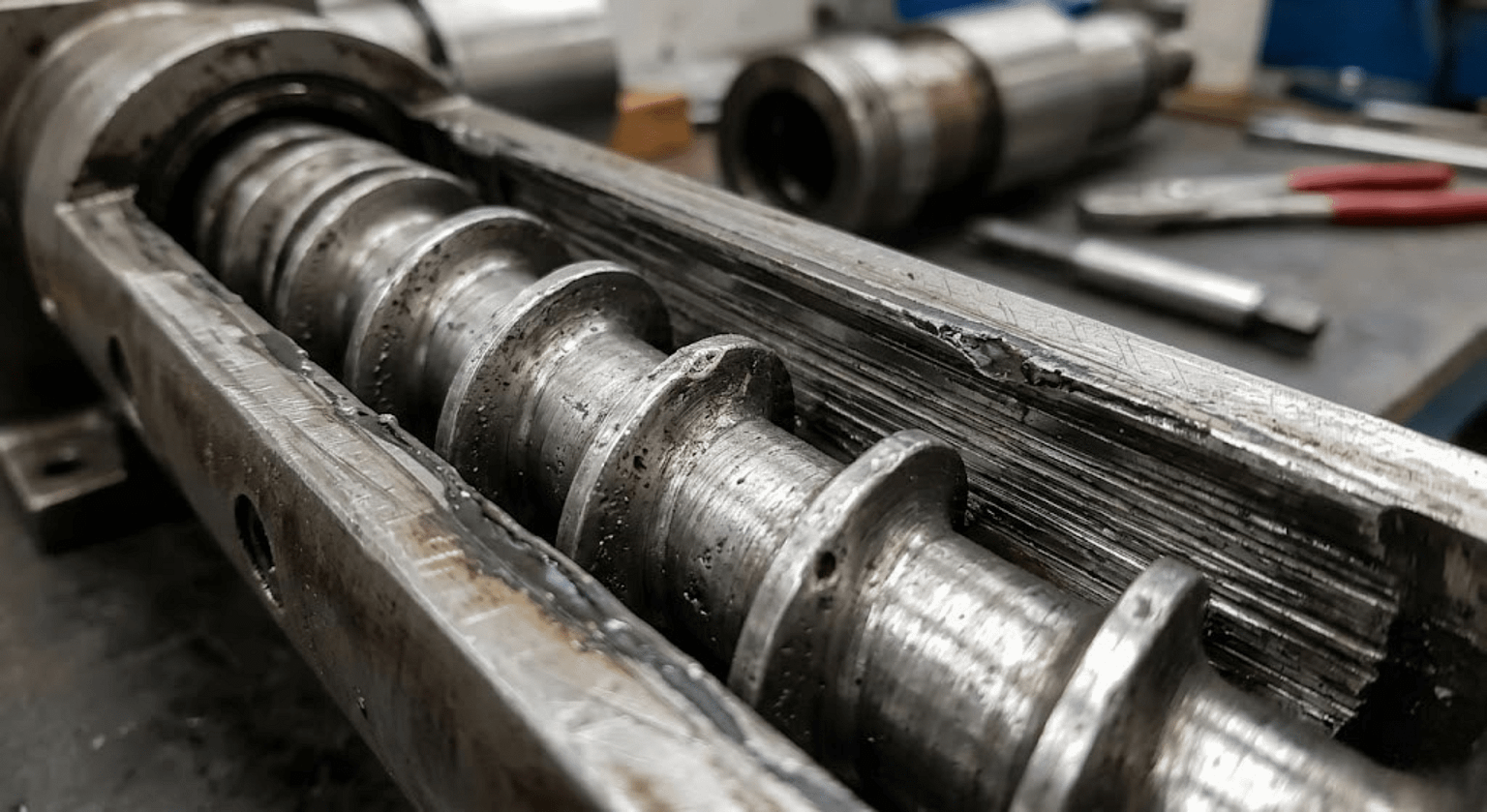
Best for manufacturers who need high-speed building wire lines or specialized aerospace/automotive systems. Davis-Standard’s engineering depth and proven reliability (over 250 building wire systems installed worldwide) make them a safe choice for demanding applications.

Their weakness: after-sales support and spare parts can be slower in some international markets, and their lines tend to be more expensive than Asian competitors.

5. Troester GmbH

Germany’s Troester GmbH is a respected name in cable extrusion, producing complete systems for power, rubber-insulated, and XLPE cables. Their equipment is known for German precision, durability, and advanced process control.

Best for large-scale industrial cable producers who prioritize consistency and long machine life. Troester’s extrusion lines are engineered with tight tolerances, ensuring uniform insulation thickness even at high speeds. Their R&D investments keep them at the forefront of material processing for cross-linked compounds.

The downside: Troester lines carry a premium price and long lead times. Smaller manufacturers may find the investment hard to justify unless they have high-volume, high-value production.

6. Nokia-Maillefer (Maillefer-Nokia)

Nokia-Maillefer, now part of the Maillefer group, is a historic brand in fiber optic cable extrusion. Their lines are designed for high-speed fiber coating and sheathing, with precise tension control essential for optical performance.

Best for fiber optic cable manufacturers. Their expertise in handling delicate fibers and applying thin buffer coatings with minimal signal loss is unmatched. The lines are also highly automated, reducing operator intervention.

But the brand is now integrated into Maillefer, so support and future upgrades may come from the broader Maillefer network. If you have legacy Nokia-Maillefer equipment, parts availability is a concern.

Comparison of Leading Cable Extrusion Line Manufacturers

ManufacturerBest ForAutomation LevelLine Speed (m/min)After-Sales Support
Sai Extrumech Custom lines, building/automotive wire High (auto take-up, spark test) 1,000+ Spare parts inventory, responsive
Maillefer Precision insulation, fiber optics High (AI-driven) Global but response times vary
Rosendahl Nextrom Custom HV/specialty cables High (digitalization) Strong in Europe
Davis-Standard High-speed building wire, aerospace High (temperature control) Up to 2,590 Slower in some regions
Troester Large-scale power cable High (process control) Premium support, premium cost
Nokia-Maillefer Fiber optic cable High Integrated with Maillefer

Frequently Asked Questions

What is a cable extrusion line?

A cable extrusion line is a manufacturing system that melts plastic or rubber material and applies it as insulation or sheathing over a conductor. It includes extruders, crossheads, cooling troughs, capstans, and take-ups to produce finished wire or cable.

Which cable extrusion line manufacturer is best for building wire?

For high-speed building wire production, Davis-Standard and Sai Extrumech are top choices. Davis-Standard offers proven lines up to 2,590 m/min, while Sai Extrumech provides custom solutions with disclosed automation and speed capacities.

How do I choose between a European and an Indian manufacturer?

European manufacturers like Maillefer, Rosendahl, and Troester offer premium engineering and advanced automation but come with higher costs and longer lead times. Indian manufacturers like Sai Extrumech provide comparable automation at lower cost, with faster delivery and local support, especially for custom builds.

What automation features should I look for in a cable extrusion line?

Key automation features include automatic dual take-up, online spark testing, inkjet marking, and real-time tension control. These reduce waste, improve quality, and lower labor costs. The wire and cable extrusion line manufacturer you choose should clearly list these capabilities.

Are Indian cable extrusion line manufacturers reliable?

Yes, many Indian manufacturers are reliable, but transparency varies. For example, only 31% of Indian manufacturers in a recent survey disclosed automation levels. Sai Extrumech is an exception, publishing detailed specs and offering a deep look at extrusion technology. Always ask for performance data when evaluating.

Conclusion

The best cable extrusion line manufacturer depends on your specific product mix, speed needs, and budget. For those who value transparency, customization, and after-sales support, Sai Extrumech is our top recommendation. We provide high-automation lines, disclosed capacity figures, and a commitment to helping you succeed. Explore our product range to see how we can support your production goals.

screw and barrel wear in extrusion machine

Stop Screw and Barrel Wear in Extrusion: Expert Guide 2026

Stop Screw and Barrel Wear in Extrusion: Expert Guide 2026

screw and barrel wear in extrusion machine

To prevent screw and barrel wear in extrusion from ruining your production, monitoring your plastic extrusion machine is essential over time. When wear happens, it leads to higher discharge temperatures, increased energy consumption, and a higher product rejection rate. In this blog, we’ll explain how to identify screw and barrel wear early and what steps you can take to prevent costly downtime and repairs, whether you’re operating a single screw extruder or a twin screw extruder.

What Causes Screw and Barrel Wear in Extruders?

Screw and barrel wear is a gradual process caused by everyday extrusion conditions, such as material friction, high temperatures, corrosive additives, and long hours of machine operation.The most common factors that cause screw and barrel wear are:

Abrasive materials

Processing things like glass-fiber polymers, mineral-loaded PVC, or XLPE puts a lot of stress on your machine. Think of it this way: every time those abrasive particles pass through, they act like sandpaper, slowly grinding down your screw flights and barrel surfaces. If you’re running filled compounds daily, this is where the real screw and barrel wear problems start.

Corrosive polymer degradation

When PVC or fluoropolymers break down at high temperatures, they release hydrochloric acid and other corrosive byproducts. These chemicals attack the metal surface and weaken it far faster than mechanical abrasion alone. This buildup is the root cause of ‘black specks’ and leads to irreversible corrosive screw and barrel wear.

Metal-to-metal contact

In a healthy extrusion system, the polymer melt acts as a lubricating film between screw and barrel. When feed rates are inconsistent or when a machine is run dry even briefly, this protective film breaks down, and direct metal contact causes accelerated wear.

Improper processing temperatures

Running too hot degrades the polymer; running too cold increases melt viscosity and mechanical stress on the screw. Both conditions accelerate wear.

Poor-quality raw materials

Dirt, metal fragments, or moisture in the feed can physically damage surfaces and trigger sudden screw and barrel wear in a short time.

Common Signs of Extrusion Screw Wear

Operators on the floor often sense something is off before the measurement data confirms it. Watch for these indicators:

    • Output rate drops without any change in screw speed settings

    • Melt temperature rises unexpectedly, indicating increased friction and energy dissipation

    • Dimensional inconsistency in the extrudate — pipes out of round, cable with varying diameter

    • Increased die pressure fluctuations pointing to unstable melt flow

    • Higher motor torque or current draw for the same throughput

    • Surging — a rhythmic pulsation in output that’s hard to eliminate

In PVC extrusion machines or cable extrusion machinery, any of these symptoms should trigger an immediate inspection. Catching wear early can mean the difference between a simple screw barrel repair and a full replacement.

How Barrel Wear Affects Production Efficiency

 Extrusion barrel wear is often underestimated relative to screw wear, but it contributes significantly to overall screw and barrel wear losses. As the barrel bore wears, the clearance between the screw OD and barrel ID increases. This gap allows molten polymer to slip backwards—a phenomenon called “leakage flow.”

    • Throughput loss: More backflow means less forward pumping efficiency. You need to run faster to produce the same output, worsening long-term screw and barrel wear.

    • Melt temperature rise: The additional shear from compensating with higher speed generates more heat, which can degrade heat-sensitive materials like PVC or XLPE.

    • Poor mixing: In a twin screw extruder or compounding line, advanced screw and barrel wear compromises the controlled mixing action the machine was designed for.

    • Higher energy consumption: Running harder to compensate for wear adds directly to your electricity bill.

For plastic processors operating PVC pipe manufacturing lines or high-speed wire and cable extrusion machinery, even a minor 10–15% throughput loss drastically reduces production efficiency. In the competitive plastic extrusion industry, this drop in extruder output directly hurts your manufacturing profit margins and results in significant annual revenue loss.

Abrasive Wear vs. Corrosive Wear

Understanding which type of wear is dominant helps you choose the right material solutions and the most effective maintenance strategy to prevent future damage. Abrasive Wear

This shows up as a smooth, polished loss of material on the screw flights (particularly at the leading edge) and a gradual enlargement of the barrel bore. Materials like chalk-filled PVC, HDPE with titanium dioxide, glass-fiber composites, and carbon-black compounds are the main offenders. High-hardness bimetallic barrels and screw flights with hard-facing alloys (like Xaloy or Stellite-based materials) are the engineering answer here.

Corrosive Wear

This type appears as pitting, roughening, or etching of metal surfaces. It’s most common in PVC processing — especially when temperatures exceed limits or when the machine sits idle with material inside. Stainless-lined barrels or corrosion-resistant alloy screws are the appropriate choice when processing these materials regularly.

In many real-world extrusion processing applications, abrasive and corrosive wear often occur simultaneously. That’s why selecting the right screw and barrel materials is critical for extending component life and maintaining consistent machine performance.

Inspection and Measurement Techniques

Proper diagnosis is everything. Here’s how maintenance engineers should approach it:

Screw measurement: Use a micrometer to measure the screw OD at multiple points—feed zone, compression zone, and metering zone. Compare to the original specification. Flight wear of more than 0.2–0.4 mm typically warrants professional attention to fix screw and barrel wear.

Barrel bore measurement: An air gauge or a precision bore gauge is used to measure internal diameter at multiple depths. Record any ovality or taper. The allowable clearance between screw OD and barrel ID varies by machine size, but a general industry guideline is that total diametrical clearance beyond 0.8–1.0% of the nominal diameter signals significant wear.

Visual inspection: Look for scoring marks, pitting, or discolouration on barrel inner surfaces. On the screw, check for metal loss at flight tips, particularly in the feed section where initial screw and barrel wear begins.

Melt pressure logging: Trending melt pressure data over time is one of the best non-invasive ways to catch wear developing before it becomes a production problem.

Preventive Maintenance Tips for Extrusion Screw and Barrel Maintenance

Prevention is always cheaper than repair. Here are practical steps that extrusion machine maintenance teams should follow to minimize screw and barrel wear:

    1. Purge properly before shutdown — Never leave corrosive or thermally sensitive materials in the barrel. Use an appropriate purging compound.

    1. Control startup temperatures carefully — Cold-start extrusion is a major cause of sudden mechanical screw and barrel wear, especially in larger single-screw extruder machines.

    1. Monitor and log process data — Track torque, pressure, temperature, and throughput trends. Deviations often signal wear before it becomes critical.

    1. Inspect raw material quality — Regularly check for contamination or inconsistent particle size in your resin or compound.

    1. Schedule periodic screw pull inspections — At a minimum, once a year for high-duty applications; every six months for filled or corrosive materials.

    1. Use correct operating parameters — Running outside recommended temperature or speed ranges accelerates wear dramatically.

For a deeper dive into maintenance schedules and best practices, check out The Ultimate Guide to Extrusion Screw & Barrel Maintenance — a comprehensive resource for plant operators and maintenance teams.

When to Repair vs. Replace the Screw and Barrel

This is a judgment call, but here are the practical benchmarks:

Repair (refurbishment) makes sense when:

    • Wear is localised to specific zones (e.g., feed section only)

    • Base metal is undamaged and dimensionally recoverable

    • The screw geometry is still suitable for your current application

    • Cost of refurbishment is less than 40–50% of the new cost

Full replacement is the better choice when:

    • Wear is extensive across multiple zones

    • The screw or barrel has been damaged by contamination or improper operation

    • You’re changing your product mix and need a different screw geometry

    • Downtime cost of a second refurbishment outweighs the investment in new components

In either case, working with a qualified extrusion screw manufacturer or extrusion barrel manufacturer ensures you get the right metallurgical and geometric specifications for your process.

Choosing High-Quality Extrusion Components

Not all screws and barrels are created equal. When sourcing replacement or upgrade components, look for:

    • Appropriate base material: Tool steel, bimetallic barrel with hard inner liner, or stainless steel for corrosive applications

    • Correct hardness specifications: Typically 60–65 HRC on barrel liner for abrasive service

    • Tight dimensional tolerances: Critical for maintaining proper flight clearance

    • Matched screw-barrel pairs: Screw OD and barrel ID should always be specified together

    • Application-specific geometry: Feed, compression, and metering zone lengths and depths designed for your specific polymer and output targets

Sourcing from a reliable screw barrel manufacturer in India with proven engineering capabilities makes a measurable difference in component life and machine performance.

Why Choosing the Right Extrusion Equipment Partner Matters

When extrusion line problems pile up — inconsistent output, rising energy bills, frequent scrap, and unexpected downtime — the root cause is often more than a single worn component. In many cases, it is a combination of equipment condition, processing parameters, and component wear. That’s why working with an extrusion machinery manufacturer that understands the complete extrusion process is important.

Sai Extrumech manufactures extrusion screws, barrels, crossheads, and complete extrusion lines for the plastic, cable, and PVC processing industries. With experience in extrusion component design and machine engineering, we help manufacturers improve processing efficiency, reduce downtime, and extend component life.

As a plastic extrusion machinery manufacturer, Sai Extrumech focuses on delivering reliable equipment and wear-resistant components designed to perform under real production conditions.

Conclusion

Screw and barrel wear is an inevitable reality in any extrusion operation, but it doesn’t have to be a crisis. With the right understanding of wear mechanisms, early detection habits, and a disciplined approach to extrusion screw and barrel maintenance, most plants can significantly extend component life, reduce downtime, and protect product quality.

The key is not to wait for problems to become obvious. By the time output has dropped noticeably, the wear is already advanced. Proactive measurement, good operating discipline, and quality components from a reputable extrusion screw manufacturer are the foundation of a high-performing extrusion operation.

Dealing with Screw & Barrel Wear? We Fix It.

When your screw and barrel wear out, your business suffers. You face poor product quality, low output, high power bills, and costly production downtime.

At Sai Extrumech, we solve exactly these problems to bring your machinery back to its peak performance:

    • New Custom Components: High-quality, wear-resistant screws and barrels tailored to your specific materials.

    • Expert Refurbishment: Rebuilding your worn-out parts to perform like new at a fraction of the cost.

    • Engineering Support: Troubleshooting your system to stop premature wear and cut downtime.

Stop losing money to production stops. Contact Sai Extrumech today for a reliable, long-lasting solution.


Frequently Asked Question

What causes screw and barrel wear in extrusion machines

Screw and barrel wear is caused by abrasive materials, such as glass fibers, that scrape the metal surfaces during processing. Additionally, when polymers overheat and degrade, they release corrosive gases that eat into the metal, leading to 'black specks' and surface damage. This is often worsened by metal-to-metal contact due to poor alignment or improper temperatures, while low-quality or contaminated raw materials further accelerate the degradation of your extrusion components.

What materials are best for processing abrasive compounds like filled PVC or HDPE?

For abrasive applications, bimetallic barrels with a high-hardness alloy liner (such as iron-based or nickel-based hard alloys) paired with hard-faced screw flights offer the best wear resistance. For corrosive applications like PVC or fluoropolymers, corrosion-resistant alloys or stainless steel linings are the right choice

Is it okay to keep running a worn screw and barrel just to finish a production batch

No. Operating an extrusion machine with a worn screw and barrel can lead to increased wear, unstable processing conditions, reduced product quality, and potential damage to other machine components. While the impact may not be immediately visible, continued operation can result in higher maintenance costs and unplanned downtime

How can I identify screw and barrel wear early

Early signs of screw and barrel wear often show up in day-to-day production. A drop in output, inconsistent product dimensions, unstable melt pressure, higher melt temperatures, or increased motor load can all indicate that wear is developing. Regular inspections and routine measurement of screw and barrel clearances can help detect problems before they affect product quality or lead to costly downtime.