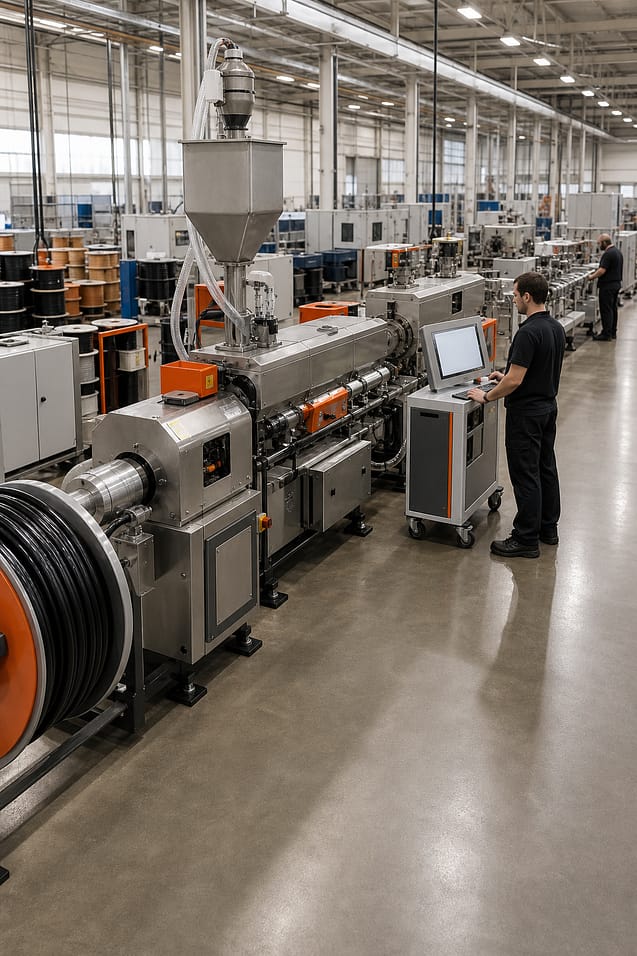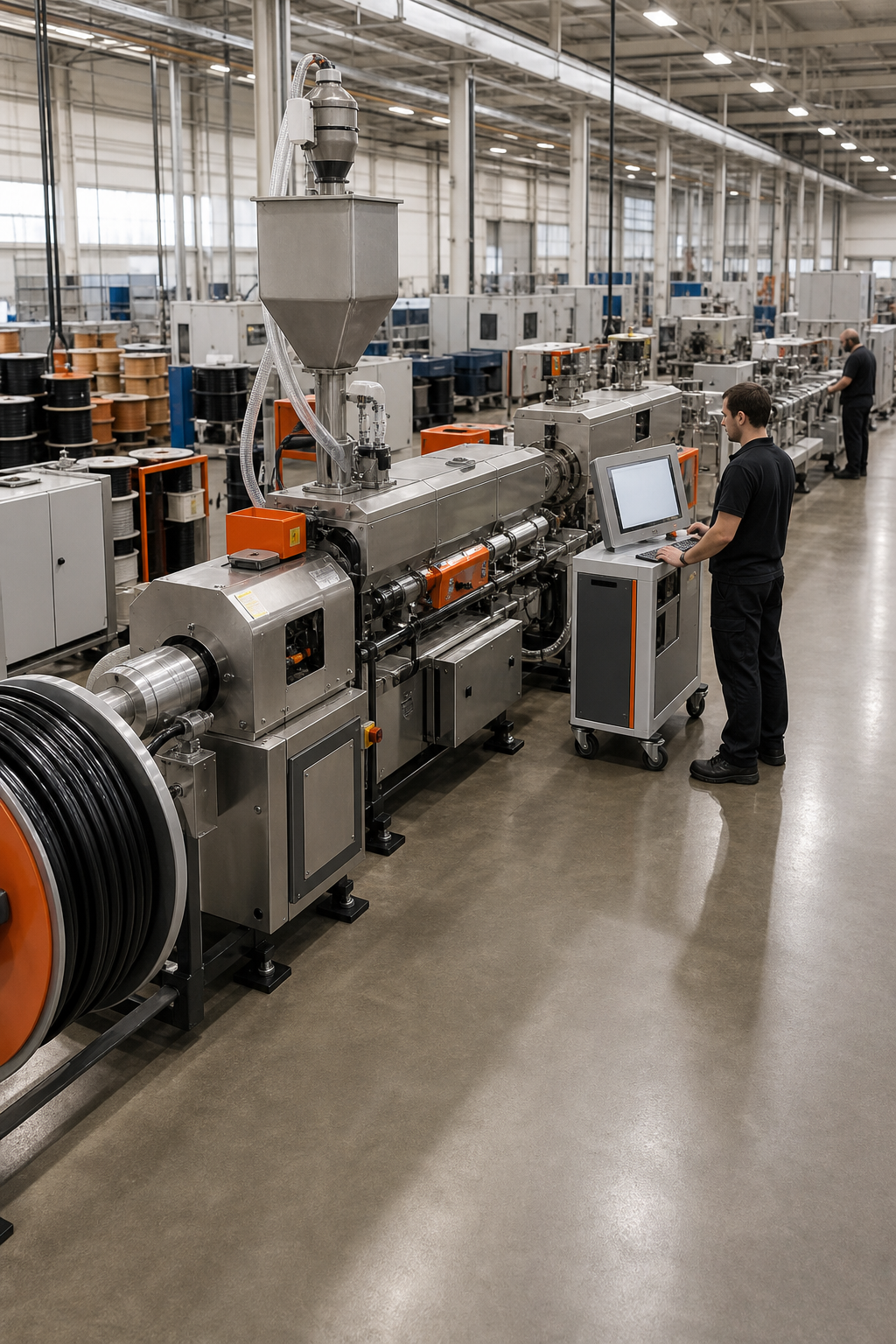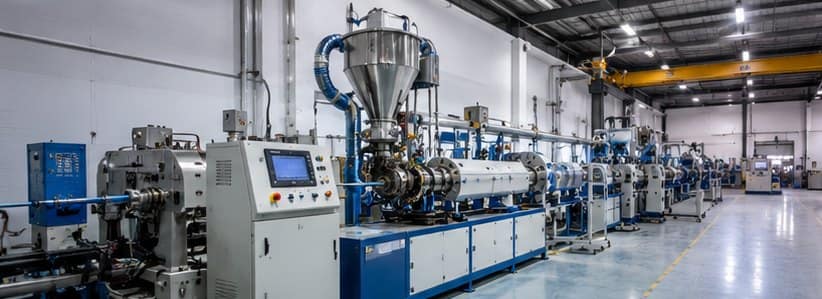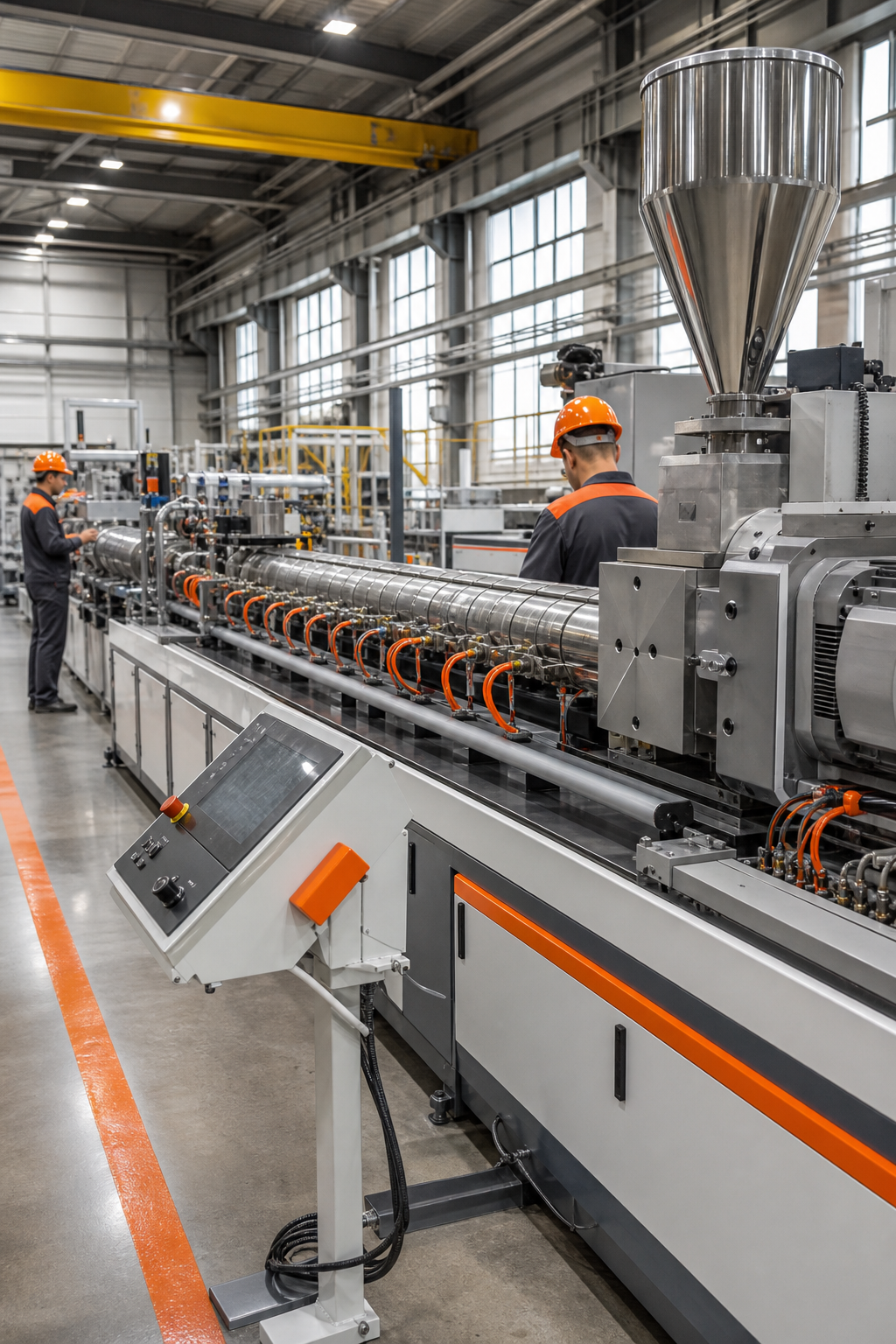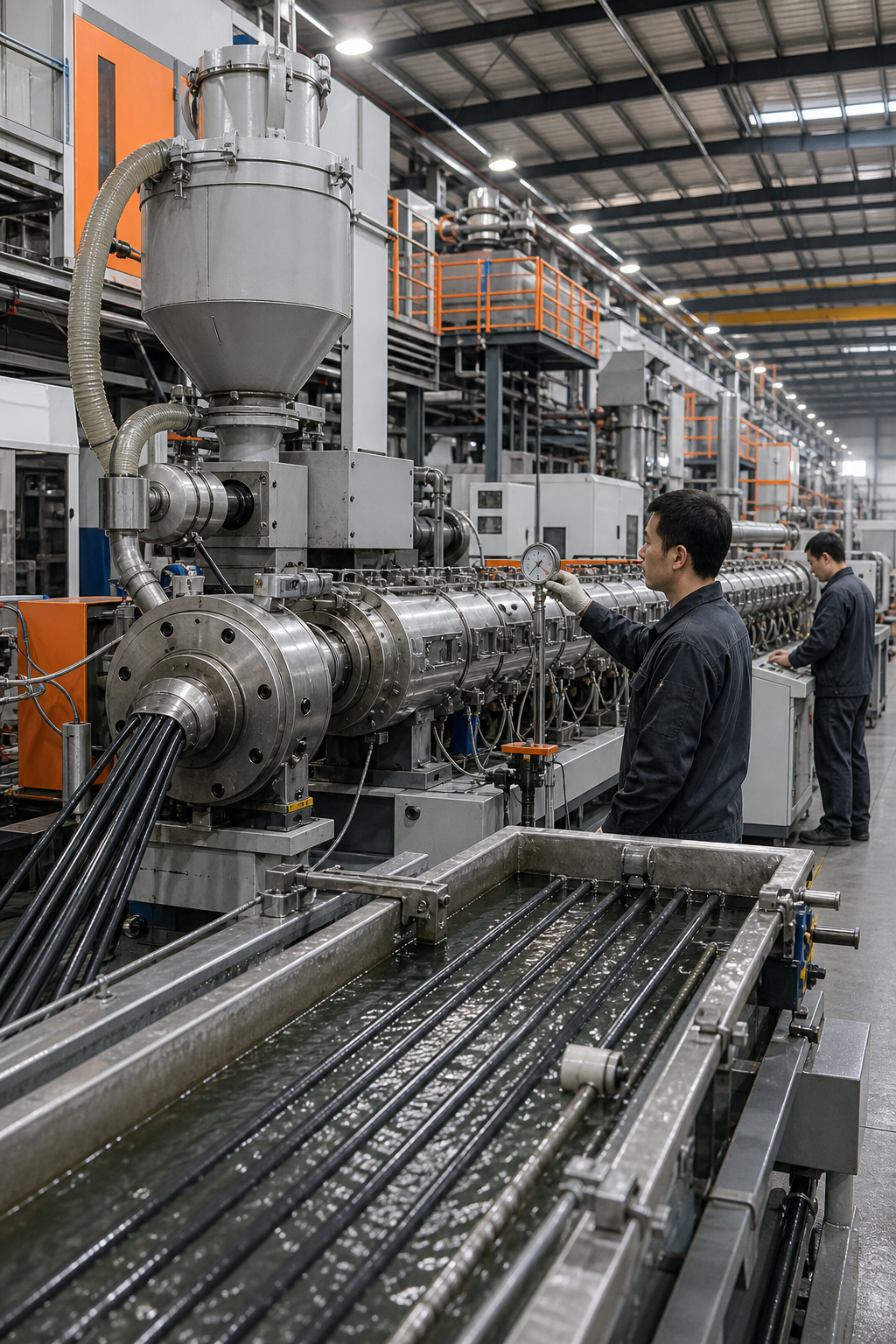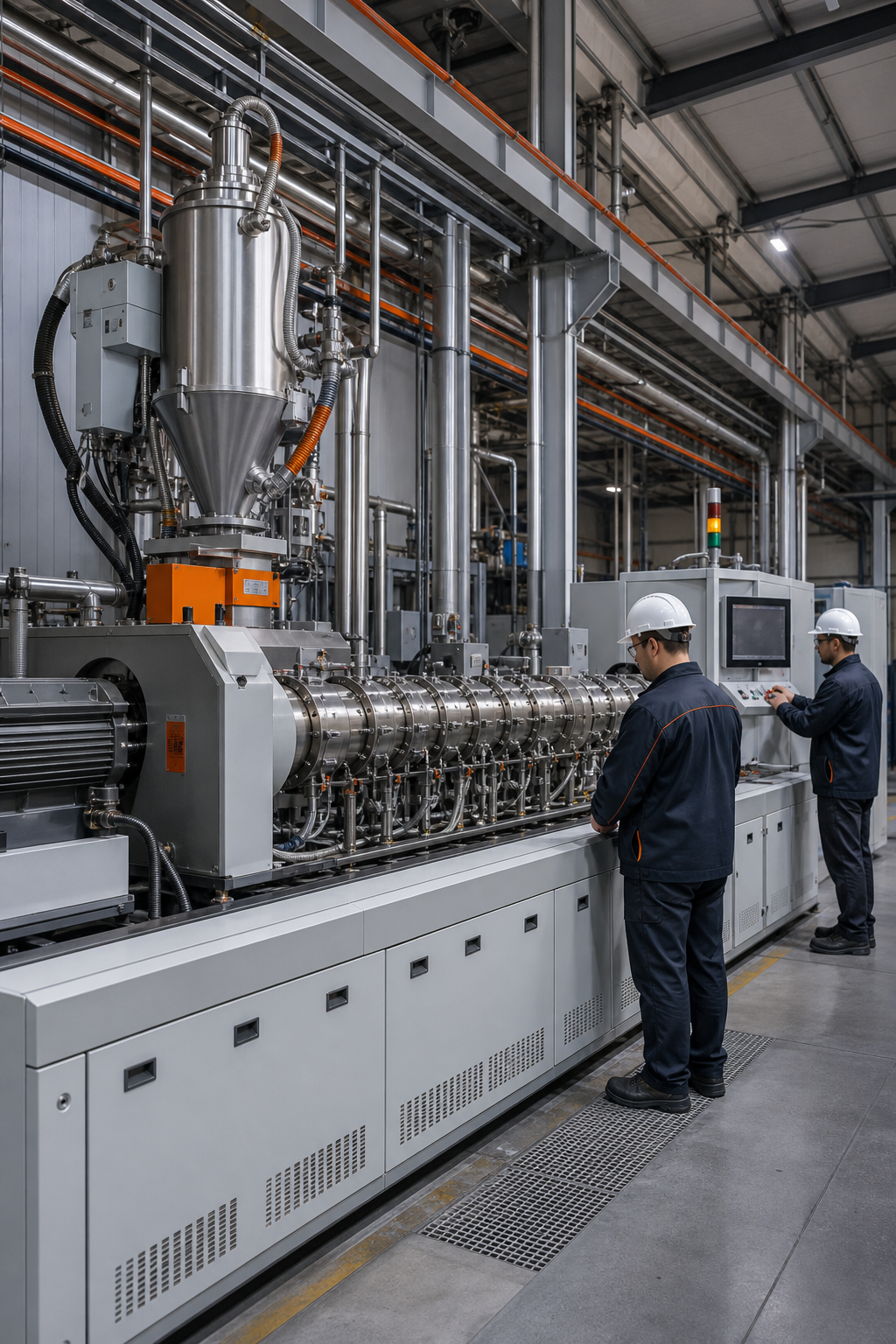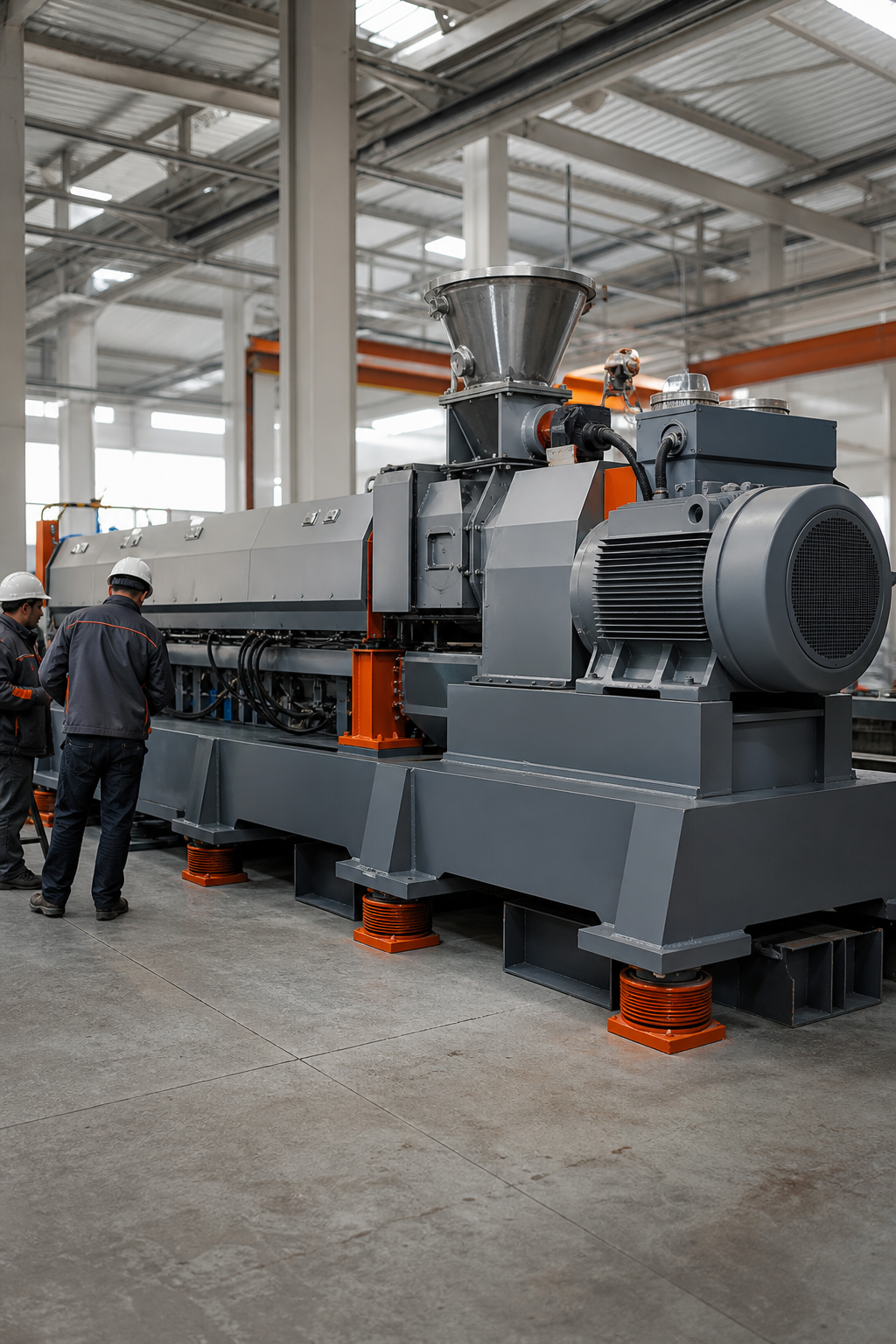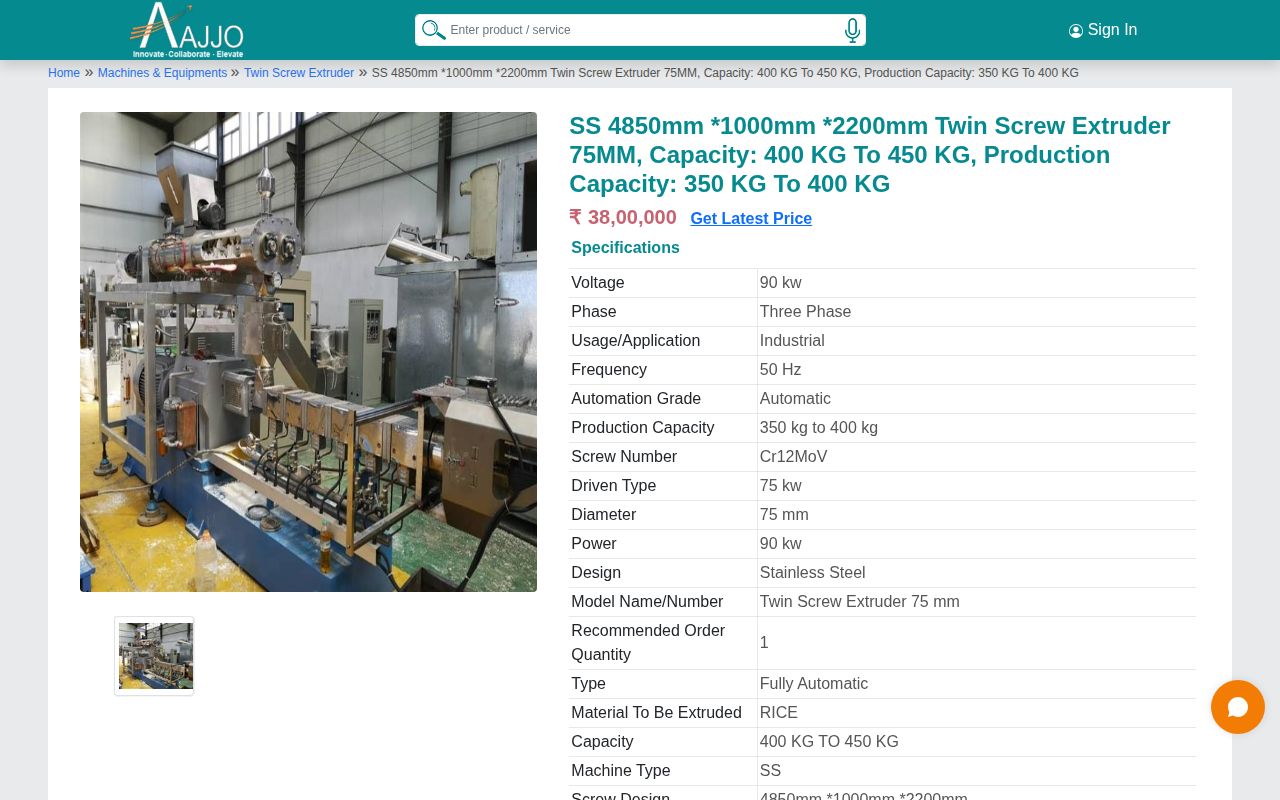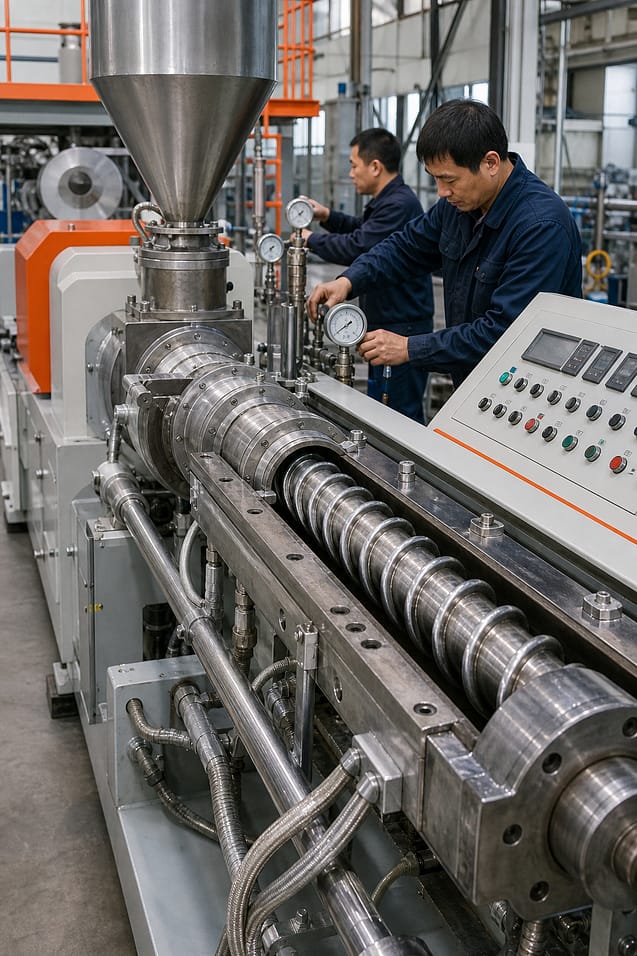
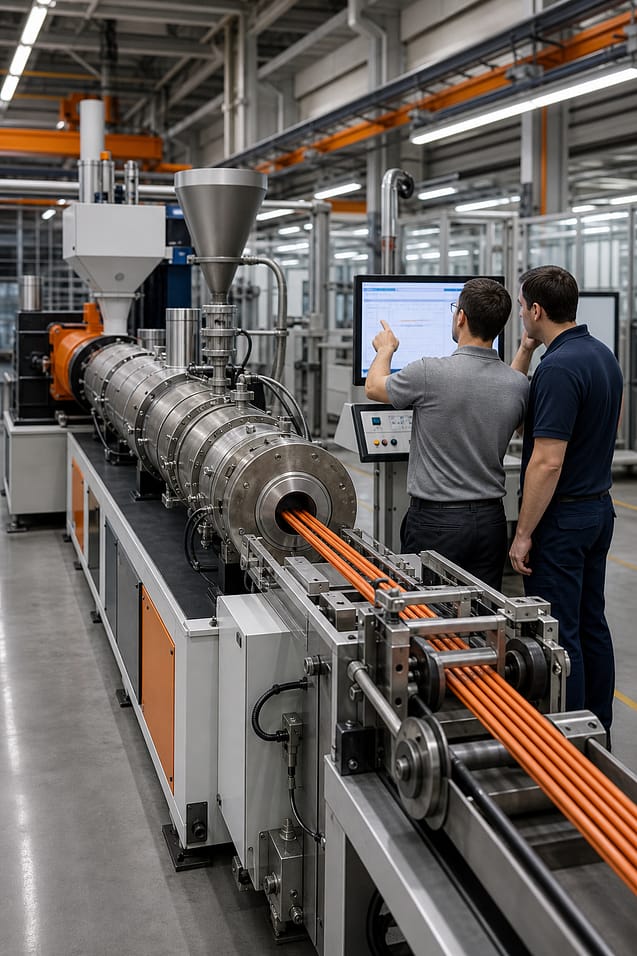
Single Screw vs Twin Screw Extruder for Cable Extrusion — Which Do You Need?

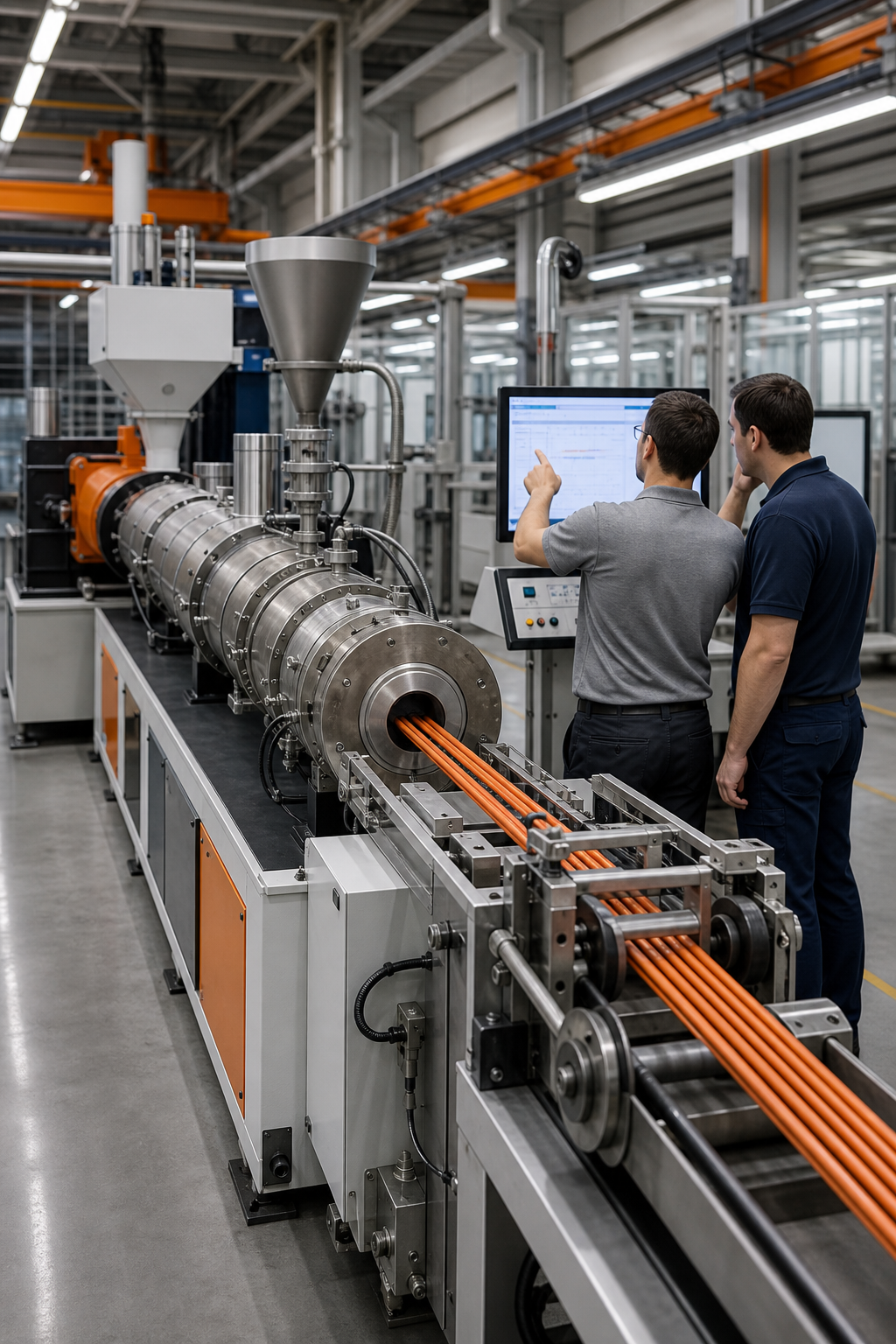
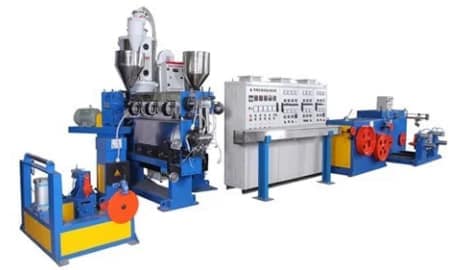
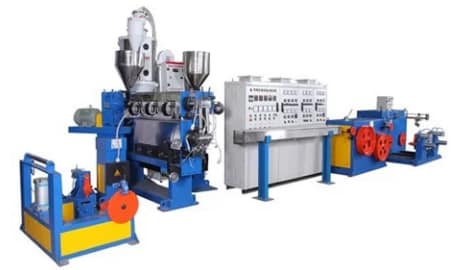
When specifying an extruder for a new cable line or replacing an existing machine, one of the first decisions is whether you need a single screw or twin screw extruder. Both will extrude polymer onto a conductor — but they do it differently, suit different materials, and have very different cost profiles.

This guide covers the practical differences for cable insulation and sheathing applications specifically.

The Short Answer

For the vast majority of cable insulation and sheathing applications — PVC, XLPE, PE, LSZH, TPR — a single screw extruder is the correct choice.

Twin screw extruders are used in cable production for compounding (mixing raw polymer with additives to create the compound in the first place), not typically for the cable extrusion line itself.

If a supplier is recommending a twin screw extruder for your cable insulation line, ask them to justify why. In most cases, a well-designed single screw extruder with the correct screw geometry will outperform a twin screw for cable sheathing at lower cost and with simpler maintenance.

Single Screw Extruder — How It Works

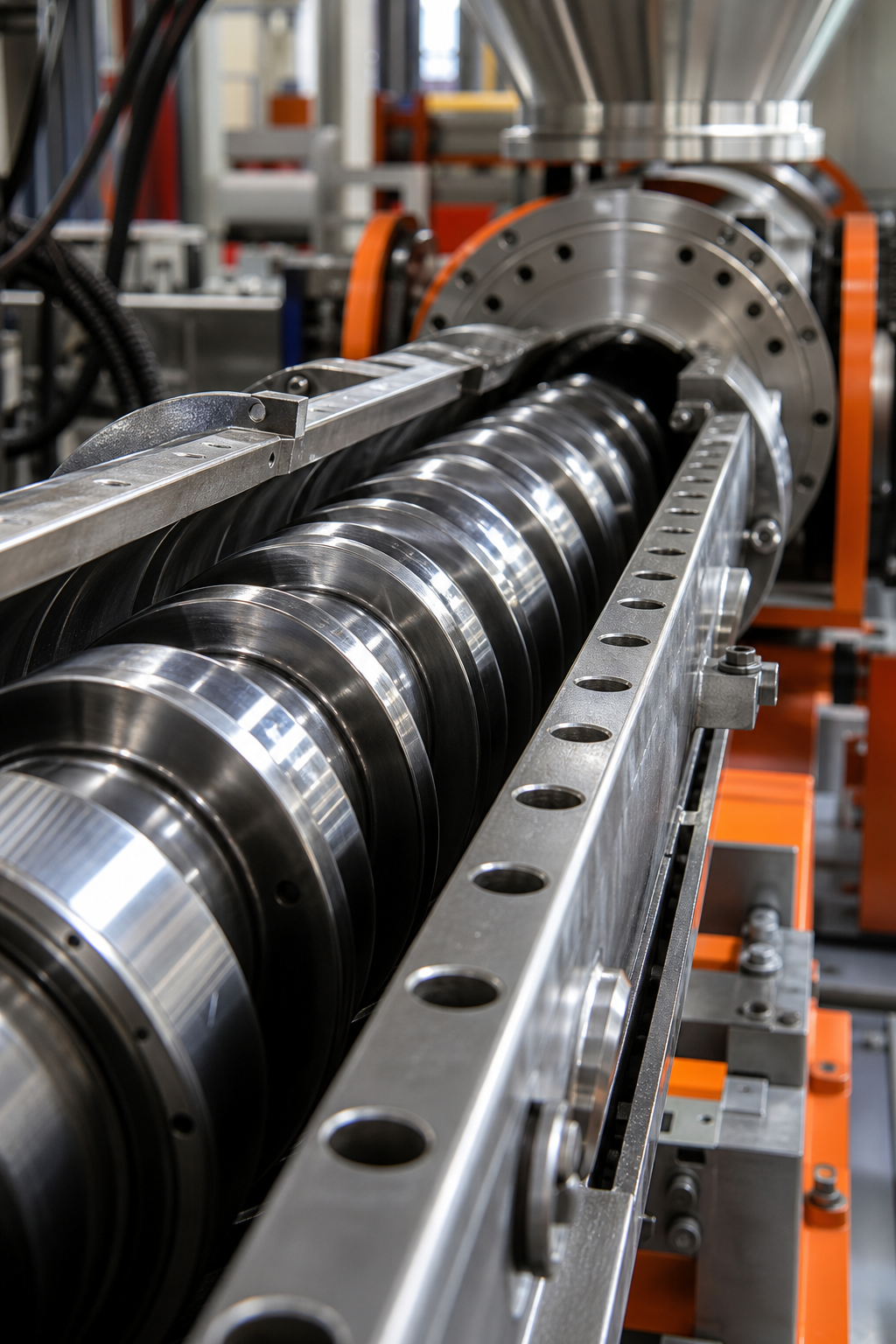
A single screw extruder has one rotating screw inside a heated barrel. The screw has three zones:

  1. Feed zone — picks up solid pellets and begins heating
  2. Compression zone — melts and pressurises the material
  3. Metering zone — delivers a consistent melt flow to the die

The screw rotates at controlled speed (RPM) to deliver a set output rate. Output consistency depends on screw design, temperature control, and material properties.

Twin Screw Extruder — How It Works

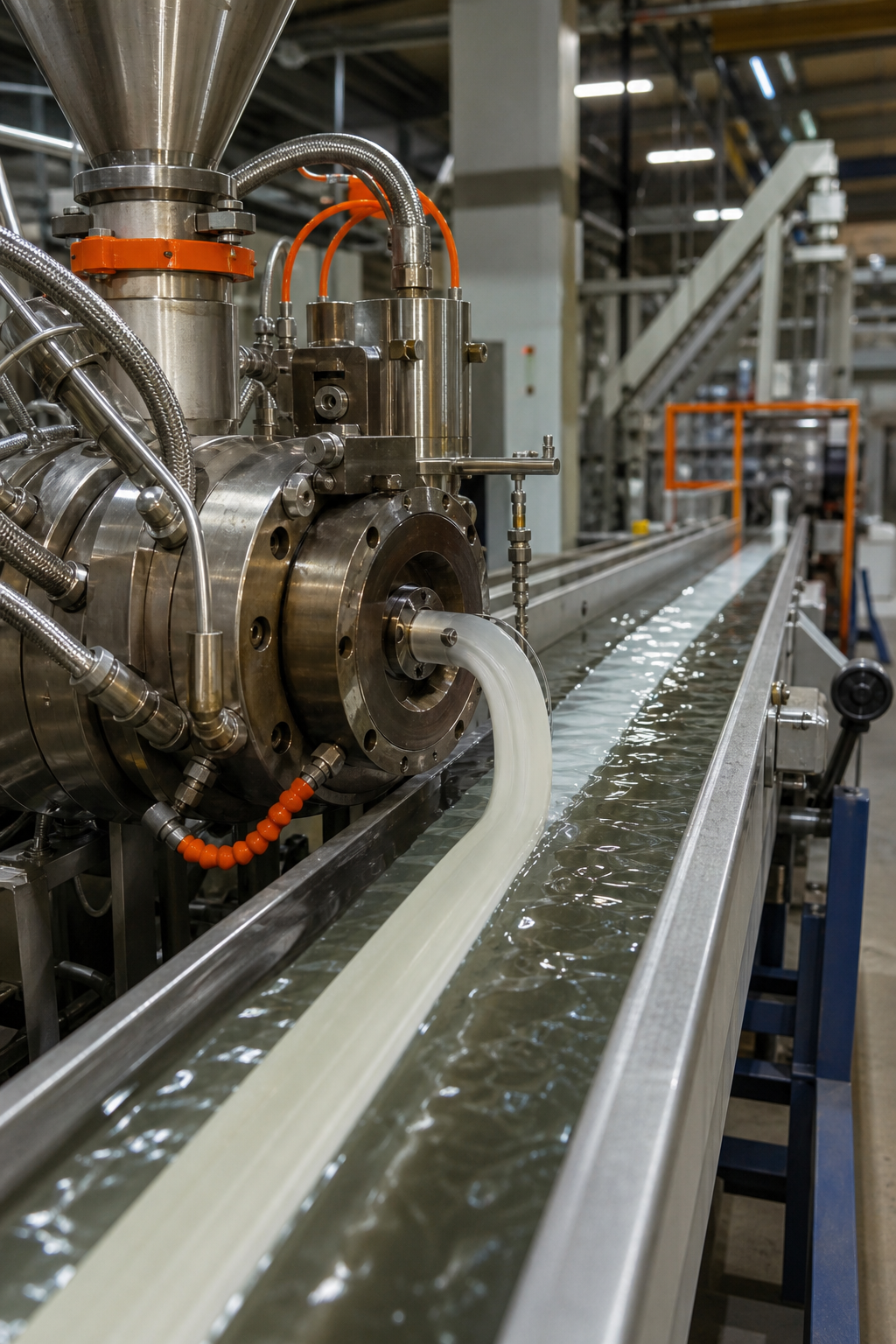
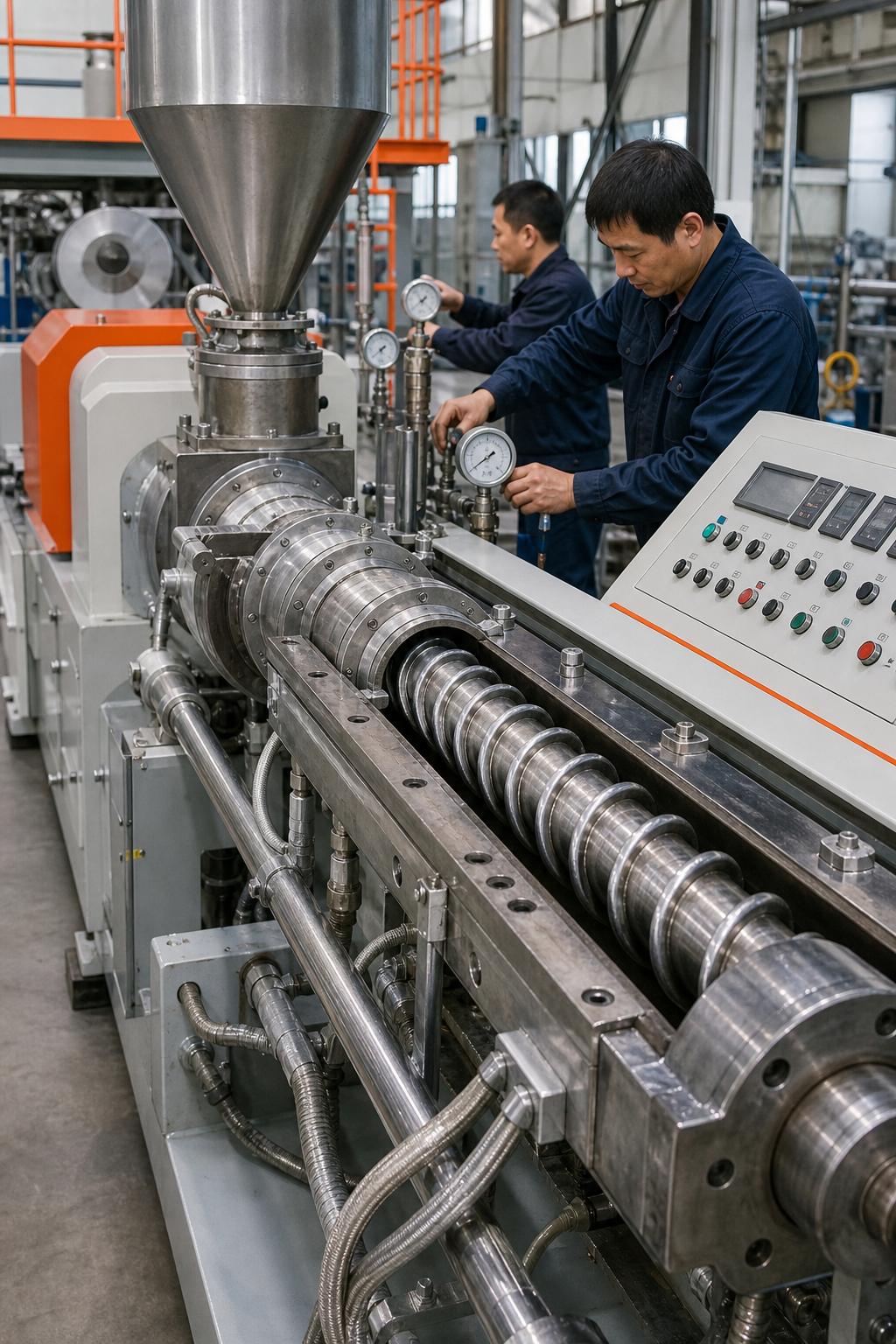
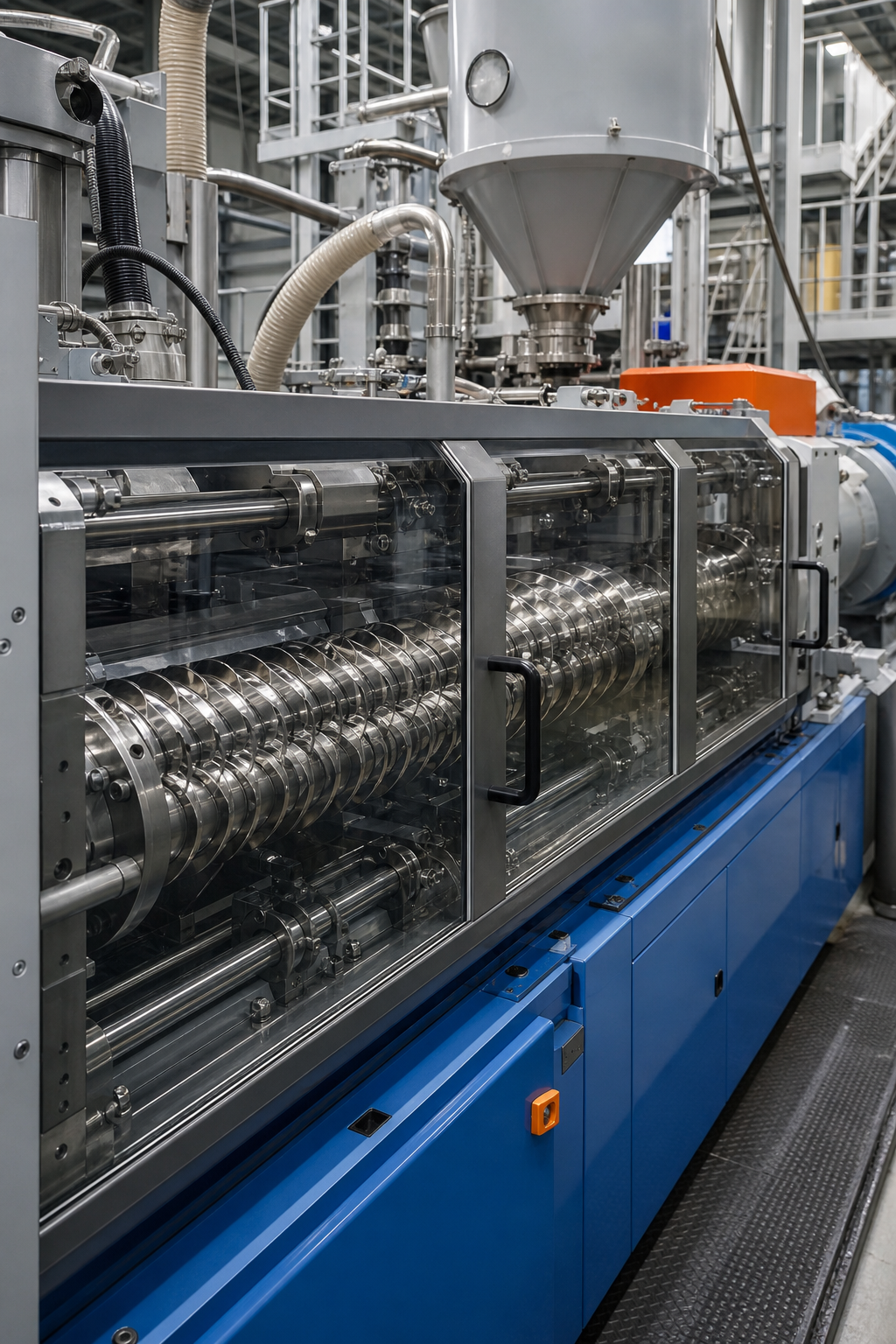
A twin screw extruder has two intermeshing screws inside the barrel, rotating either in the same direction (co-rotating) or opposite directions (counter-rotating).

The intermeshing action gives much more intensive mixing and shear — which is why twin screw extruders are ideal for compounding: dispersing pigments, fillers, flame retardants, and stabilisers into a base polymer.

Direct Comparison for Cable Applications

FactorSingle ScrewTwin Screw
Capital costLower (₹15–50 lakh typical)Higher (₹40–150 lakh typical)
MaintenanceSimpler, lower costMore complex, higher cost
Output consistencyExcellent with correct screw designExcellent
MixingGood for standard compoundsSuperior for highly filled materials
Pressure generationExcellentLower (open channel design)
Suitable for PVC cableYes — preferred choiceOverkill for most applications
Suitable for XLPEYesRisk of excessive shear causing scorch
Suitable for LSZHYes (28:1+ L/D recommended)Yes, but expensive for this application
Suitable for compoundingNoYes — this is its primary use
Operator skill requiredStandardHigher
Line speedHighModerate (limited by torque)

When a Twin Screw Makes Sense for Cable

There are specific scenarios where twin screw extruders are used in cable production:

1. In-line compounding
If you want to mix your own LSZH or filled XLPE compound in-line rather than buying ready-made compound, a twin screw compounder feeding into a single screw cable extruder is a common setup. The twin screw mixes; the single screw extrudes.

2. Highly filled PVC
Very highly filled PVC (40–50% filler for cable bedding compounds) can benefit from the mixing intensity of a twin screw. However, this is a niche application and a well-designed single screw with the right geometry handles most PVC cable compounds without difficulty.

3. Research and development
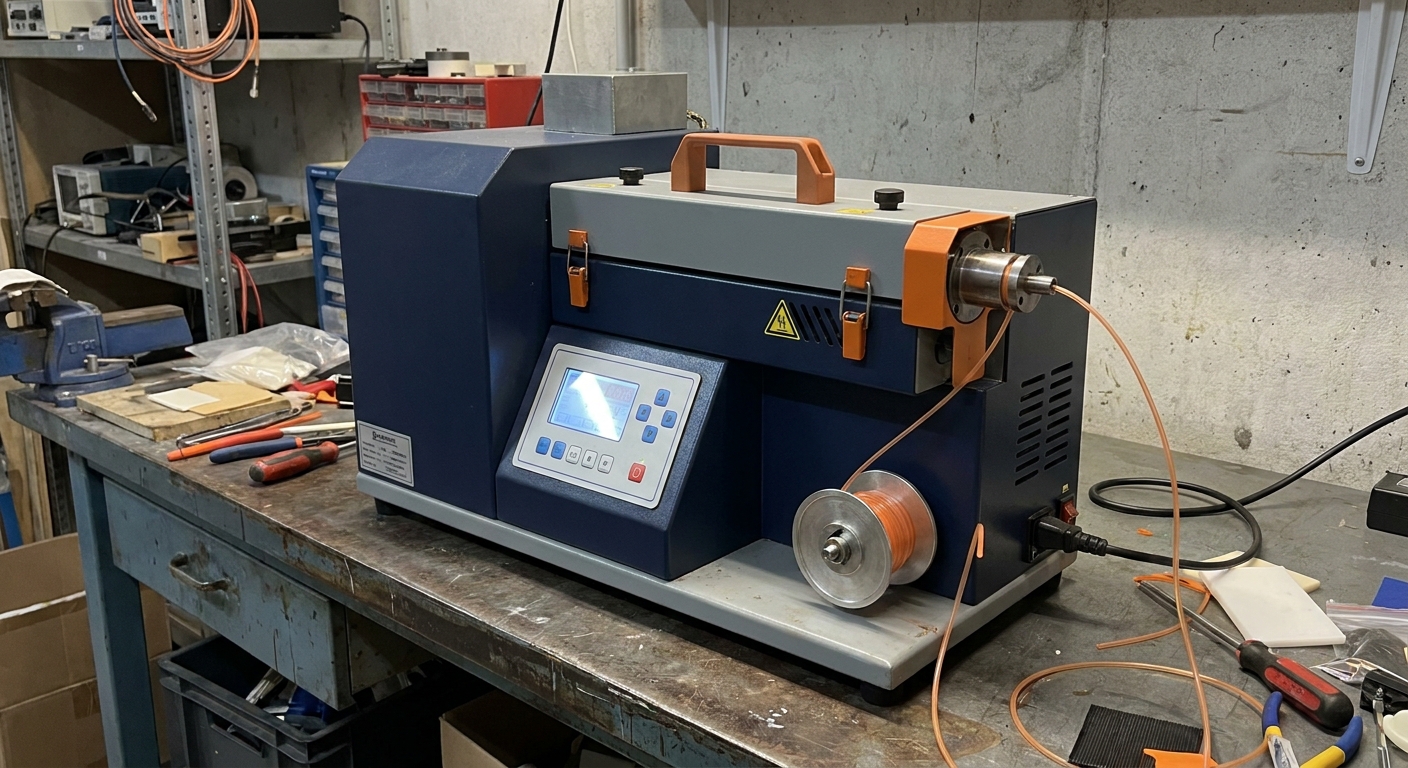
Lab-scale twin screw extruders are used in R&D for compound development because of their flexibility and intensive mixing. Sai Extrumech supplies lab extruders for this application.

The Cost Reality

A twin screw extruder for a cable line typically costs 2–4x more than an equivalent single screw. The screws and barrels wear faster with intensive mixing and are more expensive to replace. Maintenance requires more skilled technicians.

For a standard cable insulation or sheathing application, this additional cost does not deliver proportional performance benefit. A correctly specified single screw extruder will match or exceed twin screw output for cable applications at significantly lower total cost of ownership.

Recommendation

For cable insulation and sheathing (PVC, PE, XLPE, LSZH, TPR, Nylon):
→ Use a single screw extruder with screw geometry matched to your material.

For compound production (mixing raw polymer with additives):
→ Use a twin screw compounder (co-rotating preferred for most compounds).

For R&D and material development:
→ Use a lab extruder (single or twin screw depending on purpose).

Single Screw Extruders from Sai Extrumech

Sai Extrumech manufactures single screw extruders from 25mm to 150mm diameter with L/D ratios from 20:1 to 32:1. Each screw is designed for the specific material to be processed — we do not supply generic screws.

We also manufacture lab extruders for compound trials and R&D, and supply replacement screws and barrels for extruders from other manufacturers.

👉 View our Extruder Range
👉 Contact Engineering Team

Frequently Asked Questions

Q: Can I convert a single screw extruder to twin screw?
A: No. The barrel, gearbox, drive, and frame are completely different. Single and twin screw are distinct machine architectures.

Q: My current single screw extruder is surging. Would a twin screw fix this?
A: Surging is almost always a screw design or temperature control issue — not a fundamental limitation of the single screw architecture. Before investing in a twin screw, have your screw inspected for wear and review your temperature profiles. In most cases, a new correctly designed screw solves surging.

Q: Does Sai Extrumech supply twin screw extruders?
A: Sai Extrumech specialises in single screw extruders for cable, wire, and pipe extrusion. For compounding twin screws, we can refer you to appropriate manufacturers.

Related from Sai Extrumech: screw and barrel manufacturers in India · extrusion machine manufacturers in India · our screw & barrel range

Solar Cable Extrusion Line — Manufacturer & Supplier in India | Sai Extrumech

Solar power capacity in India is growing faster than almost any other sector. Behind every solar panel installation is a cable network — and behind every solar cable is a precisely engineered extrusion line.

Sai Extrumech designs and manufactures solar cable extrusion lines for producers of DC solar cables, photovoltaic wiring, and EV charging cables across India and internationally.

What is a Solar Cable?

A solar cable (also called a photovoltaic cable or PV cable) is a single-core or multi-core cable designed to carry DC current between solar panels, inverters, and battery storage systems.

Solar cables must withstand:

  • UV radiation — direct outdoor sunlight exposure for 25+ years
  • High temperatures — surface temperatures on rooftops can exceed 80°C
  • Weather exposure — rain, humidity, dust, and ozone
  • DC voltage — typically 1000V or 1500V DC for utility-scale installations
  • Mechanical stress — flexing during installation and wind movement

To meet these requirements, solar cables are typically insulated with XLPE (cross-linked polyethylene) or LSZH (low-smoke zero-halogen) compounds — both of which require specific extrusion line configurations.

Sai Extrumech Solar Cable Extrusion Lines

Our solar cable extrusion lines are engineered for the specific demands of UV-stabilised and XLPE compound processing. Each line is custom-designed to your conductor range, output target, and compound specification.

Standard Configuration

Extruder: Single screw extruder, 45mm–90mm diameter, 24:1 L/D (for XLPE) or 28:1 L/D (for LSZH compounds)

Crosshead: Fixed centre or manual centre crosshead with precision die-tip sets for conductor sizes 1.5mm² to 300mm²

Cooling: Multi-pass cooling trough, 6–12 metres, with temperature-controlled water circulation

Haul-off: Dual caterpillar haul-off with constant tension control

Take-up: Automatic single or dual bobbin take-up with traverse mechanism

Line speed: 10–80 metres per minute depending on insulation wall thickness and conductor size

Optional Add-ons

  • Spark tester (online dielectric integrity testing)
  • Diameter gauge (laser measurement for real-time OD monitoring)
  • Ink-jet printer for cable marking
  • Silane crosslinking bath (for silane XLPE process)

Key Technical Considerations for Solar Cable Production

XLPE Processing
XLPE compound for solar cables is typically processed via the silane crosslinking method (moisture cure), which requires careful temperature control and a short residence time screw (20–24:1 L/D). Our lines include temperature-zoned barrels with PID controllers on each zone.

UV Stabilisation
UV-stabilised LSZH compounds for solar cables contain carbon black and other additives that are abrasive. We recommend bimetallic screws and barrels for these compounds to extend service life.

Concentricity Control
Solar cable insulation concentricity is specified to tight tolerances in IEC 60227 and IEC 62930. Our manual centre crossheads allow real-time concentricity adjustment during production without stopping the line.

Applications

Solar cable extrusion lines from Sai Extrumech are suitable for:

  • DC solar cables (1.5mm² – 300mm²)
  • EV charging cables (Type 2, CCS, CHAdeMO configurations)
  • Photovoltaic string cables
  • Battery interconnect cables
  • Solar farm trunk cables

Why Choose Sai Extrumech for Your Solar Cable Line?

  • 25+ years manufacturing extrusion lines for the Indian cable industry
  • In-house design and manufacturing — no third-party sub-assemblies
  • Custom engineering for your conductor range and compound
  • After-sales support and spare parts supply from Faridabad
  • Lines operational in India, UAE, South Africa, UK, and Bangladesh
  • Academic collaboration with IIT Delhi and BITS Pilani for process R&D

Get a Quote

Tell us your production requirements and we will design a solar cable extrusion line around your specific needs.

Required information:

  • Conductor size range (mm²)
  • Insulation material (XLPE, LSZH, PVC)
  • Target line speed
  • Bobbin/drum size
  • Required certifications (IEC 62930, IS 694, etc.)

👉 Contact our Engineering Team
👉 View Full Extrusion Line Range

Choosing the right solar cable extrusion line means matching the extruder, crosshead and cooling to your conductor range and compound. Sai Extrumech engineers each solar cable extrusion line around UV-stabilised XLPE and LSZH processing, with concentricity control to IEC 62930. See our solar cable extrusion line or contact our engineering team for a configuration matched to your output target.

What is L/D Ratio in an Extruder? How It Affects Cable Extrusion Performance

If you are specifying or purchasing an extruder for cable or wire production, one of the first numbers you will encounter is the L/D ratio. It is printed in every extruder datasheet and quoted in every technical discussion — but what does it actually mean, and why does it matter?

What L/D Ratio Means

L/D stands for Length to Diameter ratio. It describes the length of the extruder screw relative to its diameter.

For example:

  • A screw that is 25D long and 60mm in diameter = L/D of 25:1
  • A screw that is 30D long and 90mm in diameter = L/D of 30:1

The formula is simple: L/D = Screw Length ÷ Screw Diameter

A higher L/D means a longer screw relative to its width. A lower L/D means a shorter, more compact screw.

Why L/D Ratio Matters

The extruder screw has three jobs: feed solid pellets, melt them, and pressurise the melt into the die. These three functions happen in three zones along the screw — the feed zone, the compression zone, and the metering zone.

A longer screw (higher L/D) gives each zone more length to do its job:

  • Better melting: More residence time means more heat input and better homogeneity
  • Better mixing: Longer metering zone mixes colour, additives, and compounds more thoroughly
  • Better pressure consistency: Longer metering zone reduces surging and pressure fluctuations
  • Lower melt temperature: More gradual melting generates less frictional heat, which matters for heat-sensitive materials like PVC

A shorter screw (lower L/D) processes material faster but with less mixing and less consistent output.

Typical L/D Ratios for Cable Extrusion

Different cable materials and applications require different L/D ratios:

MaterialRecommended L/DReason
PVC (standard)20:1 – 25:1PVC is heat sensitive; shorter residence time preferred
PVC (rigid/compound)25:1 – 30:1More mixing needed for filled compounds
XLPE (silane crosslinkable)20:1 – 24:1Prevent premature crosslinking
HFFR / LSZH28:1 – 32:1Highly filled material needs longer mixing zone
Polyethylene (HDPE/LDPE)25:1 – 30:1Good melt behaviour; longer screw improves output
Nylon (PA)20:1 – 25:1Hygroscopic; short screw to minimise degradation
TPR / TPE25:1 – 28:1Needs good mixing for consistent properties

For most cable insulation and sheathing applications, an L/D of 24:1 to 28:1 is the industry standard starting point.

L/D and Screw Design Work Together

L/D ratio alone does not tell the full story. The compression ratio, feed zone depth, metering zone depth, and helix angle of the screw all interact with the L/D to determine actual extruder performance.

A long screw with the wrong compression ratio can over-shear a material and cause degradation. A short screw with the right design can outperform a longer one for a specific material.

This is why screw selection should always be done together — specifying the L/D, the compression ratio, and the material to be processed as a package, not each in isolation.

Common L/D Mistakes

Mistake 1: Using a PVC screw for HFFR/LSZH compound
PVC screws are typically 20–24:1. HFFR compounds are highly filled and need a 28–32:1 screw for proper dispersion. Using the wrong screw causes poor mixing, surface defects, and inconsistent mechanical properties.

Mistake 2: Using a long screw for silane XLPE
Silane crosslinkable XLPE begins crosslinking when exposed to heat and moisture. A very long screw increases residence time and raises the risk of scorch (premature crosslinking inside the barrel). Keep L/D at 20–24:1 for silane XLPE.

Mistake 3: Assuming longer is always better
Some operators assume a 32:1 screw will always outperform a 24:1 screw. This is not true. For heat-sensitive materials, a longer screw can cause more degradation, not less. Match the L/D to the material.

Screw and Barrel from Sai Extrumech

Sai Extrumech manufactures screws and barrels for cable, wire, and pipe extrusion across a full range of L/D ratios and diameters. We manufacture screws in nitrided steel and bimetallic (for abrasive compounds), with custom flight geometry matched to your material and line speed.

If you are replacing a worn screw or upgrading to a new compound, send us your current screw specification and material datasheet — we will recommend the correct replacement.

👉 View Screw & Barrel Range
👉 Request a Quote

Frequently Asked Questions

Q: Can I increase the L/D ratio of my existing extruder?
A: In most cases, no. The barrel length is fixed by the extruder frame. To change L/D, you would need a new barrel and screw — effectively a new extruder. Some extruder designs allow extension barrels to be added, but this is not common.

Q: Does a higher L/D ratio mean a higher output rate?
A: Not necessarily. Output rate depends more on screw diameter, screw speed, and metering zone depth. A higher L/D can improve melt quality and reduce surging, which can indirectly allow higher stable output — but it is not a direct relationship.

Q: What L/D ratio does Sai Extrumech recommend for PVC cable extrusion?
A: For standard PVC cable insulation and sheathing, we recommend 24:1 to 25:1 as the standard, with 28:1 available for heavily filled or rigid PVC compounds that need more intensive mixing.

Related from Sai Extrumech: screw and barrel manufacturers in India · extrusion machine manufacturers in India · our screw & barrel range

Extrusion Crossheads: Types, Function and Selection Guide 2026

Extrusion crossheads are the tooling assemblies that guide molten polymer around a moving wire or conductor, forming a uniform layer of insulation or sheathing. Every cable extrusion line depends on one, and the design of that crosshead directly determines whether your insulation meets spec or gets rejected.

Without a well-designed crosshead, you cannot achieve consistent insulation thickness. Inconsistent insulation means rejected cable, wasted material, and failed quality checks.

How a Crosshead Works

In a cable extrusion line, the extruder screw melts and pressurises the polymer compound. This molten material is then channelled into the crosshead, which is mounted at a right angle (hence the name “cross”) to the direction of the wire being fed through.

Inside the crosshead, the molten polymer is directed through a die and tip assembly that shapes it around the conductor as it passes through. The geometry of the die and tip controls:

  • Insulation thickness, how thick the coating is
  • Concentricity, how centred the insulation is around the conductor
  • Surface quality, smoothness and consistency of the outer surface

The coated cable then exits the crosshead and enters a cooling trough where the insulation solidifies.

Types of Crossheads

Not all crossheads are the same. The right type depends on your cable specification, production speed, and material being processed.

1. Fixed Centre Crosshead

In a fixed centre crosshead, the die and tip are in a fixed position relative to each other. The concentricity is set during installation and cannot be adjusted during production.

Best for: High-volume production of a single cable type where setup time is acceptable and specifications are consistent.

Advantage: Simpler design, lower cost, very stable once set up correctly.

Limitation: Any eccentricity requires a production stop to readjust.

2. Manual Centre Crosshead

A manual centre crosshead allows the operator to adjust the position of the tip while the line is running, without stopping production. Adjusting screws on the body of the crosshead shift the tip position to correct concentricity in real time.

Best for: Production lines running multiple cable types, or where conductor diameter varies, requiring frequent concentricity corrections.

Advantage: Flexibility during production without downtime.

Limitation: Requires a skilled operator who can read concentricity measurements and make accurate adjustments.

3. Triple Layer / Multi-Layer Crosshead

A triple layer crosshead feeds three separate polymer streams, inner layer, insulation, and outer sheath, through a single crosshead assembly. Each layer is applied in one pass.

Best for: High-specification cables requiring multiple material layers such as XLPE insulated cables, LSZH sheathed cables, and EV charging cables.

Advantage: Single pass for a multi-layer product, dramatically increases line efficiency.

Limitation: Higher cost, more complex setup, requires precise control of each melt stream.

4. Skin Layer Crosshead (60, 80%)

A skin layer crosshead applies a thin outer coating, typically 60, 80% of the total insulation wall, over an existing insulation layer. Common in tandem extrusion setups.

Best for: Dual-material cable constructions where the bulk insulation and outer skin are different compounds.

How to Select the Right Crosshead

Choosing the correct crosshead for your line depends on four factors:

1. Cable type and specification
What type of cable are you producing? A power cable, building wire, solar cable, and optical fiber cable all have different insulation requirements and will need different crosshead geometries.

2. Conductor diameter range
If your line runs multiple conductor sizes, a manual centre crosshead gives you flexibility. If you run a single size at high volume, a fixed centre crosshead may be more appropriate.

3. Number of layers
If you need dual or triple layer insulation in a single pass, you need a multi-layer crosshead. Running two separate lines in tandem is the alternative but requires more floor space and capital.

4. Production speed
Higher line speeds require crossheads designed for low pressure drop and even flow distribution. At very high speeds, uneven flow in the crosshead manifests as surface defects and eccentricity.

Common Crosshead Problems and How to Fix Them

Problem: Eccentric insulation (insulation thicker on one side)
Cause: Die and tip are not concentric. In a fixed centre crosshead, stop the line and adjust. In a manual centre crosshead, use the adjustment screws while the line is running.

Problem: Surface roughness or sharkskin appearance
Cause: Melt temperature too low, or the crosshead is not up to processing temperature. Allow more warm-up time, or increase melt temperature slightly.

Problem: Insulation thickness variation along the length
Cause: Inconsistent extruder output (surging), or conductor tension variation. Check the extruder screw wear and haul-off speed consistency.

Problem: Carbon or degraded material in the crosshead
Cause: Stagnation zones in the flow path, or material left in the crosshead during shutdown. Purge thoroughly before shutdown and clean the crosshead regularly.

Crossheads from Sai Extrumech

Sai Extrumech manufactures fixed centre, manual centre, and triple layer crossheads for wire and cable extrusion lines. All crossheads are precision machined to tight tolerances and designed for long service life with minimal maintenance.

We also manufacture the complete die and tip sets, guide tubes, and tooling accessories that work with our crossheads, and we supply replacement tooling for lines from other manufacturers.

If you are unsure which crosshead is right for your application, contact our engineering team. We will review your cable specification and recommend the correct tooling configuration.

👉 View our Crosshead Range
👉 Contact our Engineering Team

Frequently Asked Questions

Q: What is the difference between a die and a tip in a crosshead?
A: The tip (also called a guide or core tube) supports the conductor as it passes through the crosshead and determines the inner diameter of the insulation. The die determines the outer diameter and shape of the insulation. Together, the die-tip gap controls insulation wall thickness.

Q: Can I use the same crosshead for different cable types?
A: The crosshead body can often be reused, but the die and tip sets are specific to the conductor size and insulation diameter. You will need a different die-tip set for each cable specification.

Q: How often should a crosshead be cleaned and serviced?
A: For continuous production, a full crosshead strip-down and inspection is recommended every 3, 6 months depending on the material being processed. Crossheads running abrasive compounds like filled XLPE may need more frequent inspection.

Q: What materials are crossheads made from?
A: Crosshead bodies are typically made from hardened tool steel. Die and tip components are often made from tungsten carbide or hardened steel with chrome or nickel plating for corrosion resistance and surface quality.

How to Select the Right Screw and Barrel for Your Extrusion Line

By Sai Extrumech Editorial Team | Published: April 14, 2026 | Last Updated: April 14, 2026

Screw and barrel selection is the process of matching an extruder’s core mechanical components — the rotating screw and the heated barrel surrounding it — to the specific thermoplastic compound, output rate, and quality requirements of a cable extrusion line. Key parameters include L/D ratio, compression ratio, screw diameter, and barrel metallurgy.

Selecting the right screw and barrel for cable extrusion is the most critical decision in ensuring the longevity, efficiency, and quality of your manufacturing line. In the high-precision world of wire and cable production, the screw and barrel assembly acts as the “heart” of the extruder, responsible for melting, mixing, and pumping thermoplastic compounds with absolute consistency. A mismatched assembly can lead to surging, poor insulation quality, and premature mechanical failure, directly impacting your bottom line.

Definition: In the context of cable manufacturing, a screw and barrel assembly is a precision-engineered system where a rotating screw conveys raw polymer granules through a heated cylindrical barrel. The interaction between the screw’s flight geometry and the barrel’s inner surface generates the thermal and mechanical energy required to transform solid pellets into a uniform, pressurized melt ready for the crosshead. This process is fundamental to achieving the desired dielectric properties and physical durability of modern electrical and communication cables.

The global demand for high-performance extrusion equipment is surging. According to recent industry data, the global cable extruders market is projected to grow from US$5.4 billion in 2025 to US$8.2 billion by 2032, expanding at a steady CAGR of 6.2%. Furthermore, the single screw feed barrel segment alone accounted for approximately USD 871.3 million in 2025, highlighting the critical role these components play in modern infrastructure development. For a manufacturer like Sai Extrumech, with over 25 years of experience, staying at the forefront of this growth means delivering components that exceed these evolving global standards.

What is a Screw and Barrel for Cable Extrusion?

The screw is a helical component that fits tightly inside the barrel. As it rotates, it performs three primary functions: feeding, compression (melting), and metering. The barrel provides the structural housing and heat transfer surface. For cable extrusion, these components must handle a variety of materials, from standard PVC and PE to specialized HFFR (Halogen-Free Flame Retardant) and XLPE (Cross-linked Polyethylene) compounds. Each material has a unique “fingerprint” of viscosity and thermal sensitivity, requiring a specific screw design to avoid degradation.

Key Components of the Assembly

  • The Screw: Usually made from high-grade alloy steel, often nitrided or bimetallic-coated for wear resistance. The flight design—whether single-flighted, barrier, or mixing—determines the efficiency of the melt.
  • The Barrel: A heavy-walled cylinder designed to withstand high internal pressures, typically ranging from 200 to 500 bar in cable lines. It must maintain structural integrity under intense thermal cycling.
  • Heating & Cooling Zones: Barrels are equipped with ceramic or mica heaters and often feature water or air-cooling systems to maintain precise temperature profiles, ensuring the polymer doesn’t overheat during the shear-intensive melting phase.

Technical Specifications: L/D Ratio and Compression

When specifying a screw and barrel for cable extrusion, the Length-to-Diameter (L/D) ratio is the most vital parameter. This ratio determines the residence time of the polymer and the amount of shear energy imparted to the material. A well-calculated L/D ratio ensures that every pellet is fully melted and homogenized before reaching the die.

Standard L/D Ratios

For most wire and cable applications, an L/D ratio of 24:1 to 30:1 is the industry standard. A higher L/D ratio (e.g., 30:1) allows for better mixing and a more stable melt temperature, which is essential for high-speed insulation lines. In specialized applications like high-voltage power cables, ratios can even exceed 36:1 to ensure absolute purity and uniformity of the XLPE insulation. Conversely, shorter L/D ratios might be used for heat-sensitive materials to prevent thermal degradation during long residence times.

Compression Ratios

The compression ratio—the ratio of the flight depth in the feed zone to the flight depth in the metering zone—typically ranges from 2.0:1 to 3.5:1 for cable compounds. PVC often requires a lower compression ratio (around 2.0:1 to 2.5:1) to avoid over-shearing, which can cause the material to release corrosive hydrochloric acid. In contrast, Polyethylene (PE) can handle higher compression ratios (3.0:1 or more) to achieve the high throughput required for building wire and telecommunication cables.

Types of Screws for Different Cable Compounds

At Sai Extrumech, we design screws tailored to the specific rheology of the polymer being processed. Understanding the material science is just as important as the mechanical engineering:

  • PVC Screws: Feature deep flights and moderate compression to handle the high viscosity of PVC without burning the material. They are often chrome-plated to resist the mildly corrosive nature of PVC melt.
  • PE/XLPE Screws: Designed with barrier flights or mixing elements (like Maddock mixers) to ensure a bubble-free, perfectly uniform melt. This is critical for high-voltage insulation where even a microscopic void can lead to electrical failure.
  • HFFR Screws: These require specialized metallurgy, such as bimetallic coatings, to resist the corrosive nature of the flame-retardant additives. HFFR materials are notoriously difficult to process due to their high filler content and narrow processing window.

Material Selection: Nitrided vs. Bimetallic

The durability of your screw and barrel assembly depends on the materials used in their construction. Choosing the wrong metallurgy can lead to rapid wear, resulting in lost production and expensive downtime.

Nitrided Steel (EN41B / Musco)

Nitriding involves diffusing nitrogen into the surface of alloy steel to create a hard, wear-resistant layer (typically 0.4mm to 0.6mm deep). This is cost-effective and suitable for non-abrasive materials like standard PVC or LDPE. It offers a surface hardness of approximately 65-70 HRC, which is sufficient for many general-purpose applications.

Bimetallic Solutions

For abrasive or corrosive compounds (like those used in solar cables, HFFR lines, or glass-filled polymers), bimetallic barrels are superior. They feature a centrifugal casting of a wear-resistant alloy (tungsten carbide or nickel-based) inside the barrel. Bimetallic components can last 3 to 5 times longer than standard nitrided parts in demanding environments. This longevity significantly reduces the “Total Cost of Ownership” despite the higher initial investment.

Applications in Modern Extrusion Lines

The right screw and barrel setup is essential across various extrusion line types manufactured by Sai Extrumech:

  • House Wiring Lines: Require high-speed screws (capable of processing at line speeds up to 1000 m/min) with excellent pressure stability to maintain tight tolerances on thin-wall insulation.
  • Power Cable Lines: Focus on thick-wall insulation where melt temperature control is paramount to prevent “sagging” and ensure the concentricity of the cable.
  • Optical Fiber Coating: Demands extreme precision and low-shear screws to protect the delicate glass fibers from mechanical stress during the secondary coating process.

Operating Parameters: Speeds and Temperatures

Achieving peak performance requires balancing mechanical settings with material requirements. Even the best screw will perform poorly if the operating parameters are incorrect:

  • Screw Speeds: Range from 20 RPM for large power cable extruders (120mm or 150mm) to over 150 RPM for small-diameter high-speed wire lines (45mm or 60mm).
  • Temperature Profiles: Typically maintained between 150°C and 220°C for most thermoplastics. Precision PID controllers in Sai Extrumech machines ensure deviations are kept within ±1°C, preventing thermal “surging” that can ruin miles of cable.

Sai Extrumech: Your Partner in Precision Engineering

With over 25 years of experience, Sai Extrumech Pvt. Ltd. has mastered the art of manufacturing high-performance screw and barrel for cable extrusion. Based in Faridabad, Haryana, we serve clients in over 30 countries, providing custom-built solutions that maximize output and minimize downtime. Our USP lies in our ability to customize every screw profile to the specific compound and production goals of our clients.

Our screws are engineered using advanced CAD/CAM software and manufactured on high-precision CNC machines. Whether you need a single replacement screw or a complete extrusion line upgrade, our technical team is ready to assist you. We understand that in the cable industry, reliability is everything.

Frequently Asked Questions (FAQs)

How often should I replace my screw and barrel?

Replacement frequency depends on the material processed and the metallurgy of the components. On average, a nitrided assembly lasts 12-18 months in continuous operation with non-abrasive materials, while bimetallic versions can last 3-5 years even with more challenging compounds.

What are the signs of a worn-out screw and barrel?

Common signs include a drop in output (kg/hr), fluctuating melt pressure (surging), increased melt temperature due to excessive friction, and visual defects like “unmelts” or bubbles in the cable insulation.

Can I use the same screw for PVC and PE?

While possible for some general-purpose lines, it is not recommended for high-quality production. PVC and PE have different melting points and viscosities; using a dedicated screw profile for each ensures better quality, higher speeds, and less waste.

What is the advantage of a barrier screw?

A barrier screw features a secondary flight that separates the melted polymer from the solid pellets earlier in the process. This leads to a more uniform melt temperature and allows for higher production speeds without compromising the quality of the insulation.

How do I maintain my screw and barrel assembly?

Regular cleaning (purging) with specialized compounds, checking heater bands for functionality, and periodic measurement of the screw-to-barrel clearance are essential maintenance steps. Always ensure the cooling fans or water jackets are clear of obstructions.

Industrial Cable Extrusion Process

The Future of Cable Extrusion: Embracing Automation and Smart Technologies

The Future of Cable Extrusion: Embracing Automation and Smart Technologies

The wire and cable industry is undergoing a significant transformation. As global demand for high-quality, reliable, and specialized cables continues to rise—driven by sectors like telecommunications, renewable energy, and automotive—manufacturers are increasingly turning to advanced technologies to stay competitive. In this article, we explore how automation and smart technologies are shaping the future of cable extrusion and why embracing these innovations is essential for modern manufacturing success.

The Shift Toward Smart Manufacturing

Industrial Cable Extrusion Process

Traditionally, cable extrusion was a labor-intensive process that relied heavily on the expertise and intuition of experienced operators. However, the advent of Industry 4.0 has introduced a new era of smart manufacturing, where data-driven insights and automated systems play a central role. By integrating sensors, IoT (Internet of Things) devices, and advanced control systems into extrusion lines, manufacturers can now achieve unprecedented levels of precision and efficiency.

One of the key benefits of smart manufacturing is the ability to monitor critical process parameters in real-time. From melt temperature and pressure to line speed and tension, every aspect of the extrusion process can be tracked and analyzed. This real-time visibility allows for immediate adjustments, ensuring consistent product quality and minimizing waste. For companies like Sai Extrumech, providing state-of-the-art extrusion machinery that supports these advanced capabilities is a top priority.

Enhancing Precision with Advanced Tooling

Modern Cable Manufacturing Factory

At the heart of every high-performance extrusion line is the tooling. The precision of the screw and barrel, as well as the design of the crosshead, directly impacts the quality of the final product. Advanced tooling solutions are now being engineered to handle increasingly complex materials, including halogen-free compounds and high-performance polymers.

Modern crossheads, such as fixed-center and manual-center designs, are now being equipped with sophisticated adjustment mechanisms that allow for precise control over wall thickness and concentricity. This level of precision is crucial for meeting the stringent requirements of industries like medical device manufacturing and aerospace, where even the slightest deviation can have significant consequences. You can explore our range of crossheads and tooling to see how we are pushing the boundaries of precision engineering.

The Role of Automation in Improving Efficiency

Automation is no longer just about replacing manual labor; it’s about optimizing the entire production lifecycle. Automated pay-off and take-up systems, for example, ensure smooth and consistent handling of cables, reducing the risk of damage and improving overall line speed. Similarly, automated coiling and packaging systems can significantly enhance throughput and reduce labor costs.

Beyond the physical machinery, automation also extends to the control and management systems. Advanced PLC (Programmable Logic Controller) systems can now store and recall complex recipes for different cable types, allowing for rapid changeovers and reducing downtime. This flexibility is essential for manufacturers who need to produce a wide variety of products in smaller batch sizes.

Driving Sustainability Through Technology

As environmental concerns become increasingly important, the cable industry is also focusing on sustainability. Smart technologies can play a vital role in reducing the environmental footprint of cable manufacturing. By optimizing energy consumption, minimizing material waste, and improving process efficiency, manufacturers can significantly reduce their overall impact on the planet.

For instance, energy-efficient motors and heating systems can lead to substantial cost savings while also reducing greenhouse gas emissions. Additionally, the ability to process recycled materials more effectively is becoming a key differentiator for forward-thinking manufacturers. At Sai Extrumech, we are committed to developing solutions that not only enhance performance but also promote sustainable manufacturing practices.

Conclusion: The Path Forward

The future of cable extrusion is undoubtedly smart, automated, and sustainable. By embracing these technologies, manufacturers can achieve higher levels of quality, efficiency, and competitiveness. As a leading cable extrusion machine manufacturer in India, Sai Extrumech is proud to be at the forefront of this technological revolution, providing the tools and expertise our clients need to thrive in a changing world.

Whether you are looking to upgrade an existing line or invest in a new, state-of-the-art facility, our team of experts is here to help. Contact us today to learn more about our innovative solutions and how we can help you empower your manufacturing future.

By Sai Extrumech Editorial Team  |  Published: April 7, 2026  |  Last Updated: April 10, 2026

Cable extrusion automation is the integration of programmable control systems, real-time sensors, and data-driven feedback loops into the cable manufacturing process — enabling consistent product quality, higher line speeds, and reduced human intervention across insulation, jacketing, and sheathing operations.

Industry Data:
  • The global industrial automation market is projected to reach USD 395 billion by 2029 at a CAGR of 8.9% (MarketsandMarkets, 2024)
  • Smart manufacturing adoption in wire & cable production is expected to reduce material waste by up to 23% and energy consumption by 15% by 2030 (IEA, 2023)

Frequently Asked Questions

What is the difference between PVC and XLPE insulation in cable extrusion?

PVC is cost-effective and suited for low-voltage applications up to 70°C. XLPE offers superior performance at higher temperatures (up to 90°C continuous) and is required for medium and high-voltage power cables above 1 kV.

What line speeds can modern cable extrusion machines achieve?

Modern single-layer lines achieve 800–1,200 m/min for conductors under 2.5 mm². Modern Sai Extrumech single-layer lines achieve 800–1,200 m/min for building wire. Multi-layer or larger conductor lines run at 200–400 m/min.

How does automation improve cable extrusion quality?

Automation enables real-time monitoring of extrusion parameters — melt temperature, line speed, conductor tension, and insulation diameter — reducing human error and enabling immediate corrections. Smart systems can reduce scrap rates by 30–50% compared to manual monitoring.

What Industry 4.0 features are available for extrusion lines?

Modern extrusion lines support OPC-UA connectivity, SCADA integration, digital twin simulation, predictive maintenance alerts, and remote monitoring dashboards. These features allow manufacturers to monitor production from anywhere and respond to process deviations before they cause quality failures.

Can a cable extrusion line be customized for specific applications?

Yes. Sai Extrumech configures lines for specific cable types, conductor sizes, insulation materials, and line speeds — for automotive, power, solar, optical fibre, and building wire applications.

Optimizing Cable Extrusion: The Critical Role of Precision Screws and Barrels

Optimizing Cable Extrusion: The Critical Role of Precision Screws and Barrels

In the intricate world of wire and cable manufacturing, achieving superior product quality and operational efficiency hinges on the performance of every component within the extrusion line. Among these, the screw and barrel assembly stands out as the heart of the extruder. Its design, material, and precision engineering directly influence the melt quality, output consistency, and overall profitability of the extrusion process. This article delves into the paramount importance of precision screws and barrels in modern cable extrusion, exploring how their optimized design contributes to enhanced performance across various cable types.

The Core Function of Screws and Barrels in Extrusion

The primary role of the screw and barrel is to convey, melt, mix, and homogenize polymer raw materials before they are extruded through a die to form the cable insulation or sheath. This seemingly straightforward process involves complex thermodynamic and rheological principles. The screw’s geometry—including its flight depth, pitch, and compression ratio—is meticulously designed to handle specific polymer characteristics, ensuring efficient heat transfer and uniform melting without degradation. The barrel, which encases the screw, provides the necessary heating and cooling zones to control the polymer’s temperature profile. The interaction between the rotating screw and the stationary barrel generates shear forces crucial for melting and mixing. Any deviation in the precision of these components can lead to inconsistencies in melt temperature, pressure fluctuations, and poor material homogenization, ultimately compromising the final product’s electrical and mechanical properties.

Precision Engineering: A Game Changer for Cable Quality

The demands of the cable industry—from high-speed data transmission to robust power distribution—necessitate unparalleled precision. For instance, in optical fibre cable extrusion lines, even microscopic variations in insulation thickness can significantly impact signal integrity. Similarly, for solar cables and XLPE cables, consistent material distribution is vital for long-term durability and safety under harsh environmental conditions.

Optimized Screw Design for Diverse Polymers

Different cable types utilize a wide array of polymer compounds, each with unique melting points, viscosities, and shear sensitivities. A “one-size-fits-all” approach to screw design is therefore inadequate. Precision screw manufacturers like Sai Extrumech specialize in designing application-specific screws that cater to the rheological properties of materials such as PVC, PE, XLPE, LSZH, and fluoropolymers. This customization ensures:
  • Efficient Melting: Proper flight design and compression ratios ensure gradual and uniform melting, preventing localized overheating and polymer degradation.
  • Superior Mixing: Specialized mixing sections, such as Maddock or barrier sections, enhance homogenization, distributing additives and colorants evenly throughout the melt.
  • Consistent Output: Optimized screw geometry minimizes pressure and temperature fluctuations, leading to a stable melt flow and consistent cable dimensions.

The Role of Barrel Integrity and Material Science

The barrel’s construction is equally critical. It must withstand high pressures, abrasive wear from fillers, and corrosive effects from certain polymers and their byproducts. Modern barrels are often constructed from specialized alloys and treated with advanced coatings (e.g., bimetallic linings) to enhance wear resistance and extend operational life. The precision of the barrel’s internal diameter and its concentricity with the screw are paramount for maintaining consistent shear rates and preventing material hang-ups.

Impact on Operational Efficiency and Cost Savings

Investing in high-quality, precision-engineered screws and barrels translates directly into significant operational benefits and cost savings for cable manufacturers:
  • Reduced Scrap Rates: Consistent melt quality and dimensional stability minimize product defects, leading to lower scrap generation and material waste.
  • Increased Throughput: Optimized designs allow for higher screw speeds and greater output without compromising quality, boosting productivity.
  • Lower Energy Consumption: Efficient melting and conveying reduce the energy required to process polymers, contributing to lower operational costs.
  • Extended Lifespan of Components: Superior materials and manufacturing precision reduce wear and tear, extending the service life of both the screw and barrel and minimizing downtime for replacements.
  • Faster Changeovers: Well-designed components facilitate quicker cleaning and material changeovers, enhancing production flexibility.
For manufacturers looking to upgrade or maintain their extrusion lines, partnering with a specialized screw and barrel manufacturer is crucial. Companies like Sai Extrumech offer comprehensive solutions, from custom design to manufacturing and refurbishment, ensuring that each component is perfectly matched to the specific application and polymer.

Advanced Technologies in Screw and Barrel Manufacturing

The evolution of cable extrusion technology is closely tied to advancements in screw and barrel manufacturing. Modern techniques include:
  • Computational Fluid Dynamics (CFD): Used to simulate polymer flow and heat transfer within the screw and barrel, allowing for virtual optimization of designs before physical prototyping.
  • Advanced Material Alloys: Development of new alloys and bimetallic constructions that offer superior resistance to wear, corrosion, and high temperatures.
  • Precision Machining: State-of-the-art CNC machining and grinding techniques ensure extremely tight tolerances and smooth surface finishes, critical for consistent performance.
These technological advancements enable the production of screws and barrels that can handle increasingly complex polymer formulations and meet the stringent quality requirements of next-generation cables, including those for 5G infrastructure, electric vehicles, and renewable energy systems.

Conclusion

The screw and barrel assembly is undeniably a cornerstone of the cable extrusion process. Its precision engineering and optimized design are not merely desirable features but essential prerequisites for achieving high-quality cable products, maximizing operational efficiency, and ensuring long-term profitability. As the cable industry continues to innovate, the role of specialized manufacturers in providing bespoke screw and barrel solutions will only grow in importance, driving forward the capabilities of extrusion technology worldwide. For more information on high-quality extrusion components and complete extrusion lines, visit Sai Extrumech.
By Sai Extrumech Editorial Team  |  Published: March 24, 2026  |  Last Updated: April 10, 2026

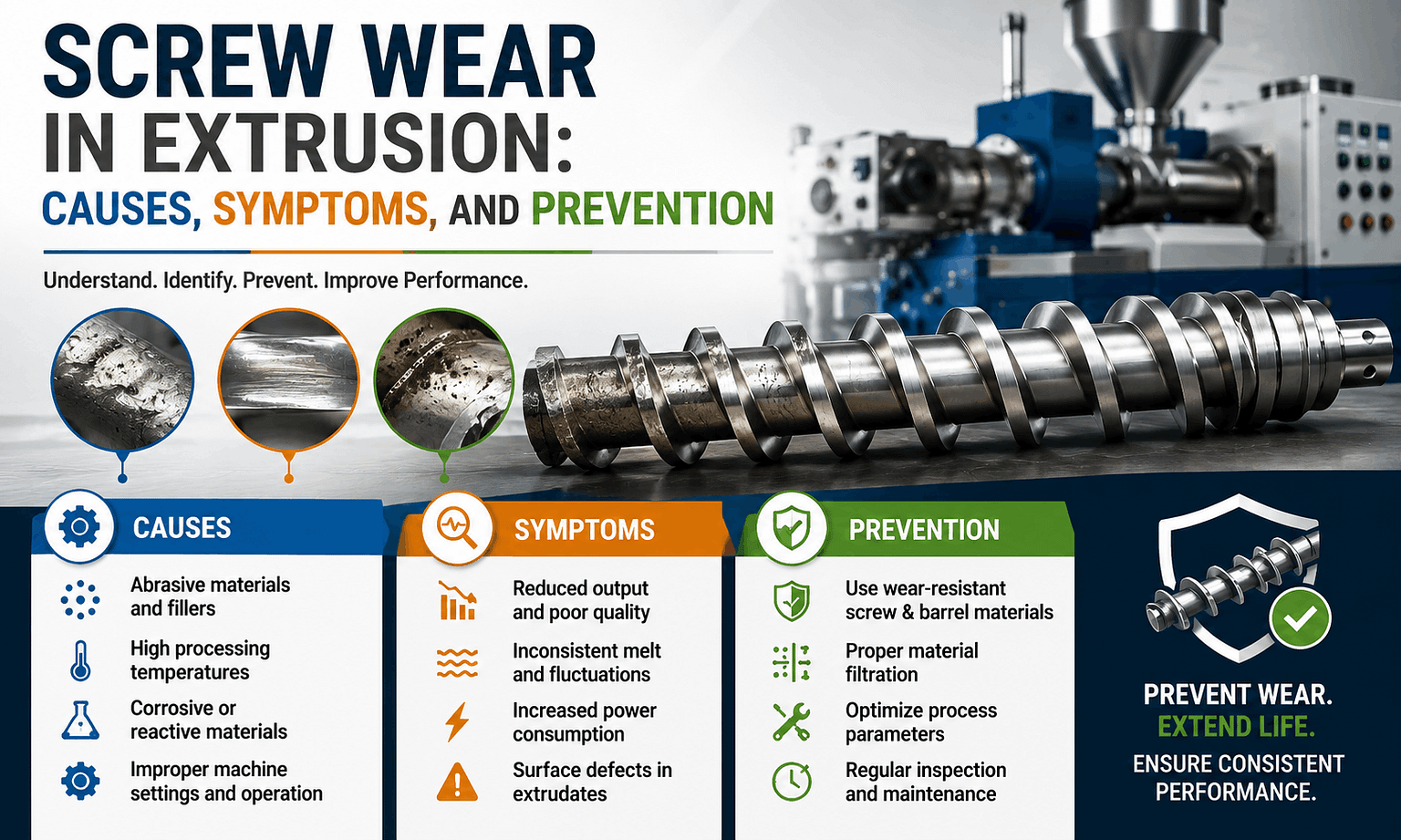
Precision screws and barrels are the core mechanical components of a cable extrusion machine — the screw rotates inside the barrel to melt, homogenise, and push thermoplastic compound through the die at controlled pressure and temperature. Their geometry (L/D ratio, compression ratio, flight depth) directly determines melt quality, output rate, and insulation consistency.

Industry Data:
  • Worn screws and barrels account for up to 35% of unplanned downtime in cable extrusion plants (Plastics Technology, 2023)
  • Bi-metallic barrel liners extend service life by 3–5× compared to standard nitrided steel in abrasive compound applications (SPE ANTEC, 2022)

Frequently Asked Questions

How often should extrusion screws and barrels be replaced?

Under normal conditions with standard PVC, quality hardened screws and barrels typically last 3–7 years. Processing abrasive compounds (glass-filled, flame retardant) or high-temperature materials like XLPE accelerates wear. Signs of wear include reduced output at the same RPM, increased pressure variation, and inconsistent melt quality.

What materials require bi-metallic screw and barrel construction?

Bi-metallic construction is recommended for processing abrasive compounds including HFFR, glass-filled materials, highly filled flame retardants, and mineral-based compounds. The hardened inner lining of bi-metallic barrels significantly extends service life compared to standard nitrided steel construction.

What is the ideal L/D ratio for a cable extrusion screw?

For PVC cable extrusion, L/D ratios of 20:1 to 25:1 are standard. For XLPE and HFFR compounds requiring more homogeneous mixing, ratios of 25:1 to 30:1 are preferred. Higher L/D ratios improve melt homogeneity but require longer screws and barrels.

What is the difference between PVC and XLPE insulation in cable extrusion?

PVC is cost-effective and suited for low-voltage applications up to 70°C. XLPE offers superior performance at higher temperatures (up to 90°C continuous) and is required for medium and high-voltage power cables above 1 kV.

Can a cable extrusion line be customized for specific applications?

Yes. Sai Extrumech configures lines for specific cable types, conductor sizes, insulation materials, and line speeds — for automotive, power, solar, optical fibre, and building wire applications.

Advancements in Cable Extrusion Technology: A Deep Dive for Industry Professionals

Introduction: The Evolving Landscape of Cable Manufacturing

The cable and wire manufacturing industry is a cornerstone of modern infrastructure, powering everything from our homes and offices to complex industrial machinery and global communication networks. At its heart lies the intricate process of cable extrusion, a technology that has continuously evolved to meet the ever-increasing demands for higher performance, greater efficiency, and specialized applications. For industry professionals, staying abreast of these advancements is not just beneficial, but essential for maintaining a competitive edge and driving innovation.
This article delves into the latest advancements in cable extrusion technology, exploring how new machinery, materials, and processes are shaping the future of wire and cable production. We will examine key trends, discuss their implications, and highlight how leading manufacturers like Sai Extrumech are at the forefront of delivering cutting-edge solutions tailored to the unique needs of a dynamic market.

The Drive for Efficiency and Speed: Next-Generation Extrusion Lines

Modern cable manufacturing demands speed without compromising quality. The latest extrusion lines are engineered for unprecedented throughput, integrating advanced control systems and automation to optimize every stage of the process. This includes:

High-Speed Extruders

New extruder designs feature enhanced screw geometries and barrel configurations that facilitate faster melting and mixing of polymers, leading to increased output rates. These extruders are often paired with sophisticated cooling systems to manage the thermal load effectively, ensuring consistent product quality even at elevated speeds.

Integrated Automation and Control

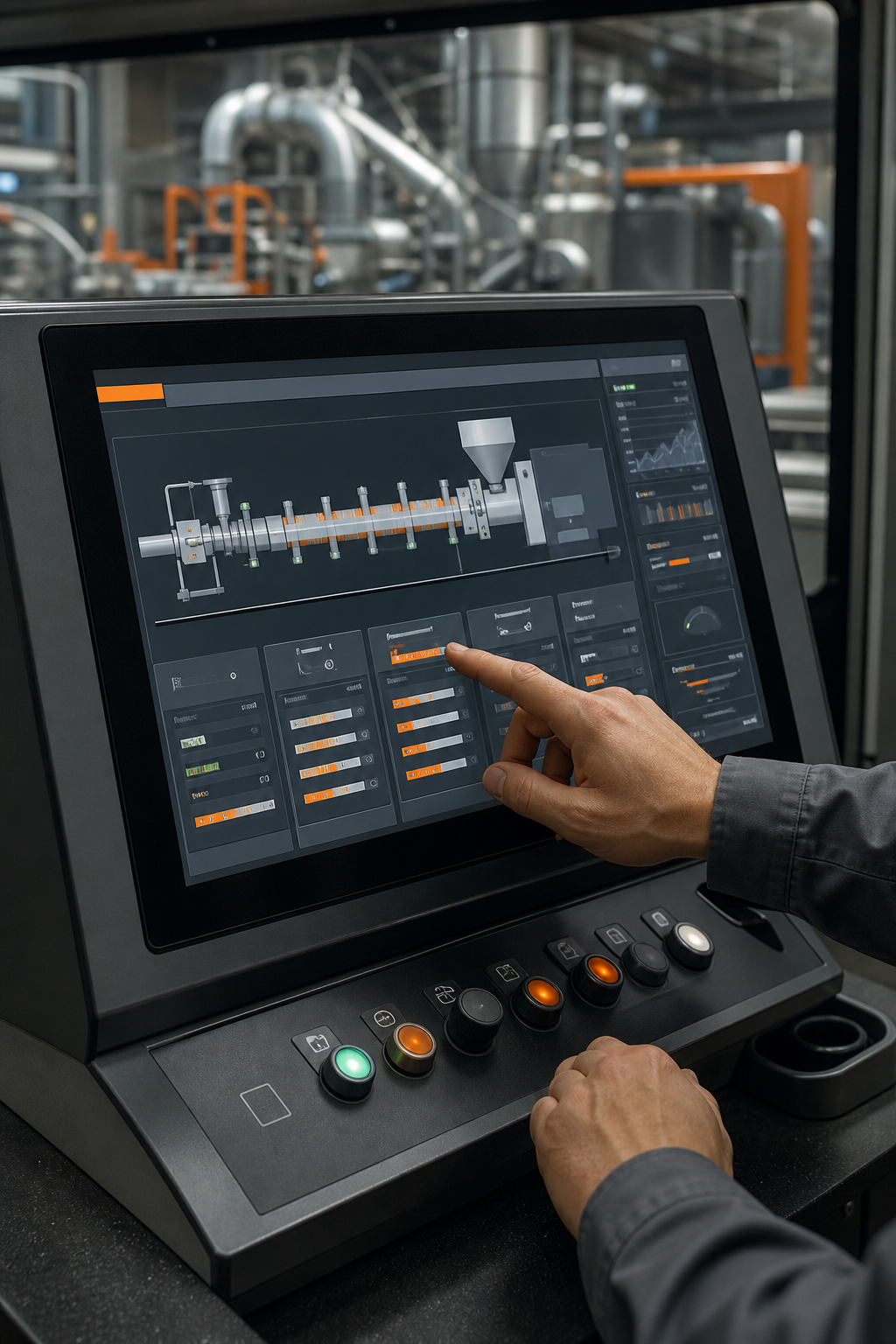
The days of manual adjustments are rapidly fading. Today’s extrusion lines incorporate advanced PLCs (Programmable Logic Controllers) and HMI (Human-Machine Interface) systems, allowing for precise control over temperature profiles, pressure, and line speed. This level of automation minimizes human error, reduces material waste, and ensures repeatable quality. Sai Extrumech, for instance, offers extrusion lines with intuitive control interfaces that empower operators to manage complex processes with ease, leading to significant operational efficiencies.

Energy Efficiency

With rising energy costs and a global push for sustainability, energy-efficient extrusion lines are becoming a standard. Innovations include more efficient motor drives, optimized heating elements, and improved insulation, all contributing to a reduced carbon footprint and lower operating costs. This focus on sustainability is not just environmentally responsible but also economically advantageous for manufacturers.

Material Innovations: Pushing the Boundaries of Performance

The performance of a cable is intrinsically linked to the materials used in its construction. Recent advancements in polymer science have led to the development of new compounds that offer superior electrical, mechanical, and thermal properties. These include:

Advanced Polymer Compounds

Specialized polymers like XLPE (Cross-linked Polyethylene) and Sioplas compounds are now widely used for their excellent insulation properties, high-temperature resistance, and durability. These materials are crucial for applications requiring robust performance, such as power cables and automotive wiring. The ability to process these advanced materials efficiently is a hallmark of state-of-the-art extrusion machinery.

Halogen-Free Flame Retardant (HFFR) Materials

Safety regulations are driving the adoption of HFFR materials, which emit minimal smoke and toxic fumes in the event of a fire. Extrusion equipment must be capable of handling these materials, which often have different processing characteristics compared to traditional PVC. Sai Extrumech’s crossheads and tooling are designed to accommodate a wide range of advanced materials, ensuring optimal processing and product integrity.

Bio-based and Recycled Polymers

In line with sustainability goals, there’s a growing interest in bio-based and recycled polymers for cable insulation and jacketing. While still nascent, the development of extrusion processes compatible with these materials represents a significant future trend, offering environmentally friendly alternatives without compromising performance.

Precision Tooling and Crossheads: The Heart of Quality Extrusion

The quality of the extruded cable is heavily dependent on the precision of the tooling and crossheads. These components shape the molten polymer around the conductor, ensuring concentricity, uniform thickness, and a smooth surface finish.

Multi-Layer Co-Extrusion

Many modern cables feature multiple layers of insulation and jacketing, each with specific properties. Multi-layer co-extrusion crossheads allow for the simultaneous application of these layers in a single pass, significantly improving efficiency and product quality. This technology is particularly vital for complex cables like optical fiber and high-voltage power cables.

Optimized Crosshead Designs

Innovations in crosshead design focus on minimizing material degradation, reducing pressure drop, and ensuring precise material flow. This results in superior concentricity and adhesion between layers, critical for the long-term reliability of the cable. Sai Extrumech offers a comprehensive range of crossheads, including fixed center and manual center designs, engineered for precision and durability across various applications.

Quick-Change Tooling Systems

To maximize uptime and flexibility, quick-change tooling systems are becoming increasingly popular. These systems allow for rapid changeovers between different cable designs, reducing production downtime and enhancing manufacturing agility.

The Role of Sai Extrumech in Shaping the Future

As a leading manufacturer in the cable extrusion machinery industry, Sai Extrumech is committed to pushing the boundaries of innovation. With 25 years of industry expertise, the company has consistently delivered advanced extrusion solutions that meet the evolving needs of its global clientele. From high-speed extrusion lines to precision crossheads and specialized screws and barrels, Sai Extrumech’s product portfolio is designed for optimal performance, efficiency, and reliability.
Sai Extrumech’s dedication to customization ensures that each solution is tailored to the specific operational requirements of its clients, whether for automotive, energy, or communication cables. Their commitment to quality, coupled with continuous research and development, positions them as a trusted partner for manufacturers seeking to enhance their production capabilities and embrace the future of cable extrusion.

Conclusion: A Future of Innovation and Growth

The cable extrusion technology landscape is characterized by continuous innovation, driven by the demand for higher performance, greater efficiency, and sustainable manufacturing practices. For industry professionals, understanding these advancements is key to unlocking new opportunities and staying ahead in a competitive market. With manufacturers like Sai Extrumech leading the charge, the future of cable manufacturing promises to be one of exciting growth and technological breakthroughs.
By Sai Extrumech Editorial Team  |  Published: March 23, 2026  |  Last Updated: April 10, 2026

Cable extrusion technology is the manufacturing process of applying a thermoplastic or thermoset insulation layer around a conductor (copper or aluminium wire) using a heated extruder screw. Modern extrusion lines run at speeds up to 1,200 m/min, process materials including PVC, XLPE, HFFR, and Sioplas, and are used to produce power cables, communication cables, and automotive wiring.

Industry Statistics: The global wire and cable market was valued at approximately USD 230 billion in 2023 and is projected to exceed USD 320 billion by 2030, driven by renewable energy infrastructure and EV adoption (Grand View Research, 2024). Cable extrusion accounts for roughly 40% of total cable manufacturing costs, making efficiency improvements a key competitive lever.

Frequently Asked Questions

What is the difference between PVC and XLPE insulation in cable extrusion?

PVC (Polyvinyl Chloride) is the most common cable insulation, cost-effective and suited for low-voltage applications up to 70°C. XLPE (Cross-linked Polyethylene) offers superior performance at higher temperatures (up to 90°C continuous), better electrical properties, and is required for medium and high-voltage power cables above 1 kV.

What line speeds can modern cable extrusion machines achieve?

Modern single-layer insulation lines typically achieve 800–1,200 m/min for conductors under 2.5 mm². Multi-layer or larger conductor lines run at 200–400 m/min. Modern Sai Extrumech single-layer cable extrusion lines achieve constructive line speeds of 800–1,200 m/min for building wire (conductors under 2.5 mm²). Multi-layer power cable lines run at 200–400 m/min depending on conductor cross-section.

What is an extrusion crosshead and why does it matter for cable quality?

A crosshead guides molten polymer uniformly around the conductor at the end of the extruder barrel. Crosshead design directly affects cable concentricity (uniform insulation thickness) and surface finish. Poor concentricity causes failures under electrical stress and is a primary quality rejection reason in cable manufacturing.

What is HFFR cable and what extrusion equipment does it require?

HFFR (Halogen-Free Flame Retardant) cable uses mineral-based compounds that emit minimal toxic smoke in fires. HFFR compounds are more abrasive and have higher melt viscosity than PVC, requiring extruders with bi-metallic screw and barrel construction, higher torque drives, and specialized crosshead tooling.

Can a cable extrusion line be customized for specific applications?

Yes. Sai Extrumech configures lines for specific cable types, conductor sizes, insulation materials, and line speeds — for automotive, power, solar, optical fibre, and building wire applications.

The Future of High-Speed Cable Extrusion: Trends for 2026

Introduction

The cable and wire manufacturing industry is a dynamic landscape, constantly evolving to meet the demands of a rapidly advancing world. As we look towards 2026, the focus on high-speed cable extrusion trends 2026 intensifies, driven by technological innovations, increasing global connectivity, and the urgent need for sustainable practices. Manufacturers are under pressure to produce cables that are not only faster and more efficient but also environmentally friendly and cost-effective. This article delves into the key trends shaping the future of high-speed cable extrusion, offering insights for industry professionals seeking to stay ahead in this competitive market.

The Driving Forces Behind Extrusion Innovation

Several factors are propelling the evolution of cable extrusion technology. The proliferation of 5G networks, the expansion of data centers, the growth of renewable energy infrastructure, and the booming electric vehicle (EV) market are all creating unprecedented demand for high-performance cables. These applications require cables with superior electrical properties, enhanced durability, and often, smaller diameters. To meet these stringent requirements, extrusion processes must become more precise, faster, and capable of handling advanced materials.

Advancements in Material Science

The core of high-speed cable extrusion innovation lies in material science. Traditional PVC and polyethylene are being supplemented, and in some cases replaced, by advanced polymers and composites. These new materials offer improved dielectric strength, higher temperature resistance, and better flame retardancy. For instance, fluoropolymers are gaining traction in EV motor wire applications due to their superior performance characteristics . The development of halogen-free flame retardant (HFFR) compounds is also a significant trend, driven by stricter safety regulations and environmental concerns. These materials require specialized extrusion techniques to maintain their integrity and performance during processing.

Automation and Smart Manufacturing

The integration of automation and smart manufacturing principles is revolutionizing the cable extrusion industry. Advanced control systems, real-time monitoring, and predictive maintenance are becoming standard. These technologies enable manufacturers to optimize production parameters, reduce material waste, and minimize downtime. The goal is to achieve higher throughput with consistent quality, a critical aspect of high-speed cable extrusion trends 2026. Artificial intelligence (AI) and machine learning (ML) are also beginning to play a role, offering insights into process optimization and defect detection, further enhancing efficiency and product reliability.

Key High-Speed Cable Extrusion Trends for 2026

As the industry progresses, several distinct trends are emerging that will define high-speed cable extrusion in 2026 and beyond.

Increased Extrusion Speeds and Throughput

The demand for higher production volumes necessitates faster extrusion speeds. This is being achieved through innovations in extruder design, screw geometry, and cooling systems. Manufacturers are investing in machines capable of processing materials at unprecedented rates without compromising cable quality. The focus is on maximizing output per hour, which directly impacts profitability and market competitiveness. This drive for speed is a central theme in high-speed cable extrusion trends 2026.

Enhanced Precision and Quality Control

With cables becoming more complex and critical to various applications, precision and quality control are paramount. Advanced gauging systems, laser measurement devices, and sophisticated vision systems are being integrated into extrusion lines to ensure exact cable dimensions, insulation thickness, and concentricity. These systems provide immediate feedback, allowing for real-time adjustments and minimizing defects. The ability to consistently produce high-quality cables at high speeds is a significant differentiator in the market.

Focus on Sustainability and Energy Efficiency

Environmental responsibility is no longer an option but a necessity. The cable extrusion industry is responding by developing more sustainable manufacturing processes. This includes reducing energy consumption in extrusion lines through optimized motor designs and efficient heating and cooling systems. Furthermore, the use of recyclable materials and the minimization of waste are becoming key considerations. Manufacturers are also exploring ways to reduce their carbon footprint throughout the entire production lifecycle. Sai Extrumech, as a leading manufacturer, is committed to developing solutions that align with these sustainable goals.

Customization and Flexibility

The diverse requirements of modern applications mean that a one-size-fits-all approach to cable manufacturing is no longer viable. There is a growing trend towards customized extrusion lines that can be quickly reconfigured to produce different types of cables. This flexibility allows manufacturers to respond rapidly to changing market demands and cater to niche applications. Modular designs and quick-change tooling are becoming increasingly important in achieving this adaptability.

Integration of Industry 4.0 Technologies

Industry 4.0, characterized by the integration of cyber-physical systems, the Internet of Things (IoT), and cloud computing, is transforming cable extrusion. Data collected from various sensors and machines across the production line can be analyzed to identify bottlenecks, predict equipment failures, and optimize overall operational efficiency. This interconnectedness fosters a more intelligent and responsive manufacturing environment, further driving the high-speed cable extrusion trends 2026.

Sai Extrumech: Leading the Way in Extrusion Technology

In this evolving landscape, companies like Sai Extrumech are at the forefront of innovation. With 25 years of industry expertise, Sai Extrumech Pvt. Ltd. has established itself as a trusted and renowned name, offering a comprehensive product portfolio that includes a full range of extrusion machines, crossheads, caterpillars, capstans, screws and barrels, take-ups, and pay-offs. Their commitment to quality and innovation is evident in their state-of-the-art solutions engineered to excel in processing thermoplastics, fiber optics, halogen-free compounds, and more. Sai Extrumech’s ability to design and produce high-efficiency, bespoke equipment sets them apart, providing customized solutions tailored to specific needs, ensuring consistent and precise output across all applications.

Conclusion

The future of high-speed cable extrusion is characterized by relentless innovation, driven by the need for faster, more efficient, and sustainable cable production. The high-speed cable extrusion trends 2026 point towards increased automation, advanced material utilization, enhanced precision, and a strong emphasis on environmental responsibility. Manufacturers who embrace these trends and invest in cutting-edge technology will be well-positioned for success. Sai Extrumech, with its dedication to engineering excellence and customized solutions, continues to be a vital partner for the cable and wire manufacturing industry, helping businesses navigate these transformative changes and achieve superior results.

By Sai Extrumech Editorial Team  |  Published: March 18, 2026  |  Last Updated: April 10, 2026

Frequently Asked Questions

What line speeds can modern cable extrusion machines achieve?

Modern single-layer insulation lines typically achieve 800–1,200 m/min for conductors under 2.5 mm². Multi-layer or larger conductor lines run at 200–400 m/min. Modern Sai Extrumech single-layer cable extrusion lines achieve constructive line speeds of 800–1,200 m/min for building wire (conductors under 2.5 mm²). Multi-layer power cable lines run at 200–400 m/min depending on conductor cross-section.

What trends are driving high-speed cable extrusion in 2026?

Key trends include energy-efficient servo drive systems replacing hydraulic drives, real-time diameter monitoring with automatic correction, predictive maintenance via vibration sensors, and integration of AI-based process optimization that reduces material waste by adjusting extrusion parameters in real time.

What is the difference between PVC and XLPE insulation?

PVC is cost-effective and suited for low-voltage applications up to 70°C. XLPE offers superior performance at higher temperatures (up to 90°C continuous) and is required for medium and high-voltage power cables above 1 kV.

Can a cable extrusion line be customized for specific applications?

Yes. Sai Extrumech configures lines for specific cable types, conductor sizes, insulation materials, and line speeds — for automotive, power, solar, optical fibre, and building wire applications.

60–80 Skin Layer × Head Crosshead for Wire and Cable Extrusion

60–80 Skin Layer × Head Crosshead for Wire and Cable Extrusion

The 60–80 Skin Layer × Head Crosshead is a critical component used in wire and cable extrusion lines to ensure uniform insulation and precise material flow. Designed for high-performance extrusion processes, this crosshead plays a key role in achieving consistent wall thickness, concentricity, and surface finish in cables.

What is a 60–80 Skin Layer Extrusion Crosshead?

In wire and cable manufacturing, the 60–80 skin layer refers to the surface hardness range of the crosshead, achieved through controlled heat treatment or surface hardening. This hardness range offers an ideal balance between wear resistance and toughness, allowing the crosshead to withstand continuous exposure to molten polymers without deformation or premature wear.

The × head (crosshead) design ensures the polymer melt flows evenly around the conductor before insulation or sheathing is applied.

Role in Wire & Cable Extrusion

The extrusion crosshead directs molten material—such as PVC, XLPE, PE, or rubber compounds—around the wire or conductor. A properly engineered 60–80 skin layer crosshead helps:

  • Maintain uniform insulation thickness
  • Improve concentricity control
  • Reduce melt turbulence and pressure drop
  • Deliver smooth, defect-free cable surfaces

This directly impacts product quality and production efficiency.

Key Features

  • Hardened 60–80 skin layer for long service life
  • Precision-machined flow channels
  • Stable performance at high extrusion temperatures
  • Compatible with PVC, XLPE, and PE compounds
  • Suitable for single-core and multi-core cables

These features make it ideal for continuous, high-speed extrusion lines.

Applications

The 60–80 skin layer × head extrusion crosshead is widely used in:

  • House wire and building cables
  • Automotive and appliance wiring
  • Power and control cables
  • Flexible and industrial cables

It supports both insulation and sheathing extrusion processes.

Advantages in Production

Compared to standard crossheads, this hardened design offers:

  • Reduced wear and maintenance downtime
  • Consistent cable dimensions
  • Improved output quality
  • Longer tooling life

Conclusion

A 60–80 Skin Layer × Head Crosshead is an essential extrusion tooling solution for wire and cable manufacturers focused on quality, efficiency, and durability. Its optimized hardness, precision flow design, and material compatibility make it a reliable choice for modern cable extrusion operations.

By Sai Extrumech Editorial Team  |  Published: January 12, 2026  |  Last Updated: April 10, 2026

Frequently Asked Questions

What is an extrusion crosshead and why does it matter for cable quality?

A crosshead guides molten polymer uniformly around the conductor at the end of the extruder barrel. Crosshead design directly affects cable concentricity (uniform insulation thickness) and surface finish. Poor concentricity causes failures under electrical stress and is a primary quality rejection reason in cable manufacturing.

What is a skin layer crosshead and when is it used?

A skin layer (or X-head) crosshead applies a thin outer layer of a different material over a base insulation layer in a single pass. The 60-80 mm skin layer crosshead is used for building wire, flexible cables, and specialty cables requiring dual-material insulation such as colour-coded outer sheaths over primary insulation.

What line speeds can modern cable extrusion machines achieve?

Modern single-layer insulation lines typically achieve 800–1,200 m/min for conductors under 2.5 mm². Multi-layer or larger conductor lines run at 200–400 m/min. Sai Extrumech's EEL 20 series achieves up to 1,200 m/min constructive line speed.

Can a cable extrusion line be customized for specific applications?

Yes. Sai Extrumech configures lines for specific cable types, conductor sizes, insulation materials, and line speeds — for automotive, power, solar, optical fibre, and building wire applications.