
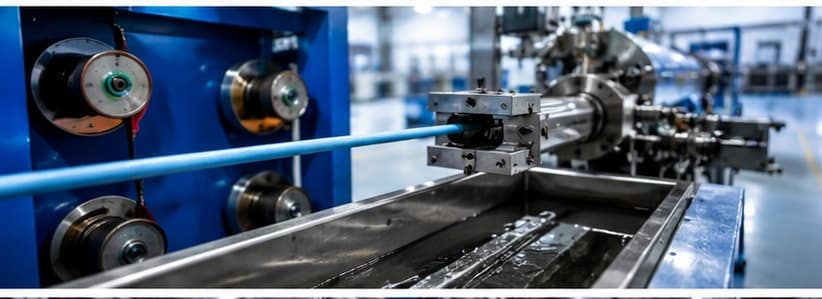
Cable pay-off unit and cooling trough on an extrusion line

PVC vs XLPE Cables: Differences, Applications & Which You Need

PVC vs XLPE cables is the most common insulation choice a cable maker faces. PVC and XLPE are the two most common cable insulation materials, and choosing between them decides your cable’s temperature rating, voltage capability and cost. In short: PVC (polyvinyl chloride) is cheaper and more flexible for low-voltage wiring, while XLPE (cross-linked polyethylene) handles higher temperatures and voltages for power cables. This guide compares PVC vs XLPE in detail — and explains how each is manufactured on an extrusion line.
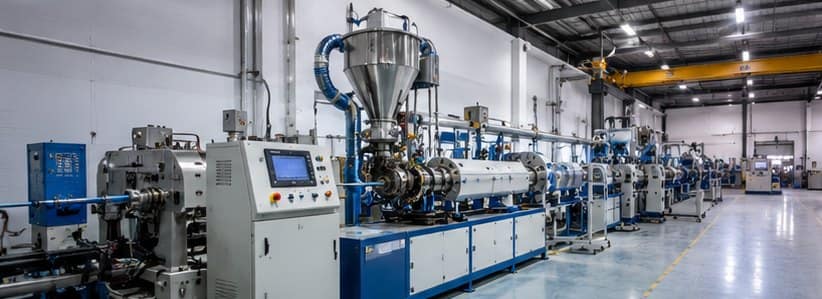
Cable extrusion line at Sai Extrumech factory in India

PVC vs XLPE Cables: Quick Comparison

PropertyPVCXLPE
Full namePolyvinyl Chloride (thermoplastic)Cross-Linked Polyethylene (thermoset)
Max conductor temp70°C (up to 105°C special grades)90°C continuous, 250°C short-circuit
Voltage rangeLow voltage (up to 1.1 kV)LV, MV & HV (up to 33 kV and beyond)
Insulation resistanceGoodExcellent
Dielectric lossesHigherLower
Current-carrying capacityLower~20-30% higher (for same size)
FlexibilityMore flexibleStiffer
Moisture & chemical resistanceGoodExcellent
Relative costLowerHigher
ManufacturingStandard extrusionExtrusion + cross-linking (Sioplas / Monosil / CCV)
Typical useHouse & building wire, control cablesPower, MV/HV, solar & industrial cables

What Is PVC Cable Insulation?

PVC (polyvinyl chloride) is a thermoplastic insulation used on the vast majority of low-voltage cables — house wiring, building wire and control cables. It is valued for being flexible, cost-effective and inherently flame-retardant. Standard PVC is rated to 70°C (special grades to 105°C) and voltages up to 1.1 kV, and is manufactured to IS 694 and IS 1554.

Its limitations are a lower temperature and voltage ceiling, higher dielectric losses, and the release of smoke and halogen gases when burning — which is why low-smoke (LSZH/HFFR) compounds are preferred in enclosed spaces. PVC insulation is applied on a straightforward building wire extrusion line using a precision crosshead.
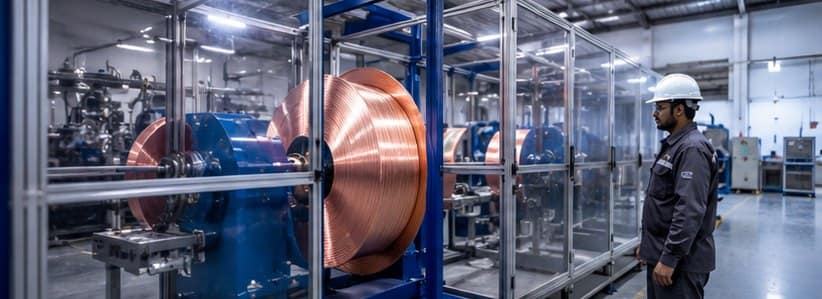
Copper wire take-up spool on a cable extrusion line

What Is XLPE Cable Insulation?

XLPE (cross-linked polyethylene) is a thermoset insulation created by chemically cross-linking polyethylene, so the material no longer melts when heated. This gives XLPE a much higher continuous temperature rating (90°C, and 250°C under short-circuit), excellent insulation resistance, low dielectric loss and superb moisture and chemical resistance. It is used from low voltage right up to medium- and high-voltage power cables and is made to IS 7098 and IEC 60502.

The trade-offs are higher material cost, greater stiffness, and an extra cross-linking step in production. But for power, solar and industrial cables, XLPE’s higher current capacity and durability usually justify the cost. See our Sioplas triple-layer HT-XLPE line for MV cables up to 33 kV.

PVC vs XLPE: The Key Differences

Temperature Rating

XLPE operates at 90°C continuously versus 70°C for standard PVC, and withstands 250°C during short-circuit faults. Because XLPE is a thermoset it will not soften or deform at high temperature, while thermoplastic PVC can.

Voltage & Current Capacity

PVC is a low-voltage material (up to 1.1 kV). XLPE spans low, medium and high voltage — up to 33 kV and beyond. For the same conductor size, XLPE also carries roughly 20–30% more current thanks to its higher temperature rating.

Electrical Performance

XLPE has higher insulation resistance and lower dielectric losses than PVC, meaning less energy wasted as heat in the insulation — important for efficient power transmission.

Mechanical & Environmental

PVC is more flexible and easier to strip and handle. XLPE resists moisture, chemicals and ageing far better, making it the choice for buried, submerged, solar and industrial cables exposed to harsh conditions.

Cost

PVC is cheaper on both material and processing. XLPE costs more and needs cross-linking equipment, so it is reserved for applications where its performance is required rather than general wiring.

When to Choose PVC vs XLPE

Choose PVC for low-voltage house wiring, building wire, control cables and budget-sensitive indoor applications where flexibility matters. Choose XLPE for power cables, medium- and high-voltage lines, solar (PV) cables, submersible and industrial cables that face heat, high current or harsh environments. Many modern cables even combine both — XLPE insulation with a PVC outer sheath.
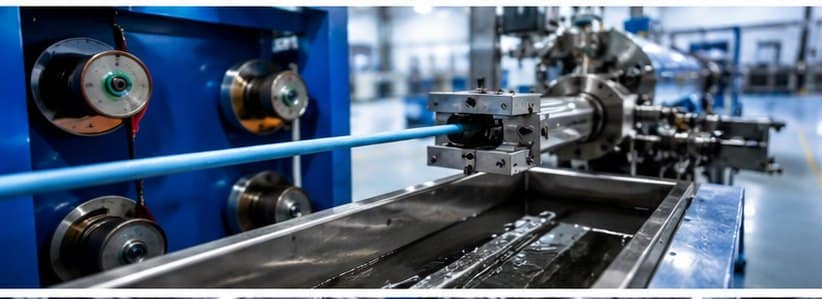
Cable pay-off unit and cooling trough on an extrusion line

How PVC and XLPE Cables Are Manufactured

Both PVC and XLPE cables begin the same way: a conductor is drawn from a pay-off through an extruder and crosshead that applies the insulation, then through a cooling trough, haul-off and take-up. The key difference is the cross-linking step for XLPE.

PVC Extrusion

PVC insulation is applied by melting the compound and extruding it around the conductor through the crosshead, then cooling it in a water trough. It is a single- or dual-layer extrusion process with no curing stage — simple, fast and cost-effective.

XLPE Extrusion & Cross-Linking

XLPE requires an extra step to cross-link the polyethylene. The three main methods are Sioplas and Monosil (silane grafting, moisture-cured) and CCV/CV (peroxide, continuously vulcanised) for medium and high voltage. Our Sioplas triple-layer lines apply the semiconducting screens and XLPE insulation in one pass for MV cables up to 33 kV — see our comparison of the Sioplas vs Monosil process for details.
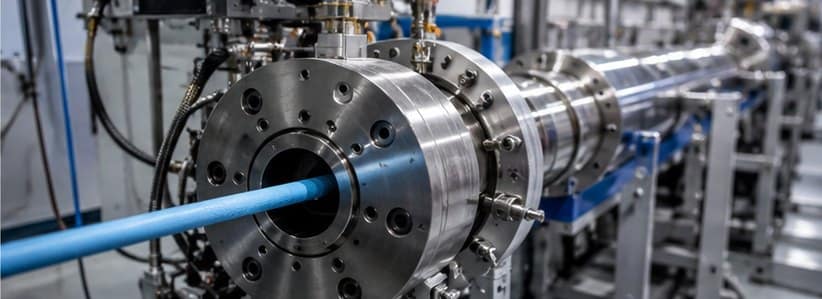
Extruder crosshead applying insulation on a cable

Both processes depend on precise crossheads, matched screws and barrels, and good insulation concentricity. Explore the full range from Sai Extrumech, extrusion machine manufacturers in India, or see all our cable extrusion lines.

Cable Standards for PVC and XLPE

  • PVC: IS 694 (up to 1100 V), IS 1554 (heavy-duty PVC cables) — Bureau of Indian Standards
  • XLPE: IS 7098 (XLPE insulated cables), IEC 60502 (power cables with extruded insulation)

PVC vs XLPE Cables: Key Takeaways

The choice of PVC vs XLPE cables comes down to temperature, voltage and cost. In short, PVC vs XLPE cables is decided by the job: PVC for low-voltage building wire, XLPE for higher-temperature power, solar and MV cables. For the insulation chemistry behind the difference, see cross-linked polyethylene (XLPE).

Frequently Asked Questions

Which is better, PVC or XLPE?

Neither is universally better — it depends on the application. PVC is better for low-voltage building wire where cost and flexibility matter. XLPE is better for power, medium- and high-voltage, solar and industrial cables that need higher temperature and current capacity.

Is XLPE more expensive than PVC?

Yes. XLPE compound costs more and requires an extra cross-linking step in manufacturing, so XLPE cable is more expensive than PVC. The higher current capacity and temperature rating often justify the cost in power applications.

Can XLPE handle higher temperatures than PVC?

Yes. XLPE is rated for 90°C continuous operation and up to 250°C under short-circuit, versus 70°C for standard PVC. Because it is cross-linked (thermoset), XLPE does not soften and re-melt like thermoplastic PVC.

What voltage can XLPE cables handle?

XLPE is used across low, medium and high voltage — from 1.1 kV building wire up to 33 kV and well beyond for utility transmission. PVC is limited to low voltage, typically up to 1.1 kV.

How is XLPE cable made?

XLPE cable is extruded like any cable, then the polyethylene is cross-linked so it becomes a thermoset. Common methods are Sioplas and Monosil (silane, moisture-cured) and CCV/CV (peroxide, continuously vulcanised) for medium and high voltage.

Which insulation is used for solar cables?

Solar (PV) cables use cross-linked insulation such as XLPE or XLPO because they must withstand high temperatures, UV and weather for 25+ years — conditions standard PVC cannot meet.

Conclusion

PVC and XLPE each win in their own domain: PVC for affordable, flexible low-voltage wiring, and XLPE for higher-temperature, higher-voltage power, solar and industrial cables. Whichever you produce, the quality comes down to the extrusion line and tooling. Sai Extrumech builds custom PVC and XLPE (Sioplas) cable extrusion lines up to 33 kV — share your cable specification and our team will recommend the right line.

For market context, see our India wire & cable industry statistics.
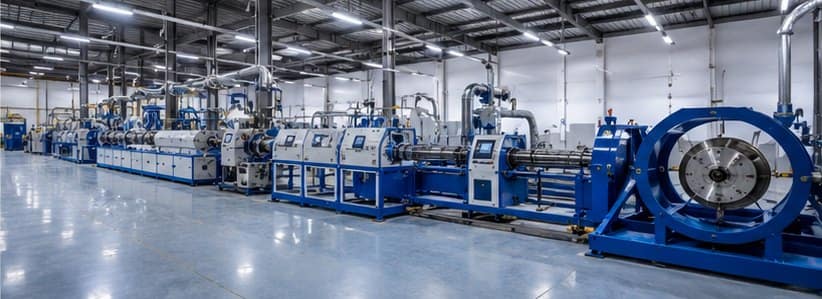
Wire and cable extrusion line production hall in India

Advancements in Cable Extrusion Technology: A Deep Dive for Industry Professionals

Introduction: The Evolving Landscape of Cable Manufacturing

The cable and wire manufacturing industry is a cornerstone of modern infrastructure, powering everything from our homes and offices to complex industrial machinery and global communication networks. At its heart lies the intricate process of cable extrusion, a technology that has continuously evolved to meet the ever-increasing demands for higher performance, greater efficiency, and specialized applications. For industry professionals, staying abreast of these advancements is not just beneficial, but essential for maintaining a competitive edge and driving innovation.
This article delves into the latest advancements in cable extrusion technology, exploring how new machinery, materials, and processes are shaping the future of wire and cable production. We will examine key trends, discuss their implications, and highlight how leading manufacturers like Sai Extrumech are at the forefront of delivering cutting-edge solutions tailored to the unique needs of a dynamic market.

The Drive for Efficiency and Speed: Next-Generation Extrusion Lines

Modern cable manufacturing demands speed without compromising quality. The latest extrusion lines are engineered for unprecedented throughput, integrating advanced control systems and automation to optimize every stage of the process. This includes:

High-Speed Extruders

New extruder designs feature enhanced screw geometries and barrel configurations that facilitate faster melting and mixing of polymers, leading to increased output rates. These extruders are often paired with sophisticated cooling systems to manage the thermal load effectively, ensuring consistent product quality even at elevated speeds.

Integrated Automation and Control

The days of manual adjustments are rapidly fading. Today’s extrusion lines incorporate advanced PLCs (Programmable Logic Controllers) and HMI (Human-Machine Interface) systems, allowing for precise control over temperature profiles, pressure, and line speed. This level of automation minimizes human error, reduces material waste, and ensures repeatable quality. Sai Extrumech, for instance, offers extrusion lines with intuitive control interfaces that empower operators to manage complex processes with ease, leading to significant operational efficiencies.

Energy Efficiency

With rising energy costs and a global push for sustainability, energy-efficient extrusion lines are becoming a standard. Innovations include more efficient motor drives, optimized heating elements, and improved insulation, all contributing to a reduced carbon footprint and lower operating costs. This focus on sustainability is not just environmentally responsible but also economically advantageous for manufacturers.

Material Innovations: Pushing the Boundaries of Performance

The performance of a cable is intrinsically linked to the materials used in its construction. Recent advancements in polymer science have led to the development of new compounds that offer superior electrical, mechanical, and thermal properties. These include:

Advanced Polymer Compounds

Specialized polymers like XLPE (Cross-linked Polyethylene) and Sioplas compounds are now widely used for their excellent insulation properties, high-temperature resistance, and durability. These materials are crucial for applications requiring robust performance, such as power cables and automotive wiring. The ability to process these advanced materials efficiently is a hallmark of state-of-the-art extrusion machinery.

Halogen-Free Flame Retardant (HFFR) Materials

Safety regulations are driving the adoption of HFFR materials, which emit minimal smoke and toxic fumes in the event of a fire. Extrusion equipment must be capable of handling these materials, which often have different processing characteristics compared to traditional PVC. Sai Extrumech’s crossheads and tooling are designed to accommodate a wide range of advanced materials, ensuring optimal processing and product integrity.

Bio-based and Recycled Polymers

In line with sustainability goals, there’s a growing interest in bio-based and recycled polymers for cable insulation and jacketing. While still nascent, the development of extrusion processes compatible with these materials represents a significant future trend, offering environmentally friendly alternatives without compromising performance.

Precision Tooling and Crossheads: The Heart of Quality Extrusion

The quality of the extruded cable is heavily dependent on the precision of the tooling and crossheads. These components shape the molten polymer around the conductor, ensuring concentricity, uniform thickness, and a smooth surface finish.

Multi-Layer Co-Extrusion

Many modern cables feature multiple layers of insulation and jacketing, each with specific properties. Multi-layer co-extrusion crossheads allow for the simultaneous application of these layers in a single pass, significantly improving efficiency and product quality. This technology is particularly vital for complex cables like optical fiber and high-voltage power cables.

Optimized Crosshead Designs

Innovations in crosshead design focus on minimizing material degradation, reducing pressure drop, and ensuring precise material flow. This results in superior concentricity and adhesion between layers, critical for the long-term reliability of the cable. Sai Extrumech offers a comprehensive range of crossheads, including fixed center and manual center designs, engineered for precision and durability across various applications.

Quick-Change Tooling Systems

To maximize uptime and flexibility, quick-change tooling systems are becoming increasingly popular. These systems allow for rapid changeovers between different cable designs, reducing production downtime and enhancing manufacturing agility.

The Role of Sai Extrumech in Shaping the Future

As a leading manufacturer in the cable extrusion machinery industry, Sai Extrumech is committed to pushing the boundaries of innovation. With 25 years of industry expertise, the company has consistently delivered advanced extrusion solutions that meet the evolving needs of its global clientele. From high-speed extrusion lines to precision crossheads and specialized screws and barrels, Sai Extrumech’s product portfolio is designed for optimal performance, efficiency, and reliability.
Sai Extrumech’s dedication to customization ensures that each solution is tailored to the specific operational requirements of its clients, whether for automotive, energy, or communication cables. Their commitment to quality, coupled with continuous research and development, positions them as a trusted partner for manufacturers seeking to enhance their production capabilities and embrace the future of cable extrusion.

Conclusion: A Future of Innovation and Growth

The cable extrusion technology landscape is characterized by continuous innovation, driven by the demand for higher performance, greater efficiency, and sustainable manufacturing practices. For industry professionals, understanding these advancements is key to unlocking new opportunities and staying ahead in a competitive market. With manufacturers like Sai Extrumech leading the charge, the future of cable manufacturing promises to be one of exciting growth and technological breakthroughs.
By Sai Extrumech Editorial Team  |  Published: March 23, 2026  |  Last Updated: April 10, 2026

Cable extrusion technology is the manufacturing process of applying a thermoplastic or thermoset insulation layer around a conductor (copper or aluminium wire) using a heated extruder screw. Modern extrusion lines run at speeds up to 1,200 m/min, process materials including PVC, XLPE, HFFR, and Sioplas, and are used to produce power cables, communication cables, and automotive wiring.

Industry Statistics: The global wire and cable market was valued at approximately USD 230 billion in 2023 and is projected to exceed USD 320 billion by 2030, driven by renewable energy infrastructure and EV adoption (Grand View Research, 2024). Cable extrusion accounts for roughly 40% of total cable manufacturing costs, making efficiency improvements a key competitive lever.

Frequently Asked Questions

What is the difference between PVC and XLPE insulation in cable extrusion?

PVC (Polyvinyl Chloride) is the most common cable insulation, cost-effective and suited for low-voltage applications up to 70°C. XLPE (Cross-linked Polyethylene) offers superior performance at higher temperatures (up to 90°C continuous), better electrical properties, and is required for medium and high-voltage power cables above 1 kV.

What line speeds can modern cable extrusion machines achieve?

Modern single-layer insulation lines typically achieve 800–1,200 m/min for conductors under 2.5 mm². Multi-layer or larger conductor lines run at 200–400 m/min. Modern Sai Extrumech single-layer cable extrusion lines achieve constructive line speeds of 800–1,200 m/min for building wire (conductors under 2.5 mm²). Multi-layer power cable lines run at 200–400 m/min depending on conductor cross-section.

What is an extrusion crosshead and why does it matter for cable quality?

A crosshead guides molten polymer uniformly around the conductor at the end of the extruder barrel. Crosshead design directly affects cable concentricity (uniform insulation thickness) and surface finish. Poor concentricity causes failures under electrical stress and is a primary quality rejection reason in cable manufacturing.

What is HFFR cable and what extrusion equipment does it require?

HFFR (Halogen-Free Flame Retardant) cable uses mineral-based compounds that emit minimal toxic smoke in fires. HFFR compounds are more abrasive and have higher melt viscosity than PVC, requiring extruders with bi-metallic screw and barrel construction, higher torque drives, and specialized crosshead tooling.

Can a cable extrusion line be customized for specific applications?

Yes. Sai Extrumech configures lines for specific cable types, conductor sizes, insulation materials, and line speeds — for automotive, power, solar, optical fibre, and building wire applications.