screw and barrel wear in extrusion machine

Stop Screw and Barrel Wear in Extrusion: Expert Guide 2026
Stop Screw and Barrel Wear in Extrusion: Expert Guide 2026

screw and barrel wear in extrusion machine

To prevent screw and barrel wear in extrusion from ruining your production, monitoring your plastic extrusion machine is essential over time. When wear happens, it leads to higher discharge temperatures, increased energy consumption, and a higher product rejection rate. In this blog, we’ll explain how to identify screw and barrel wear early and what steps you can take to prevent costly downtime and repairs, whether you’re operating a single screw extruder or a twin screw extruder.

What Causes Screw and Barrel Wear in Extruders?

Screw and barrel wear is a gradual process caused by everyday extrusion conditions, such as material friction, high temperatures, corrosive additives, and long hours of machine operation.The most common factors that cause screw and barrel wear are:

Abrasive materials

Processing things like glass-fiber polymers, mineral-loaded PVC, or XLPE puts a lot of stress on your machine. Think of it this way: every time those abrasive particles pass through, they act like sandpaper, slowly grinding down your screw flights and barrel surfaces. If you’re running filled compounds daily, this is where the real screw and barrel wear problems start.

Corrosive polymer degradation

When PVC or fluoropolymers break down at high temperatures, they release hydrochloric acid and other corrosive byproducts. These chemicals attack the metal surface and weaken it far faster than mechanical abrasion alone. This buildup is the root cause of ‘black specks’ and leads to irreversible corrosive screw and barrel wear.

Metal-to-metal contact

In a healthy extrusion system, the polymer melt acts as a lubricating film between screw and barrel. When feed rates are inconsistent or when a machine is run dry even briefly, this protective film breaks down, and direct metal contact causes accelerated wear.

Improper processing temperatures

Running too hot degrades the polymer; running too cold increases melt viscosity and mechanical stress on the screw. Both conditions accelerate wear.

Poor-quality raw materials

Dirt, metal fragments, or moisture in the feed can physically damage surfaces and trigger sudden screw and barrel wear in a short time.

Common Signs of Extrusion Screw Wear

Operators on the floor often sense something is off before the measurement data confirms it. Watch for these indicators:

    • Output rate drops without any change in screw speed settings

    • Melt temperature rises unexpectedly, indicating increased friction and energy dissipation

    • Dimensional inconsistency in the extrudate — pipes out of round, cable with varying diameter

    • Increased die pressure fluctuations pointing to unstable melt flow

    • Higher motor torque or current draw for the same throughput

    • Surging — a rhythmic pulsation in output that’s hard to eliminate

In PVC extrusion machines or cable extrusion machinery, any of these symptoms should trigger an immediate inspection. Catching wear early can mean the difference between a simple screw barrel repair and a full replacement.

How Barrel Wear Affects Production Efficiency

 Extrusion barrel wear is often underestimated relative to screw wear, but it contributes significantly to overall screw and barrel wear losses. As the barrel bore wears, the clearance between the screw OD and barrel ID increases. This gap allows molten polymer to slip backwards—a phenomenon called “leakage flow.”

    • Throughput loss: More backflow means less forward pumping efficiency. You need to run faster to produce the same output, worsening long-term screw and barrel wear.

    • Melt temperature rise: The additional shear from compensating with higher speed generates more heat, which can degrade heat-sensitive materials like PVC or XLPE.

    • Poor mixing: In a twin screw extruder or compounding line, advanced screw and barrel wear compromises the controlled mixing action the machine was designed for.

    • Higher energy consumption: Running harder to compensate for wear adds directly to your electricity bill.

For plastic processors operating PVC pipe manufacturing lines or high-speed wire and cable extrusion machinery, even a minor 10–15% throughput loss drastically reduces production efficiency. In the competitive plastic extrusion industry, this drop in extruder output directly hurts your manufacturing profit margins and results in significant annual revenue loss.

Abrasive Wear vs. Corrosive Wear

Understanding which type of wear is dominant helps you choose the right material solutions and the most effective maintenance strategy to prevent future damage. Abrasive Wear

This shows up as a smooth, polished loss of material on the screw flights (particularly at the leading edge) and a gradual enlargement of the barrel bore. Materials like chalk-filled PVC, HDPE with titanium dioxide, glass-fiber composites, and carbon-black compounds are the main offenders. High-hardness bimetallic barrels and screw flights with hard-facing alloys (like Xaloy or Stellite-based materials) are the engineering answer here.

Corrosive Wear

This type appears as pitting, roughening, or etching of metal surfaces. It’s most common in PVC processing — especially when temperatures exceed limits or when the machine sits idle with material inside. Stainless-lined barrels or corrosion-resistant alloy screws are the appropriate choice when processing these materials regularly.

In many real-world extrusion processing applications, abrasive and corrosive wear often occur simultaneously. That’s why selecting the right screw and barrel materials is critical for extending component life and maintaining consistent machine performance.

Inspection and Measurement Techniques

Proper diagnosis is everything. Here’s how maintenance engineers should approach it:

Screw measurement: Use a micrometer to measure the screw OD at multiple points—feed zone, compression zone, and metering zone. Compare to the original specification. Flight wear of more than 0.2–0.4 mm typically warrants professional attention to fix screw and barrel wear.

Barrel bore measurement: An air gauge or a precision bore gauge is used to measure internal diameter at multiple depths. Record any ovality or taper. The allowable clearance between screw OD and barrel ID varies by machine size, but a general industry guideline is that total diametrical clearance beyond 0.8–1.0% of the nominal diameter signals significant wear.

Visual inspection: Look for scoring marks, pitting, or discolouration on barrel inner surfaces. On the screw, check for metal loss at flight tips, particularly in the feed section where initial screw and barrel wear begins.

Melt pressure logging: Trending melt pressure data over time is one of the best non-invasive ways to catch wear developing before it becomes a production problem.

Preventive Maintenance Tips for Extrusion Screw and Barrel Maintenance

Prevention is always cheaper than repair. Here are practical steps that extrusion machine maintenance teams should follow to minimize screw and barrel wear:

    1. Purge properly before shutdown — Never leave corrosive or thermally sensitive materials in the barrel. Use an appropriate purging compound.

    1. Control startup temperatures carefully — Cold-start extrusion is a major cause of sudden mechanical screw and barrel wear, especially in larger single-screw extruder machines.

    1. Monitor and log process data — Track torque, pressure, temperature, and throughput trends. Deviations often signal wear before it becomes critical.

    1. Inspect raw material quality — Regularly check for contamination or inconsistent particle size in your resin or compound.

    1. Schedule periodic screw pull inspections — At a minimum, once a year for high-duty applications; every six months for filled or corrosive materials.

    1. Use correct operating parameters — Running outside recommended temperature or speed ranges accelerates wear dramatically.

For a deeper dive into maintenance schedules and best practices, check out The Ultimate Guide to Extrusion Screw & Barrel Maintenance — a comprehensive resource for plant operators and maintenance teams.

When to Repair vs. Replace the Screw and Barrel

This is a judgment call, but here are the practical benchmarks:

Repair (refurbishment) makes sense when:

    • Wear is localised to specific zones (e.g., feed section only)

    • Base metal is undamaged and dimensionally recoverable

    • The screw geometry is still suitable for your current application

    • Cost of refurbishment is less than 40–50% of the new cost

Full replacement is the better choice when:

    • Wear is extensive across multiple zones

    • The screw or barrel has been damaged by contamination or improper operation

    • You’re changing your product mix and need a different screw geometry

    • Downtime cost of a second refurbishment outweighs the investment in new components

In either case, working with a qualified extrusion screw manufacturer or extrusion barrel manufacturer ensures you get the right metallurgical and geometric specifications for your process.

Choosing High-Quality Extrusion Components

Not all screws and barrels are created equal. When sourcing replacement or upgrade components, look for:

    • Appropriate base material: Tool steel, bimetallic barrel with hard inner liner, or stainless steel for corrosive applications

    • Correct hardness specifications: Typically 60–65 HRC on barrel liner for abrasive service

    • Tight dimensional tolerances: Critical for maintaining proper flight clearance

    • Matched screw-barrel pairs: Screw OD and barrel ID should always be specified together

    • Application-specific geometry: Feed, compression, and metering zone lengths and depths designed for your specific polymer and output targets

Sourcing from a reliable screw barrel manufacturer in India with proven engineering capabilities makes a measurable difference in component life and machine performance.

Why Choosing the Right Extrusion Equipment Partner Matters

When extrusion line problems pile up — inconsistent output, rising energy bills, frequent scrap, and unexpected downtime — the root cause is often more than a single worn component. In many cases, it is a combination of equipment condition, processing parameters, and component wear. That’s why working with an extrusion machinery manufacturer that understands the complete extrusion process is important.

Sai Extrumech manufactures extrusion screws, barrels, crossheads, and complete extrusion lines for the plastic, cable, and PVC processing industries. With experience in extrusion component design and machine engineering, we help manufacturers improve processing efficiency, reduce downtime, and extend component life.

As a plastic extrusion machinery manufacturer, Sai Extrumech focuses on delivering reliable equipment and wear-resistant components designed to perform under real production conditions.

Conclusion

Screw and barrel wear is an inevitable reality in any extrusion operation, but it doesn’t have to be a crisis. With the right understanding of wear mechanisms, early detection habits, and a disciplined approach to extrusion screw and barrel maintenance, most plants can significantly extend component life, reduce downtime, and protect product quality.

The key is not to wait for problems to become obvious. By the time output has dropped noticeably, the wear is already advanced. Proactive measurement, good operating discipline, and quality components from a reputable extrusion screw manufacturer are the foundation of a high-performing extrusion operation.

Dealing with Screw & Barrel Wear? We Fix It.

When your screw and barrel wear out, your business suffers. You face poor product quality, low output, high power bills, and costly production downtime.

At Sai Extrumech, we solve exactly these problems to bring your machinery back to its peak performance:

    • New Custom Components: High-quality, wear-resistant screws and barrels tailored to your specific materials.

    • Expert Refurbishment: Rebuilding your worn-out parts to perform like new at a fraction of the cost.

    • Engineering Support: Troubleshooting your system to stop premature wear and cut downtime.

Stop losing money to production stops. Contact Sai Extrumech today for a reliable, long-lasting solution.
 

Frequently Asked Question

What causes screw and barrel wear in extrusion machines

Screw and barrel wear is caused by abrasive materials, such as glass fibers, that scrape the metal surfaces during processing. Additionally, when polymers overheat and degrade, they release corrosive gases that eat into the metal, leading to 'black specks' and surface damage. This is often worsened by metal-to-metal contact due to poor alignment or improper temperatures, while low-quality or contaminated raw materials further accelerate the degradation of your extrusion components.

What materials are best for processing abrasive compounds like filled PVC or HDPE?

For abrasive applications, bimetallic barrels with a high-hardness alloy liner (such as iron-based or nickel-based hard alloys) paired with hard-faced screw flights offer the best wear resistance. For corrosive applications like PVC or fluoropolymers, corrosion-resistant alloys or stainless steel linings are the right choice

Is it okay to keep running a worn screw and barrel just to finish a production batch

No. Operating an extrusion machine with a worn screw and barrel can lead to increased wear, unstable processing conditions, reduced product quality, and potential damage to other machine components. While the impact may not be immediately visible, continued operation can result in higher maintenance costs and unplanned downtime

How can I identify screw and barrel wear early

Early signs of screw and barrel wear often show up in day-to-day production. A drop in output, inconsistent product dimensions, unstable melt pressure, higher melt temperatures, or increased motor load can all indicate that wear is developing. Regular inspections and routine measurement of screw and barrel clearances can help detect problems before they affect product quality or lead to costly downtime.
Purging And Maintenance

Purging And Maintenance Tips to Avoid Screw And Barrel Damage

Purging And Maintenance Tips to Avoid Screw & Barrel Damage

Why Regular Purging And Maintenance Saves Money?

In the plastic extrusion industry, even a few minutes of downtime can affect production. Regular purging and maintenance of extrusion screws and barrels plays an important role in keeping production smooth and efficient.

Quick changeovers between different colors and resin grades help reduce machine downtime and minimize material waste. At Sai Extrumech, we always advise processors that preventive maintenance of extrusion screws and barrels is not just routine servicing — it is a smart investment that improves extruder performance, extends the life of screws and barrels, and increases long-term profitability.

Once a screw or barrel begins to wear out, no amount of process adjustments can truly fix the drop in machine performance. That is why staying consistent with your Purging and Maintenance routine is so important.

Unfortunately, components in extrusion lines are often taken for granted. Plant managers frequently put off Preventive Maintenance (PM) to chase immediate production targets. While this might help you meet today’s urgent quotas, delaying essential care can quietly cause devastating, long-term damage to your business.

The smartest and most effective way to upgrade your PM routine is simple: integrate the regular use of a premium Commercial Purging Compound (CPC) into your production cycle.

What Makes Your Extrusion Parts Wear Out?

To take good care of your extruder, you first need to understand why its parts break down over time. Implementing the right Purging and Maintenance routine helps fight these 5 common causes of screw and barrel wear:

    • The Raw Materials: Harsh resins like PVC cause chemical rust, while plastics mixed with glass fibers scratch the metal surfaces.

    • Metal Quality: The strength and type of metal used to make your screws and barrels determine how long they will last.

    • Special Coatings: Parts that have an extra-hard, protective layer resist damage much better than standard parts.

    • Machine Settings: Running your lines at the wrong temperatures, high speeds (RPM), or under too much pressure causes rapid internal damage.

    • Perfect Alignment: If your screw and barrel are not lined up perfectly, they will rub against each other and cause metal-on-metal friction.

Because you cannot fix a physically worn-out extruder by just changing your settings, being proactive with your Purging And Maintenance is very important.

A smart maintenance plan tracks how long your parts last based on the exact plastics you run. At Sai Extrumech, we recommend teaching your factory team to spot early signs of wear, measure components correctly, and know exactly when to repair or replace them.

Purging And Maintenance

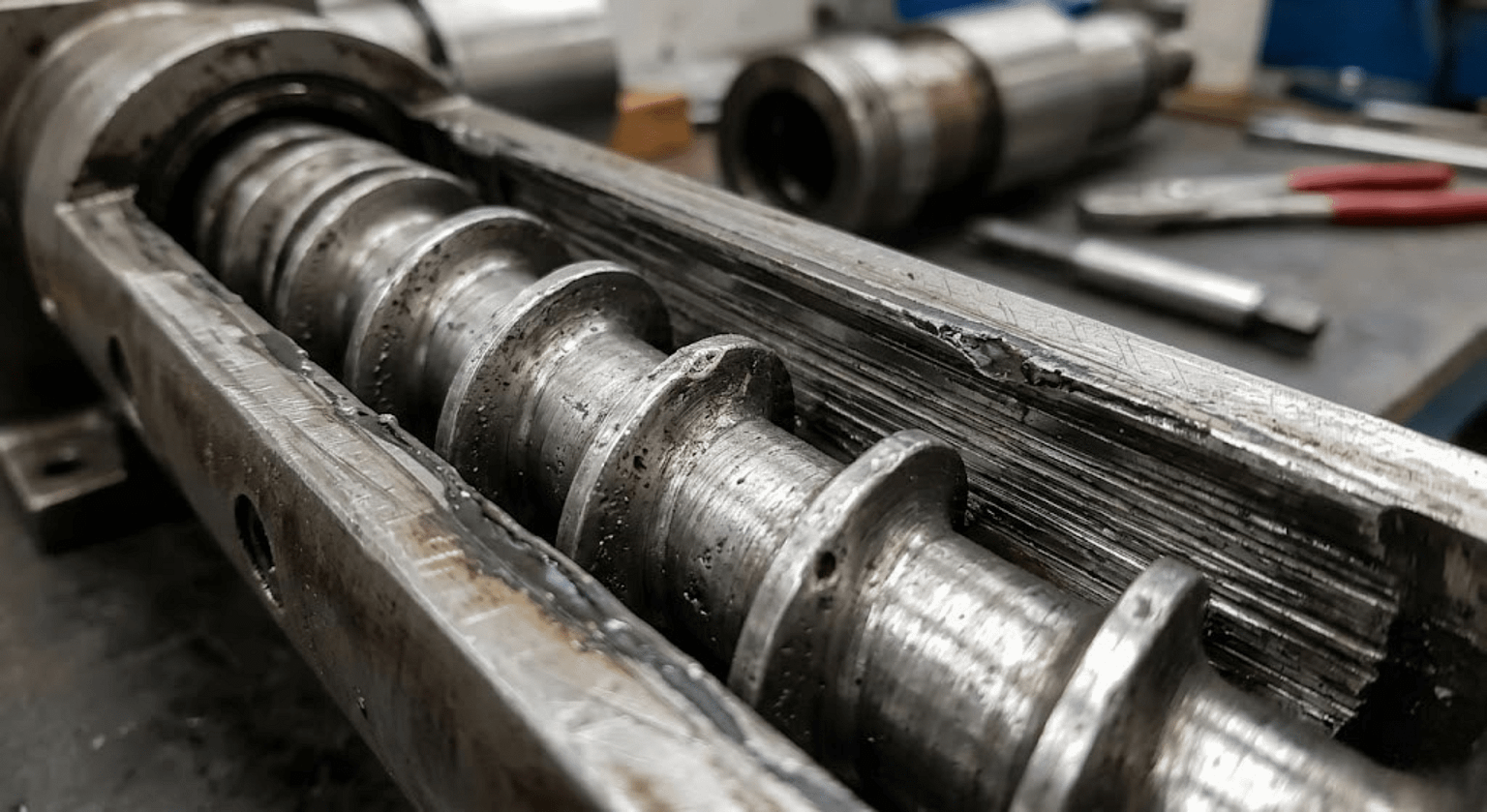
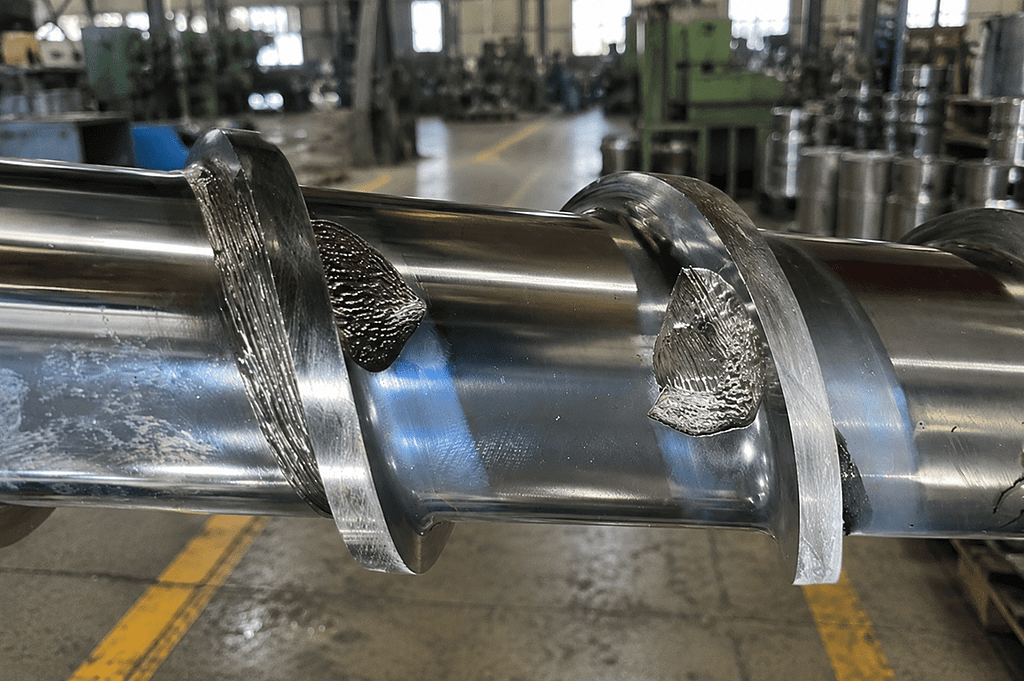
Abrasive screw wear, like the damage shown in Image 2, can create serious problems in the extrusion process over time. As screws and barrels wear out, material flow becomes inconsistent, production output drops, and melting quality suffers. Worn screw and barrel also make the machine work harder, which increases power consumption and operating costs. Regular wear inspection, combined with proper Purging And Maintenance, helps keep the extrusion system running smoothly, reduces unexpected breakdowns, and avoid expensive repair and production downtime.

Purging And Maintenance Tips for Abrasive screw wear

Why Preventive Maintenance Matters for Screw and Barrel Systems

In plastic processing industries, screw and barrel systems work under high pressure and temperature every day. When processors use glass-filled or reinforced materials, these components can wear out faster.

Incorporating a strict Purging And Maintenance schedule is critical; if wear is not checked on time, it will directly harm machine performance, reduce product quality, and destroy overall production efficiency.

That is why a structured preventive care program is very important. Regular inspection of screws, barrels, and valves helps identify wear before it becomes a major problem.

In facilities processing these abrasive compounds, inspections should be done more frequently because the added friction accelerates internal wear. 

Regular Purging and Maintenance of extrusion screws and barrels offers key structural advantages for your facility. It delivers a drastic downtime reduction by cutting down machine stoppage time during color or resin changes. Additionally, this proactive care ensures maximized equipment life, effectively protecting high-value extruder parts from premature wear while achieving zero unexpected breakdowns by catching minor internal friction issues before they turn into costly factory shutdowns.

How Wear Analysis Improves Production Efficiency

Checking the wear condition of screws and barrels helps manufacturers maintain smooth and stable production. As components start wearing out, processors may notice problems such as higher scrap rates, inconsistent product quality, longer cycle times, and increased power consumption. Finding these issues early helps prevent bigger production losses.

Wear analysis also helps manufacturers choose better metallurgy to improve extruder machine performance. For demanding applications, many processors prefer using bimetallic screws and barrels because they offer superior wear resistance and a longer working life in abrasive processing conditions.

High-quality components help maintain stable material flow, reduce downtime, and improve overall production efficiency. Implementing a regular Purging & Maintenance routine for your extruder machines is a direct way to boost your plastic processing efficiency and increase your profit margins. It helps manufacturers maintain flawless quality by wiping out carbon buildup, black specks, and material contamination inside the screw and barrel assembly

On top of that, it helps lower your energy costs because clean components ensure a smooth plastic melt and material flow, which significantly reduces power consumption. Finally, by cutting down on scrap and polymer waste, it saves your expensive raw materials from getting rejected, directly lowering your operational expenses and driving higher profitability for your plastic extrusion business

Continuous processing of abrasive compounds can gradually cause severe wear on your screw and barrel assembly, which eventually affects machine throughput and production efficiency. If component wear is ignored for a long period, processors will experience inconsistent output, increased scrap rates, and reduced performance. Following a dedicated Purging And Maintenance program is the best way to extend the working life of your extruder parts while maintaining stable processing conditions.

Variations in machine performance are often connected to wear on processing components. Regular inspection of screws and barrels helps manufacturers identify wear before major production issues occur. After proper cleaning and cooling, wear can be measured and recorded to evaluate whether repair or replacement is required. Many processors also use commercial purging compounds (CPC) before screw removal because they make the entire Purging And Maintenance process much faster, cleaner, and more effective.

How Purging Helps Improve Screw and Barrel Performance

In plastic processing industries, small amounts of screw and barrel wear can sometimes be managed through machine setting adjustments. However, as wear increases over time, it can start affecting throughput, product quality, and overall production efficiency. Implementing proven Purging And Maintenance routines helps manufacturers increase the working life of screws and barrels while maintaining smooth machine performance.

For larger extruder machines, screw removal and maintenance can take significant time if proper cleaning is not performed. This is why many processors use commercial purging compounds (CPC) before screw pulling.

A high-quality CPC helps clean the screw and barrel more effectively, reduces material buildup, and improves the efficiency of the maintenance process. Using the right purging compound can also help speed up resin and color changes during production while reducing carbon buildup, black specks, and leftover material residue inside the system. In demanding processing applications, proper purging And maintenance practices help maintain stable production quality and improve the overall life of screw and barrel components. Many processors also use heat-stable purging compounds during machine shutdowns to reduce oxidation and prevent startup contamination problems

Purging And Maintenance Tips to Avoid Screw wear

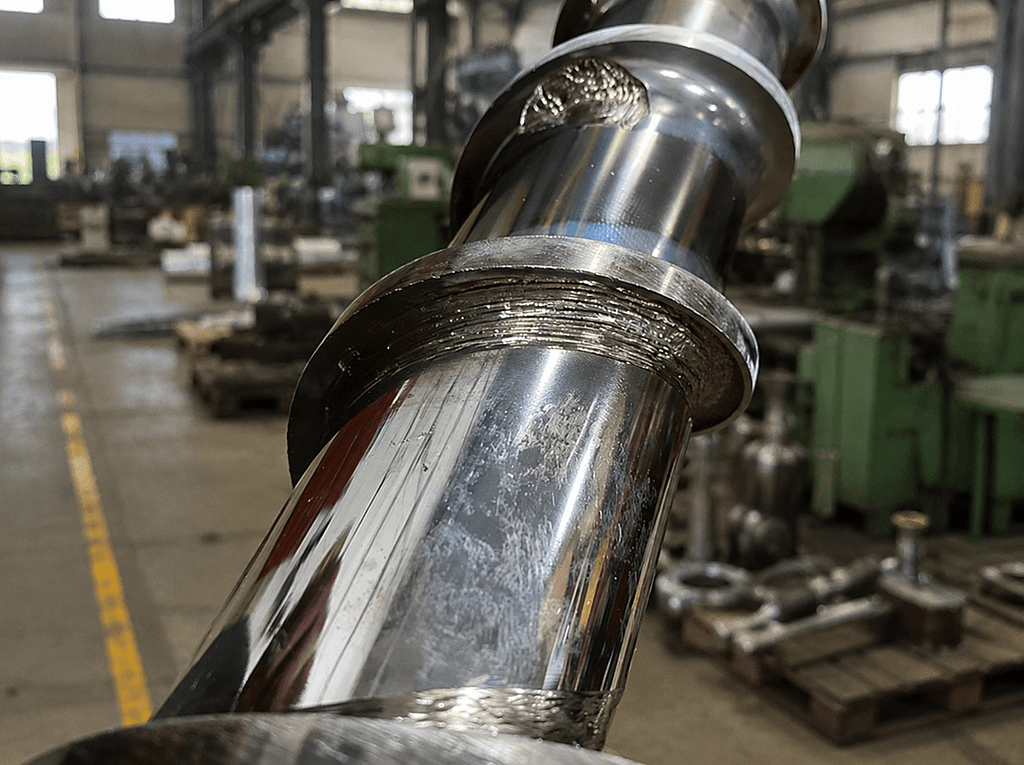
Purging compounds help remove resin residue, contamination, carbon deposits, and leftover material from extrusion systems. Always purge corrosive or filled resins before shutting down the machine to help prevent black specks, carbon buildup, and corrosive wear like the damage shown in Image 3. Making this step a standard part of your Purging and Maintenance routine is the easiest way to protect your extruder and maintain stable processing conditions Many processors use advanced CPCs to improve cleaning efficiency, reduce black specks, and maintain smoother machine performance during production and startup. Compared to cleaning with virgin resin or regrind material, CPCs are often more effective, require less material, and help reduce unnecessary manual Purging And Maintenance time. 

Using the right purging compound along with a proper preventive maintenance (PM) program helps improve productivity, reduce downtime, and extend the working life of screw and barrel components.

Conclusion

Regular preventive maintenance and effective purging practices are essential for maximizing the life and performance of extruder screw and barrel systems. By identifying wear early, using high-quality purging compounds, and following a structured maintenance program, manufacturers can reduce downtime, improve product quality, and achieve more stable production efficiency. Investing in proper screw and barrel maintenance not only protects processing equipment but also supports long-term operational profitability and reliable extrusion performance.

Need Expert Help for Your Extrusion Machine? 

At Sai Extrumech, we provide advanced engineering solutions for screw and barrel wear, extrusion instability, material degradation, and production efficiency problems faced by plastic processing industries across India. Our technical team can help you identify the root cause and recommend the right screw barrel solution for long-term machine performance. Contact Our Engineers Today for Technical Assistance & Custom Solutions


Frequently Asked Questions

What is the best way to clean an extruder screw and barrel

The best way to clean an extruder screw and barrel is by using a high-quality Commercial Purging Compound (CPC). It helps remove carbon buildup, black specks, and leftover material more effectively than using virgin resin or regrind. Regular purging also reduces downtime and helps maintain better machine performance without frequent screw pulling.

What are the main causes of screw and barrel wear in an extruder?

Screw and barrel wear is usually caused by friction, heat, hard filler materials, and improper machine operation. Issues like high screw speed, poor temperature control, moisture, and metal-to-metal contact can increase damage over time. Following proper purging and maintenance tips to avoid screw & barrel damage can help improve machine life and reduce costly downtime.

What are the best purging and maintenance tips to avoid screw & barrel damage

Using a good Commercial Purging Compound (CPC) is one of the best ways to keep screws and barrels clean and prevent carbon buildup. It’s also important to purge the machine properly before shutdown, especially after processing filled or corrosive materials, to avoid black specks and rust formation. Regular wear inspection, proper screw and barrel alignment, and using the right materials like bimetallic screws and barrels for abrasive compounds can also help reduce damage and increase machine life. Simple maintenance practices and timely checks can prevent costly breakdowns and improve extrusion performance.

What are the common signs of extruder screw wear

Some common symptoms of worn screws in an extruder are reduced production rates, irregular flow of material, poor melting properties, and increased scrap rate. One can also find that the machine consumes more energy compared to before or finds it difficult to perform consistently.

Why should we purge the machine before a complete shutdown?

Far far away, behind the word mountains, far from the countries Vokalia and Consonantia, there live the blind texts. Separated they live in Bookmarksgrove right at the coast

Is Your Extruder “Eating” Your Profits? The Truth About Material Wastage

In cable and pipe manufacturing, raw material (PVC, XLPE, or PE) is your biggest expense. If your extruder lacks precision, you aren’t just making cables—you are giving away free material with every meter produced.

The “Overweight” Problem

Most older or generic extruders struggle with Concentricity (keeping the wire perfectly centered in the insulation). To meet safety standards, operators often over-extrude insulation to compensate for poor centering.

  • Result: You use 10-15% more material than necessary.
  • Cost: That’s lakhs of rupees in wasted resin annually.

The Sai Extrumech Fix: Precision Engineering

At Sai Extrumech, we don’t just build machines; we build profit-savers. Our Self-Centering Cross Heads and precision-engineered Screw Barrels ensure:

  1. Perfect Concentricity: The conductor stays dead center.
  2. Thinner Tolerances: You can run closer to the minimum required thickness without breaching safety limits.
  3. Zero Start-up Scrap: Our high-speed lines stabilize instantly, reducing the pile of waste at the start of a run.

Stop Burning Cash on Resin

Your machinery shouldn’t be a liability. Whether you are running a 70mm High-Speed Line or a delicate Medical Tubing operation, accuracy is the only metric that matters for your bottom line.

Upgrade to precision. Upgrade to Sai Extrumech.

By Sai Extrumech Editorial Team  |  Published: November 27, 2025  |  Last Updated: April 10, 2026

Frequently Asked Questions

What is the difference between PVC and XLPE insulation in cable extrusion?

PVC (Polyvinyl Chloride) is the most common cable insulation, cost-effective and suited for low-voltage applications up to 70°C. XLPE (Cross-linked Polyethylene) offers superior performance at higher temperatures (up to 90°C continuous), better electrical properties, and is required for medium and high-voltage power cables above 1 kV.

What line speeds can modern cable extrusion machines achieve?

Modern single-layer insulation lines typically achieve 800–1,200 m/min for conductors under 2.5 mm². Multi-layer or larger conductor lines run at 200–400 m/min. Sai Extrumech's EEL 20 series achieves up to 1,200 m/min constructive line speed.

What is an extrusion crosshead and why does it matter for cable quality?

A crosshead guides molten polymer uniformly around the conductor at the end of the extruder barrel. Crosshead design directly affects cable concentricity (uniform insulation thickness) and surface finish. Poor concentricity causes failures under electrical stress.

How often should extrusion screws and barrels be replaced?

Under normal conditions with standard PVC, quality hardened screws and barrels last 3–7 years. Abrasive or high-temperature compounds like XLPE accelerate wear. Signs: reduced output at the same RPM, increased pressure variation, inconsistent melt quality.

Can a cable extrusion line be customized for specific applications?

Yes. Sai Extrumech configures lines for specific cable types, conductor sizes, insulation materials, and line speeds. Custom elements include extruder diameter and L/D ratio, crosshead design, cooling trough length, and capstan configuration — for automotive, power, solar, optical fibre, and building wire.