Purging And Maintenance

Purging And Maintenance Tips to Avoid Screw And Barrel Damage

Purging And Maintenance Tips to Avoid Screw & Barrel Damage

Why Regular Purging And Maintenance Saves Money?

In the plastic extrusion industry, even a few minutes of downtime can affect production. Regular purging and maintenance of extrusion screws and barrels plays an important role in keeping production smooth and efficient.

Quick changeovers between different colors and resin grades help reduce machine downtime and minimize material waste. At Sai Extrumech, we always advise processors that preventive maintenance of extrusion screws and barrels is not just routine servicing — it is a smart investment that improves extruder performance, extends the life of screws and barrels, and increases long-term profitability.

Once a screw or barrel begins to wear out, no amount of process adjustments can truly fix the drop in machine performance. That is why staying consistent with your Purging and Maintenance routine is so important.

Unfortunately, components in extrusion lines are often taken for granted. Plant managers frequently put off Preventive Maintenance (PM) to chase immediate production targets. While this might help you meet today’s urgent quotas, delaying essential care can quietly cause devastating, long-term damage to your business.

The smartest and most effective way to upgrade your PM routine is simple: integrate the regular use of a premium Commercial Purging Compound (CPC) into your production cycle.

What Makes Your Extrusion Parts Wear Out?

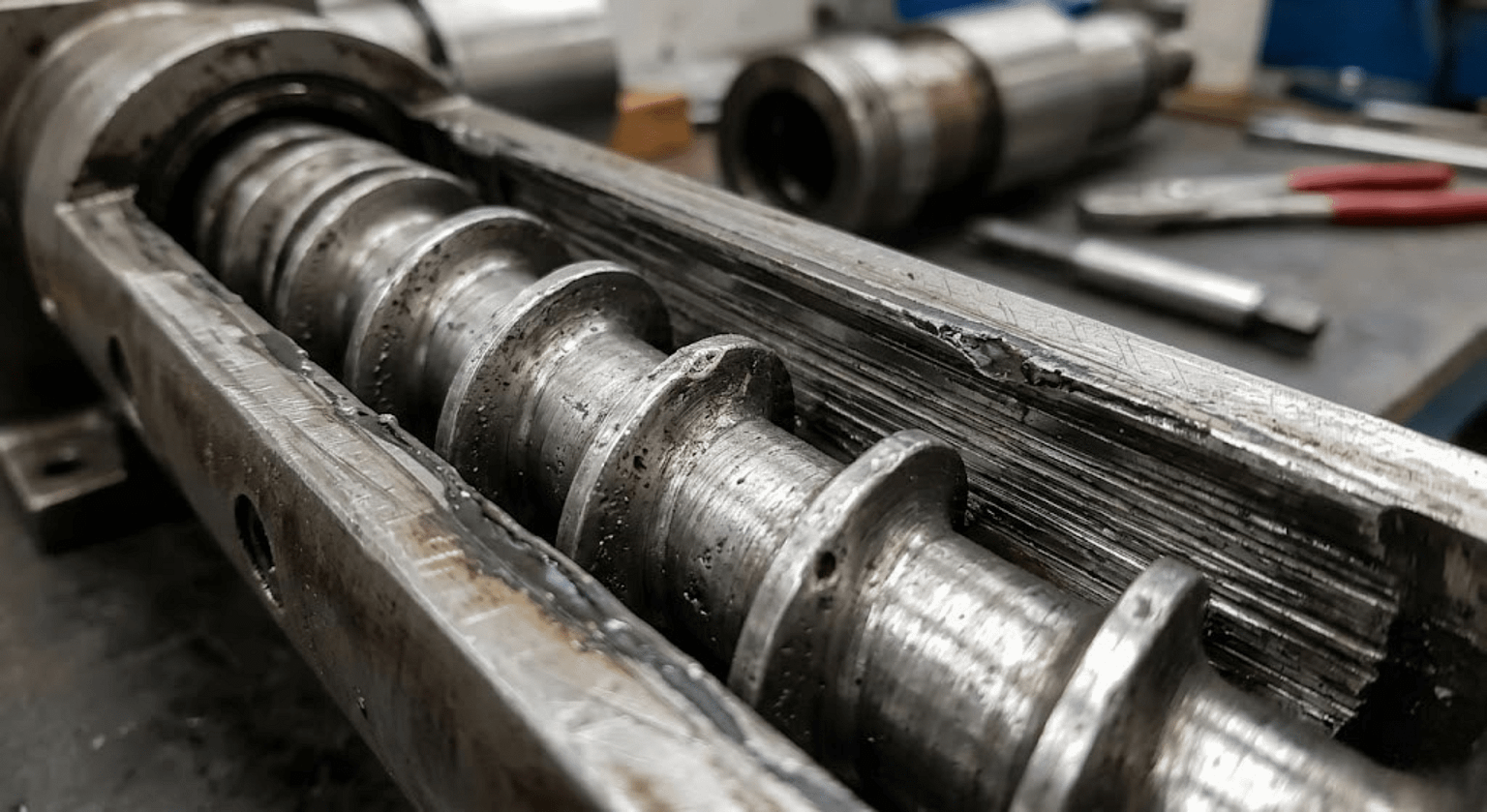
To take good care of your extruder, you first need to understand why its parts break down over time. Implementing the right Purging and Maintenance routine helps fight these 5 common causes of screw and barrel wear:

    • The Raw Materials: Harsh resins like PVC cause chemical rust, while plastics mixed with glass fibers scratch the metal surfaces.

    • Metal Quality: The strength and type of metal used to make your screws and barrels determine how long they will last.

    • Special Coatings: Parts that have an extra-hard, protective layer resist damage much better than standard parts.

    • Machine Settings: Running your lines at the wrong temperatures, high speeds (RPM), or under too much pressure causes rapid internal damage.

    • Perfect Alignment: If your screw and barrel are not lined up perfectly, they will rub against each other and cause metal-on-metal friction.

Because you cannot fix a physically worn-out extruder by just changing your settings, being proactive with your Purging And Maintenance is very important.

A smart maintenance plan tracks how long your parts last based on the exact plastics you run. At Sai Extrumech, we recommend teaching your factory team to spot early signs of wear, measure components correctly, and know exactly when to repair or replace them.

Purging And Maintenance

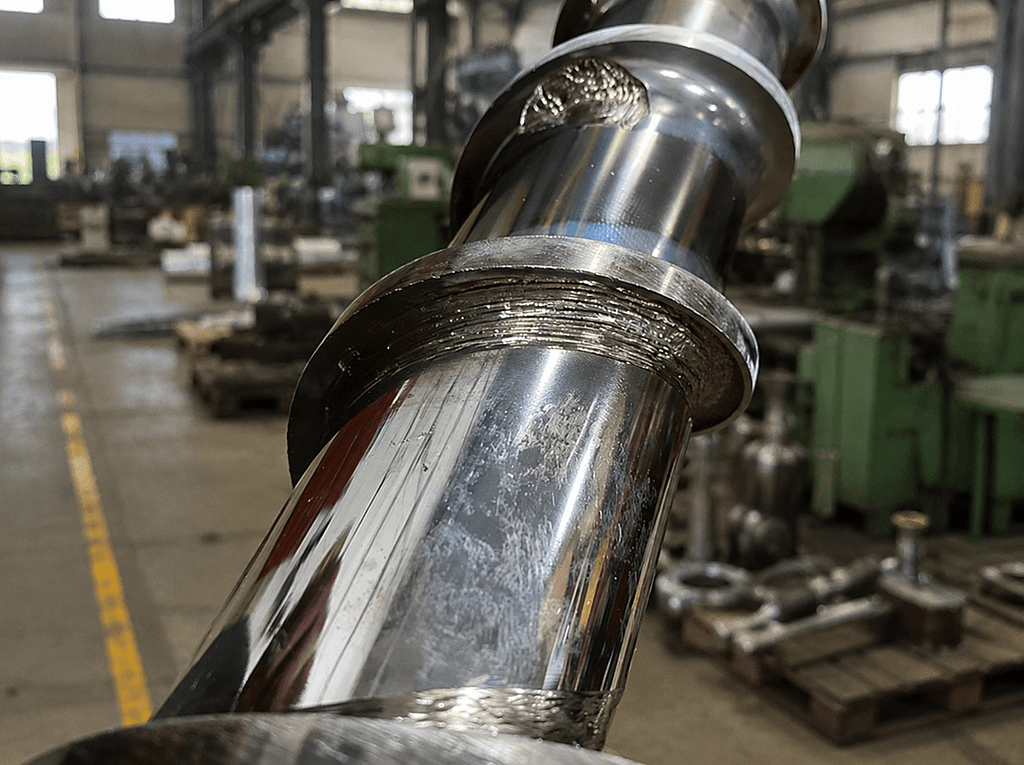
Abrasive screw wear, like the damage shown in Image 2, can create serious problems in the extrusion process over time. As screws and barrels wear out, material flow becomes inconsistent, production output drops, and melting quality suffers. Worn screw and barrel also make the machine work harder, which increases power consumption and operating costs. Regular wear inspection, combined with proper Purging And Maintenance, helps keep the extrusion system running smoothly, reduces unexpected breakdowns, and avoid expensive repair and production downtime.

Purging And Maintenance Tips for Abrasive screw wear

Why Preventive Maintenance Matters for Screw and Barrel Systems

In plastic processing industries, screw and barrel systems work under high pressure and temperature every day. When processors use glass-filled or reinforced materials, these components can wear out faster.

Incorporating a strict Purging And Maintenance schedule is critical; if wear is not checked on time, it will directly harm machine performance, reduce product quality, and destroy overall production efficiency.

That is why a structured preventive care program is very important. Regular inspection of screws, barrels, and valves helps identify wear before it becomes a major problem.

In facilities processing these abrasive compounds, inspections should be done more frequently because the added friction accelerates internal wear. 

Regular Purging and Maintenance of extrusion screws and barrels offers key structural advantages for your facility. It delivers a drastic downtime reduction by cutting down machine stoppage time during color or resin changes. Additionally, this proactive care ensures maximized equipment life, effectively protecting high-value extruder parts from premature wear while achieving zero unexpected breakdowns by catching minor internal friction issues before they turn into costly factory shutdowns.

How Wear Analysis Improves Production Efficiency

Checking the wear condition of screws and barrels helps manufacturers maintain smooth and stable production. As components start wearing out, processors may notice problems such as higher scrap rates, inconsistent product quality, longer cycle times, and increased power consumption. Finding these issues early helps prevent bigger production losses.

Wear analysis also helps manufacturers choose better metallurgy to improve extruder machine performance. For demanding applications, many processors prefer using bimetallic screws and barrels because they offer superior wear resistance and a longer working life in abrasive processing conditions.

High-quality components help maintain stable material flow, reduce downtime, and improve overall production efficiency. Implementing a regular Purging & Maintenance routine for your extruder machines is a direct way to boost your plastic processing efficiency and increase your profit margins. It helps manufacturers maintain flawless quality by wiping out carbon buildup, black specks, and material contamination inside the screw and barrel assembly

On top of that, it helps lower your energy costs because clean components ensure a smooth plastic melt and material flow, which significantly reduces power consumption. Finally, by cutting down on scrap and polymer waste, it saves your expensive raw materials from getting rejected, directly lowering your operational expenses and driving higher profitability for your plastic extrusion business

Continuous processing of abrasive compounds can gradually cause severe wear on your screw and barrel assembly, which eventually affects machine throughput and production efficiency. If component wear is ignored for a long period, processors will experience inconsistent output, increased scrap rates, and reduced performance. Following a dedicated Purging And Maintenance program is the best way to extend the working life of your extruder parts while maintaining stable processing conditions.

Variations in machine performance are often connected to wear on processing components. Regular inspection of screws and barrels helps manufacturers identify wear before major production issues occur. After proper cleaning and cooling, wear can be measured and recorded to evaluate whether repair or replacement is required. Many processors also use commercial purging compounds (CPC) before screw removal because they make the entire Purging And Maintenance process much faster, cleaner, and more effective.

How Purging Helps Improve Screw and Barrel Performance

In plastic processing industries, small amounts of screw and barrel wear can sometimes be managed through machine setting adjustments. However, as wear increases over time, it can start affecting throughput, product quality, and overall production efficiency. Implementing proven Purging And Maintenance routines helps manufacturers increase the working life of screws and barrels while maintaining smooth machine performance.

For larger extruder machines, screw removal and maintenance can take significant time if proper cleaning is not performed. This is why many processors use commercial purging compounds (CPC) before screw pulling.

A high-quality CPC helps clean the screw and barrel more effectively, reduces material buildup, and improves the efficiency of the maintenance process. Using the right purging compound can also help speed up resin and color changes during production while reducing carbon buildup, black specks, and leftover material residue inside the system. In demanding processing applications, proper purging And maintenance practices help maintain stable production quality and improve the overall life of screw and barrel components. Many processors also use heat-stable purging compounds during machine shutdowns to reduce oxidation and prevent startup contamination problems

Purging And Maintenance Tips to Avoid Screw wear

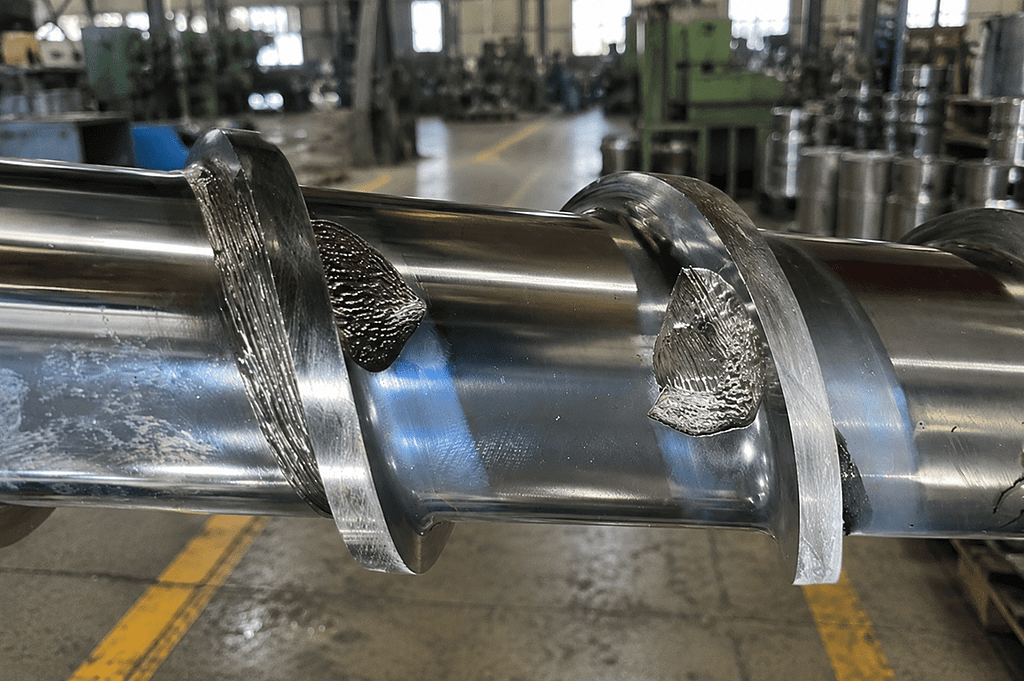
Purging compounds help remove resin residue, contamination, carbon deposits, and leftover material from extrusion systems. Always purge corrosive or filled resins before shutting down the machine to help prevent black specks, carbon buildup, and corrosive wear like the damage shown in Image 3. Making this step a standard part of your Purging and Maintenance routine is the easiest way to protect your extruder and maintain stable processing conditions Many processors use advanced CPCs to improve cleaning efficiency, reduce black specks, and maintain smoother machine performance during production and startup. Compared to cleaning with virgin resin or regrind material, CPCs are often more effective, require less material, and help reduce unnecessary manual Purging And Maintenance time. 

Using the right purging compound along with a proper preventive maintenance (PM) program helps improve productivity, reduce downtime, and extend the working life of screw and barrel components.

Conclusion

Regular preventive maintenance and effective purging practices are essential for maximizing the life and performance of extruder screw and barrel systems. By identifying wear early, using high-quality purging compounds, and following a structured maintenance program, manufacturers can reduce downtime, improve product quality, and achieve more stable production efficiency. Investing in proper screw and barrel maintenance not only protects processing equipment but also supports long-term operational profitability and reliable extrusion performance.

Need Expert Help for Your Extrusion Machine? 

At Sai Extrumech, we provide advanced engineering solutions for screw and barrel wear, extrusion instability, material degradation, and production efficiency problems faced by plastic processing industries across India. Our technical team can help you identify the root cause and recommend the right screw barrel solution for long-term machine performance. Contact Our Engineers Today for Technical Assistance & Custom Solutions


Frequently Asked Questions

What is the best way to clean an extruder screw and barrel

The best way to clean an extruder screw and barrel is by using a high-quality Commercial Purging Compound (CPC). It helps remove carbon buildup, black specks, and leftover material more effectively than using virgin resin or regrind. Regular purging also reduces downtime and helps maintain better machine performance without frequent screw pulling.

What are the main causes of screw and barrel wear in an extruder?

Screw and barrel wear is usually caused by friction, heat, hard filler materials, and improper machine operation. Issues like high screw speed, poor temperature control, moisture, and metal-to-metal contact can increase damage over time. Following proper purging and maintenance tips to avoid screw & barrel damage can help improve machine life and reduce costly downtime.

What are the best purging and maintenance tips to avoid screw & barrel damage

Using a good Commercial Purging Compound (CPC) is one of the best ways to keep screws and barrels clean and prevent carbon buildup. It’s also important to purge the machine properly before shutdown, especially after processing filled or corrosive materials, to avoid black specks and rust formation. Regular wear inspection, proper screw and barrel alignment, and using the right materials like bimetallic screws and barrels for abrasive compounds can also help reduce damage and increase machine life. Simple maintenance practices and timely checks can prevent costly breakdowns and improve extrusion performance.

What are the common signs of extruder screw wear

Some common symptoms of worn screws in an extruder are reduced production rates, irregular flow of material, poor melting properties, and increased scrap rate. One can also find that the machine consumes more energy compared to before or finds it difficult to perform consistently.

Why should we purge the machine before a complete shutdown?

Far far away, behind the word mountains, far from the countries Vokalia and Consonantia, there live the blind texts. Separated they live in Bookmarksgrove right at the coast
Industrial Cable Extrusion Process

The Future of Cable Extrusion: Embracing Automation and Smart Technologies

The Future of Cable Extrusion: Embracing Automation and Smart Technologies

The wire and cable industry is undergoing a significant transformation. As global demand for high-quality, reliable, and specialized cables continues to rise—driven by sectors like telecommunications, renewable energy, and automotive—manufacturers are increasingly turning to advanced technologies to stay competitive. In this article, we explore how automation and smart technologies are shaping the future of cable extrusion and why embracing these innovations is essential for modern manufacturing success.

The Shift Toward Smart Manufacturing

Industrial Cable Extrusion Process

Traditionally, cable extrusion was a labor-intensive process that relied heavily on the expertise and intuition of experienced operators. However, the advent of Industry 4.0 has introduced a new era of smart manufacturing, where data-driven insights and automated systems play a central role. By integrating sensors, IoT (Internet of Things) devices, and advanced control systems into extrusion lines, manufacturers can now achieve unprecedented levels of precision and efficiency.

One of the key benefits of smart manufacturing is the ability to monitor critical process parameters in real-time. From melt temperature and pressure to line speed and tension, every aspect of the extrusion process can be tracked and analyzed. This real-time visibility allows for immediate adjustments, ensuring consistent product quality and minimizing waste. For companies like Sai Extrumech, providing state-of-the-art extrusion machinery that supports these advanced capabilities is a top priority.

Enhancing Precision with Advanced Tooling

Modern Cable Manufacturing Factory

At the heart of every high-performance extrusion line is the tooling. The precision of the screw and barrel, as well as the design of the crosshead, directly impacts the quality of the final product. Advanced tooling solutions are now being engineered to handle increasingly complex materials, including halogen-free compounds and high-performance polymers.

Modern crossheads, such as fixed-center and manual-center designs, are now being equipped with sophisticated adjustment mechanisms that allow for precise control over wall thickness and concentricity. This level of precision is crucial for meeting the stringent requirements of industries like medical device manufacturing and aerospace, where even the slightest deviation can have significant consequences. You can explore our range of crossheads and tooling to see how we are pushing the boundaries of precision engineering.

The Role of Automation in Improving Efficiency

Automation is no longer just about replacing manual labor; it’s about optimizing the entire production lifecycle. Automated pay-off and take-up systems, for example, ensure smooth and consistent handling of cables, reducing the risk of damage and improving overall line speed. Similarly, automated coiling and packaging systems can significantly enhance throughput and reduce labor costs.

Beyond the physical machinery, automation also extends to the control and management systems. Advanced PLC (Programmable Logic Controller) systems can now store and recall complex recipes for different cable types, allowing for rapid changeovers and reducing downtime. This flexibility is essential for manufacturers who need to produce a wide variety of products in smaller batch sizes.

Driving Sustainability Through Technology

As environmental concerns become increasingly important, the cable industry is also focusing on sustainability. Smart technologies can play a vital role in reducing the environmental footprint of cable manufacturing. By optimizing energy consumption, minimizing material waste, and improving process efficiency, manufacturers can significantly reduce their overall impact on the planet.

For instance, energy-efficient motors and heating systems can lead to substantial cost savings while also reducing greenhouse gas emissions. Additionally, the ability to process recycled materials more effectively is becoming a key differentiator for forward-thinking manufacturers. At Sai Extrumech, we are committed to developing solutions that not only enhance performance but also promote sustainable manufacturing practices.

Conclusion: The Path Forward

The future of cable extrusion is undoubtedly smart, automated, and sustainable. By embracing these technologies, manufacturers can achieve higher levels of quality, efficiency, and competitiveness. As a leading cable extrusion machine manufacturer in India, Sai Extrumech is proud to be at the forefront of this technological revolution, providing the tools and expertise our clients need to thrive in a changing world.

Whether you are looking to upgrade an existing line or invest in a new, state-of-the-art facility, our team of experts is here to help. Contact us today to learn more about our innovative solutions and how we can help you empower your manufacturing future.

By Sai Extrumech Editorial Team  |  Published: April 7, 2026  |  Last Updated: April 10, 2026

Cable extrusion automation is the integration of programmable control systems, real-time sensors, and data-driven feedback loops into the cable manufacturing process — enabling consistent product quality, higher line speeds, and reduced human intervention across insulation, jacketing, and sheathing operations.

Industry Data:
  • The global industrial automation market is projected to reach USD 395 billion by 2029 at a CAGR of 8.9% (MarketsandMarkets, 2024)
  • Smart manufacturing adoption in wire & cable production is expected to reduce material waste by up to 23% and energy consumption by 15% by 2030 (IEA, 2023)

Frequently Asked Questions

What is the difference between PVC and XLPE insulation in cable extrusion?

PVC is cost-effective and suited for low-voltage applications up to 70°C. XLPE offers superior performance at higher temperatures (up to 90°C continuous) and is required for medium and high-voltage power cables above 1 kV.

What line speeds can modern cable extrusion machines achieve?

Modern single-layer lines achieve 800–1,200 m/min for conductors under 2.5 mm². Modern Sai Extrumech single-layer lines achieve 800–1,200 m/min for building wire. Multi-layer or larger conductor lines run at 200–400 m/min.

How does automation improve cable extrusion quality?

Automation enables real-time monitoring of extrusion parameters — melt temperature, line speed, conductor tension, and insulation diameter — reducing human error and enabling immediate corrections. Smart systems can reduce scrap rates by 30–50% compared to manual monitoring.

What Industry 4.0 features are available for extrusion lines?

Modern extrusion lines support OPC-UA connectivity, SCADA integration, digital twin simulation, predictive maintenance alerts, and remote monitoring dashboards. These features allow manufacturers to monitor production from anywhere and respond to process deviations before they cause quality failures.

Can a cable extrusion line be customized for specific applications?

Yes. Sai Extrumech configures lines for specific cable types, conductor sizes, insulation materials, and line speeds — for automotive, power, solar, optical fibre, and building wire applications.

The Future of High-Speed Cable Extrusion: Trends for 2026

Introduction

The cable and wire manufacturing industry is a dynamic landscape, constantly evolving to meet the demands of a rapidly advancing world. As we look towards 2026, the focus on high-speed cable extrusion trends 2026 intensifies, driven by technological innovations, increasing global connectivity, and the urgent need for sustainable practices. Manufacturers are under pressure to produce cables that are not only faster and more efficient but also environmentally friendly and cost-effective. This article delves into the key trends shaping the future of high-speed cable extrusion, offering insights for industry professionals seeking to stay ahead in this competitive market.

The Driving Forces Behind Extrusion Innovation

Several factors are propelling the evolution of cable extrusion technology. The proliferation of 5G networks, the expansion of data centers, the growth of renewable energy infrastructure, and the booming electric vehicle (EV) market are all creating unprecedented demand for high-performance cables. These applications require cables with superior electrical properties, enhanced durability, and often, smaller diameters. To meet these stringent requirements, extrusion processes must become more precise, faster, and capable of handling advanced materials.

Advancements in Material Science

The core of high-speed cable extrusion innovation lies in material science. Traditional PVC and polyethylene are being supplemented, and in some cases replaced, by advanced polymers and composites. These new materials offer improved dielectric strength, higher temperature resistance, and better flame retardancy. For instance, fluoropolymers are gaining traction in EV motor wire applications due to their superior performance characteristics . The development of halogen-free flame retardant (HFFR) compounds is also a significant trend, driven by stricter safety regulations and environmental concerns. These materials require specialized extrusion techniques to maintain their integrity and performance during processing.

Automation and Smart Manufacturing

The integration of automation and smart manufacturing principles is revolutionizing the cable extrusion industry. Advanced control systems, real-time monitoring, and predictive maintenance are becoming standard. These technologies enable manufacturers to optimize production parameters, reduce material waste, and minimize downtime. The goal is to achieve higher throughput with consistent quality, a critical aspect of high-speed cable extrusion trends 2026. Artificial intelligence (AI) and machine learning (ML) are also beginning to play a role, offering insights into process optimization and defect detection, further enhancing efficiency and product reliability.

Key High-Speed Cable Extrusion Trends for 2026

As the industry progresses, several distinct trends are emerging that will define high-speed cable extrusion in 2026 and beyond.

Increased Extrusion Speeds and Throughput

The demand for higher production volumes necessitates faster extrusion speeds. This is being achieved through innovations in extruder design, screw geometry, and cooling systems. Manufacturers are investing in machines capable of processing materials at unprecedented rates without compromising cable quality. The focus is on maximizing output per hour, which directly impacts profitability and market competitiveness. This drive for speed is a central theme in high-speed cable extrusion trends 2026.

Enhanced Precision and Quality Control

With cables becoming more complex and critical to various applications, precision and quality control are paramount. Advanced gauging systems, laser measurement devices, and sophisticated vision systems are being integrated into extrusion lines to ensure exact cable dimensions, insulation thickness, and concentricity. These systems provide immediate feedback, allowing for real-time adjustments and minimizing defects. The ability to consistently produce high-quality cables at high speeds is a significant differentiator in the market.

Focus on Sustainability and Energy Efficiency

Environmental responsibility is no longer an option but a necessity. The cable extrusion industry is responding by developing more sustainable manufacturing processes. This includes reducing energy consumption in extrusion lines through optimized motor designs and efficient heating and cooling systems. Furthermore, the use of recyclable materials and the minimization of waste are becoming key considerations. Manufacturers are also exploring ways to reduce their carbon footprint throughout the entire production lifecycle. Sai Extrumech, as a leading manufacturer, is committed to developing solutions that align with these sustainable goals.

Customization and Flexibility

The diverse requirements of modern applications mean that a one-size-fits-all approach to cable manufacturing is no longer viable. There is a growing trend towards customized extrusion lines that can be quickly reconfigured to produce different types of cables. This flexibility allows manufacturers to respond rapidly to changing market demands and cater to niche applications. Modular designs and quick-change tooling are becoming increasingly important in achieving this adaptability.

Integration of Industry 4.0 Technologies

Industry 4.0, characterized by the integration of cyber-physical systems, the Internet of Things (IoT), and cloud computing, is transforming cable extrusion. Data collected from various sensors and machines across the production line can be analyzed to identify bottlenecks, predict equipment failures, and optimize overall operational efficiency. This interconnectedness fosters a more intelligent and responsive manufacturing environment, further driving the high-speed cable extrusion trends 2026.

Sai Extrumech: Leading the Way in Extrusion Technology

In this evolving landscape, companies like Sai Extrumech are at the forefront of innovation. With 25 years of industry expertise, Sai Extrumech Pvt. Ltd. has established itself as a trusted and renowned name, offering a comprehensive product portfolio that includes a full range of extrusion machines, crossheads, caterpillars, capstans, screws and barrels, take-ups, and pay-offs. Their commitment to quality and innovation is evident in their state-of-the-art solutions engineered to excel in processing thermoplastics, fiber optics, halogen-free compounds, and more. Sai Extrumech’s ability to design and produce high-efficiency, bespoke equipment sets them apart, providing customized solutions tailored to specific needs, ensuring consistent and precise output across all applications.

Conclusion

The future of high-speed cable extrusion is characterized by relentless innovation, driven by the need for faster, more efficient, and sustainable cable production. The high-speed cable extrusion trends 2026 point towards increased automation, advanced material utilization, enhanced precision, and a strong emphasis on environmental responsibility. Manufacturers who embrace these trends and invest in cutting-edge technology will be well-positioned for success. Sai Extrumech, with its dedication to engineering excellence and customized solutions, continues to be a vital partner for the cable and wire manufacturing industry, helping businesses navigate these transformative changes and achieve superior results.

By Sai Extrumech Editorial Team  |  Published: March 18, 2026  |  Last Updated: April 10, 2026

Frequently Asked Questions

What line speeds can modern cable extrusion machines achieve?

Modern single-layer insulation lines typically achieve 800–1,200 m/min for conductors under 2.5 mm². Multi-layer or larger conductor lines run at 200–400 m/min. Modern Sai Extrumech single-layer cable extrusion lines achieve constructive line speeds of 800–1,200 m/min for building wire (conductors under 2.5 mm²). Multi-layer power cable lines run at 200–400 m/min depending on conductor cross-section.

What trends are driving high-speed cable extrusion in 2026?

Key trends include energy-efficient servo drive systems replacing hydraulic drives, real-time diameter monitoring with automatic correction, predictive maintenance via vibration sensors, and integration of AI-based process optimization that reduces material waste by adjusting extrusion parameters in real time.

What is the difference between PVC and XLPE insulation?

PVC is cost-effective and suited for low-voltage applications up to 70°C. XLPE offers superior performance at higher temperatures (up to 90°C continuous) and is required for medium and high-voltage power cables above 1 kV.

Can a cable extrusion line be customized for specific applications?

Yes. Sai Extrumech configures lines for specific cable types, conductor sizes, insulation materials, and line speeds — for automotive, power, solar, optical fibre, and building wire applications.