Industrial Cable Extrusion Process

The Future of Cable Extrusion: Embracing Automation and Smart Technologies

The Future of Cable Extrusion: Embracing Automation and Smart Technologies

The wire and cable industry is undergoing a significant transformation. As global demand for high-quality, reliable, and specialized cables continues to rise—driven by sectors like telecommunications, renewable energy, and automotive—manufacturers are increasingly turning to advanced technologies to stay competitive. In this article, we explore how automation and smart technologies are shaping the future of cable extrusion and why embracing these innovations is essential for modern manufacturing success.

The Shift Toward Smart Manufacturing
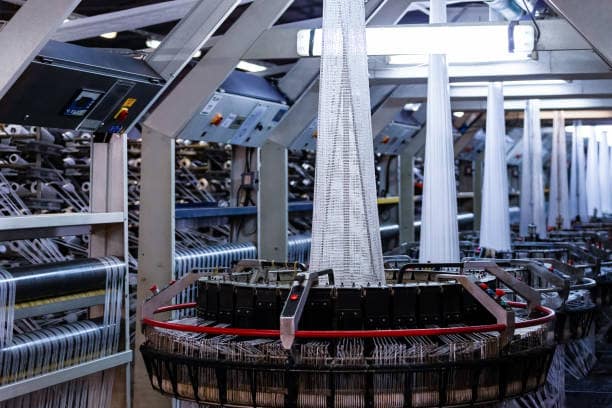
Industrial Cable Extrusion Process

Traditionally, cable extrusion was a labor-intensive process that relied heavily on the expertise and intuition of experienced operators. However, the advent of Industry 4.0 has introduced a new era of smart manufacturing, where data-driven insights and automated systems play a central role. By integrating sensors, IoT (Internet of Things) devices, and advanced control systems into extrusion lines, manufacturers can now achieve unprecedented levels of precision and efficiency.

One of the key benefits of smart manufacturing is the ability to monitor critical process parameters in real-time. From melt temperature and pressure to line speed and tension, every aspect of the extrusion process can be tracked and analyzed. This real-time visibility allows for immediate adjustments, ensuring consistent product quality and minimizing waste. For companies like Sai Extrumech, providing state-of-the-art extrusion machinery that supports these advanced capabilities is a top priority.

Enhancing Precision with Advanced Tooling
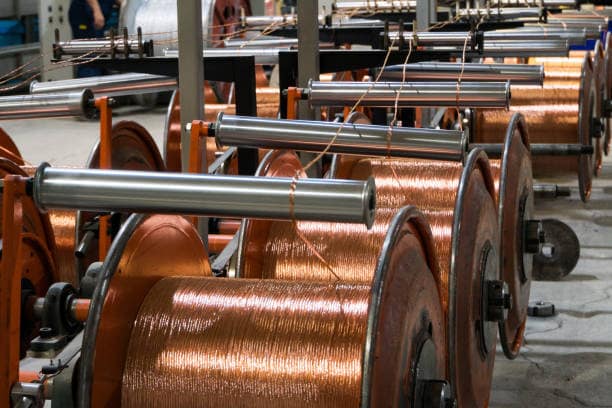
Modern Cable Manufacturing Factory

At the heart of every high-performance extrusion line is the tooling. The precision of the screw and barrel, as well as the design of the crosshead, directly impacts the quality of the final product. Advanced tooling solutions are now being engineered to handle increasingly complex materials, including halogen-free compounds and high-performance polymers.

Modern crossheads, such as fixed-center and manual-center designs, are now being equipped with sophisticated adjustment mechanisms that allow for precise control over wall thickness and concentricity. This level of precision is crucial for meeting the stringent requirements of industries like medical device manufacturing and aerospace, where even the slightest deviation can have significant consequences. You can explore our range of crossheads and tooling to see how we are pushing the boundaries of precision engineering.

The Role of Automation in Improving Efficiency

Automation is no longer just about replacing manual labor; it’s about optimizing the entire production lifecycle. Automated pay-off and take-up systems, for example, ensure smooth and consistent handling of cables, reducing the risk of damage and improving overall line speed. Similarly, automated coiling and packaging systems can significantly enhance throughput and reduce labor costs.

Beyond the physical machinery, automation also extends to the control and management systems. Advanced PLC (Programmable Logic Controller) systems can now store and recall complex recipes for different cable types, allowing for rapid changeovers and reducing downtime. This flexibility is essential for manufacturers who need to produce a wide variety of products in smaller batch sizes.

Driving Sustainability Through Technology

As environmental concerns become increasingly important, the cable industry is also focusing on sustainability. Smart technologies can play a vital role in reducing the environmental footprint of cable manufacturing. By optimizing energy consumption, minimizing material waste, and improving process efficiency, manufacturers can significantly reduce their overall impact on the planet.

For instance, energy-efficient motors and heating systems can lead to substantial cost savings while also reducing greenhouse gas emissions. Additionally, the ability to process recycled materials more effectively is becoming a key differentiator for forward-thinking manufacturers. At Sai Extrumech, we are committed to developing solutions that not only enhance performance but also promote sustainable manufacturing practices.

Conclusion: The Path Forward

The future of cable extrusion is undoubtedly smart, automated, and sustainable. By embracing these technologies, manufacturers can achieve higher levels of quality, efficiency, and competitiveness. As a leading cable extrusion machine manufacturer in India, Sai Extrumech is proud to be at the forefront of this technological revolution, providing the tools and expertise our clients need to thrive in a changing world.

Whether you are looking to upgrade an existing line or invest in a new, state-of-the-art facility, our team of experts is here to help. Contact us today to learn more about our innovative solutions and how we can help you empower your manufacturing future.
By Sai Extrumech Editorial Team  |  Published: April 7, 2026  |  Last Updated: April 10, 2026

Frequently Asked Questions

What is the difference between PVC and XLPE insulation in cable extrusion?

PVC is cost-effective and suited for low-voltage applications up to 70°C. XLPE offers superior performance at higher temperatures (up to 90°C continuous) and is required for medium and high-voltage power cables above 1 kV.

What line speeds can modern cable extrusion machines achieve?

Modern single-layer lines achieve 800–1,200 m/min for conductors under 2.5 mm². Sai Extrumech's EEL 20 series achieves up to 1,200 m/min. Multi-layer or larger conductor lines run at 200–400 m/min.

How does automation improve cable extrusion quality?

Automation enables real-time monitoring of extrusion parameters — melt temperature, line speed, conductor tension, and insulation diameter — reducing human error and enabling immediate corrections. Smart systems can reduce scrap rates by 30–50% compared to manual monitoring.

What Industry 4.0 features are available for extrusion lines?

Modern extrusion lines support OPC-UA connectivity, SCADA integration, digital twin simulation, predictive maintenance alerts, and remote monitoring dashboards. These features allow manufacturers to monitor production from anywhere and respond to process deviations before they cause quality failures.

Can a cable extrusion line be customized for specific applications?

Yes. Sai Extrumech configures lines for specific cable types, conductor sizes, insulation materials, and line speeds — for automotive, power, solar, optical fibre, and building wire applications.

Optimizing Cable Extrusion: The Critical Role of Precision Screws and Barrels

Optimizing Cable Extrusion: The Critical Role of Precision Screws and Barrels

In the intricate world of wire and cable manufacturing, achieving superior product quality and operational efficiency hinges on the performance of every component within the extrusion line. Among these, the screw and barrel assembly stands out as the heart of the extruder. Its design, material, and precision engineering directly influence the melt quality, output consistency, and overall profitability of the extrusion process. This article delves into the paramount importance of precision screws and barrels in modern cable extrusion, exploring how their optimized design contributes to enhanced performance across various cable types.

The Core Function of Screws and Barrels in Extrusion

The primary role of the screw and barrel is to convey, melt, mix, and homogenize polymer raw materials before they are extruded through a die to form the cable insulation or sheath. This seemingly straightforward process involves complex thermodynamic and rheological principles. The screw’s geometry—including its flight depth, pitch, and compression ratio—is meticulously designed to handle specific polymer characteristics, ensuring efficient heat transfer and uniform melting without degradation. The barrel, which encases the screw, provides the necessary heating and cooling zones to control the polymer’s temperature profile. The interaction between the rotating screw and the stationary barrel generates shear forces crucial for melting and mixing. Any deviation in the precision of these components can lead to inconsistencies in melt temperature, pressure fluctuations, and poor material homogenization, ultimately compromising the final product’s electrical and mechanical properties.

Precision Engineering: A Game Changer for Cable Quality

The demands of the cable industry—from high-speed data transmission to robust power distribution—necessitate unparalleled precision. For instance, in optical fibre cable extrusion lines, even microscopic variations in insulation thickness can significantly impact signal integrity. Similarly, for solar cables and XLPE cables, consistent material distribution is vital for long-term durability and safety under harsh environmental conditions.

Optimized Screw Design for Diverse Polymers

Different cable types utilize a wide array of polymer compounds, each with unique melting points, viscosities, and shear sensitivities. A “one-size-fits-all” approach to screw design is therefore inadequate. Precision screw manufacturers like Sai Extrumech specialize in designing application-specific screws that cater to the rheological properties of materials such as PVC, PE, XLPE, LSZH, and fluoropolymers. This customization ensures:
  • Efficient Melting: Proper flight design and compression ratios ensure gradual and uniform melting, preventing localized overheating and polymer degradation.
  • Superior Mixing: Specialized mixing sections, such as Maddock or barrier sections, enhance homogenization, distributing additives and colorants evenly throughout the melt.
  • Consistent Output: Optimized screw geometry minimizes pressure and temperature fluctuations, leading to a stable melt flow and consistent cable dimensions.

The Role of Barrel Integrity and Material Science

The barrel’s construction is equally critical. It must withstand high pressures, abrasive wear from fillers, and corrosive effects from certain polymers and their byproducts. Modern barrels are often constructed from specialized alloys and treated with advanced coatings (e.g., bimetallic linings) to enhance wear resistance and extend operational life. The precision of the barrel’s internal diameter and its concentricity with the screw are paramount for maintaining consistent shear rates and preventing material hang-ups.

Impact on Operational Efficiency and Cost Savings

Investing in high-quality, precision-engineered screws and barrels translates directly into significant operational benefits and cost savings for cable manufacturers:
  • Reduced Scrap Rates: Consistent melt quality and dimensional stability minimize product defects, leading to lower scrap generation and material waste.
  • Increased Throughput: Optimized designs allow for higher screw speeds and greater output without compromising quality, boosting productivity.
  • Lower Energy Consumption: Efficient melting and conveying reduce the energy required to process polymers, contributing to lower operational costs.
  • Extended Lifespan of Components: Superior materials and manufacturing precision reduce wear and tear, extending the service life of both the screw and barrel and minimizing downtime for replacements.
  • Faster Changeovers: Well-designed components facilitate quicker cleaning and material changeovers, enhancing production flexibility.
For manufacturers looking to upgrade or maintain their extrusion lines, partnering with a specialized screw and barrel manufacturer is crucial. Companies like Sai Extrumech offer comprehensive solutions, from custom design to manufacturing and refurbishment, ensuring that each component is perfectly matched to the specific application and polymer.

Advanced Technologies in Screw and Barrel Manufacturing

The evolution of cable extrusion technology is closely tied to advancements in screw and barrel manufacturing. Modern techniques include:
  • Computational Fluid Dynamics (CFD): Used to simulate polymer flow and heat transfer within the screw and barrel, allowing for virtual optimization of designs before physical prototyping.
  • Advanced Material Alloys: Development of new alloys and bimetallic constructions that offer superior resistance to wear, corrosion, and high temperatures.
  • Precision Machining: State-of-the-art CNC machining and grinding techniques ensure extremely tight tolerances and smooth surface finishes, critical for consistent performance.
These technological advancements enable the production of screws and barrels that can handle increasingly complex polymer formulations and meet the stringent quality requirements of next-generation cables, including those for 5G infrastructure, electric vehicles, and renewable energy systems.

Conclusion

The screw and barrel assembly is undeniably a cornerstone of the cable extrusion process. Its precision engineering and optimized design are not merely desirable features but essential prerequisites for achieving high-quality cable products, maximizing operational efficiency, and ensuring long-term profitability. As the cable industry continues to innovate, the role of specialized manufacturers in providing bespoke screw and barrel solutions will only grow in importance, driving forward the capabilities of extrusion technology worldwide. For more information on high-quality extrusion components and complete extrusion lines, visit Sai Extrumech.
By Sai Extrumech Editorial Team  |  Published: March 24, 2026  |  Last Updated: April 10, 2026

Frequently Asked Questions

How often should extrusion screws and barrels be replaced?

Under normal conditions with standard PVC, quality hardened screws and barrels typically last 3–7 years. Processing abrasive compounds (glass-filled, flame retardant) or high-temperature materials like XLPE accelerates wear. Signs of wear include reduced output at the same RPM, increased pressure variation, and inconsistent melt quality.

What materials require bi-metallic screw and barrel construction?

Bi-metallic construction is recommended for processing abrasive compounds including HFFR, glass-filled materials, highly filled flame retardants, and mineral-based compounds. The hardened inner lining of bi-metallic barrels significantly extends service life compared to standard nitrided steel construction.

What is the ideal L/D ratio for a cable extrusion screw?

For PVC cable extrusion, L/D ratios of 20:1 to 25:1 are standard. For XLPE and HFFR compounds requiring more homogeneous mixing, ratios of 25:1 to 30:1 are preferred. Higher L/D ratios improve melt homogeneity but require longer screws and barrels.

What is the difference between PVC and XLPE insulation in cable extrusion?

PVC is cost-effective and suited for low-voltage applications up to 70°C. XLPE offers superior performance at higher temperatures (up to 90°C continuous) and is required for medium and high-voltage power cables above 1 kV.

Can a cable extrusion line be customized for specific applications?

Yes. Sai Extrumech configures lines for specific cable types, conductor sizes, insulation materials, and line speeds — for automotive, power, solar, optical fibre, and building wire applications.

Advancements in Cable Extrusion Technology: A Deep Dive for Industry Professionals

Introduction: The Evolving Landscape of Cable Manufacturing

The cable and wire manufacturing industry is a cornerstone of modern infrastructure, powering everything from our homes and offices to complex industrial machinery and global communication networks. At its heart lies the intricate process of cable extrusion, a technology that has continuously evolved to meet the ever-increasing demands for higher performance, greater efficiency, and specialized applications. For industry professionals, staying abreast of these advancements is not just beneficial, but essential for maintaining a competitive edge and driving innovation.
This article delves into the latest advancements in cable extrusion technology, exploring how new machinery, materials, and processes are shaping the future of wire and cable production. We will examine key trends, discuss their implications, and highlight how leading manufacturers like Sai Extrumech are at the forefront of delivering cutting-edge solutions tailored to the unique needs of a dynamic market.

The Drive for Efficiency and Speed: Next-Generation Extrusion Lines

Modern cable manufacturing demands speed without compromising quality. The latest extrusion lines are engineered for unprecedented throughput, integrating advanced control systems and automation to optimize every stage of the process. This includes:

High-Speed Extruders

New extruder designs feature enhanced screw geometries and barrel configurations that facilitate faster melting and mixing of polymers, leading to increased output rates. These extruders are often paired with sophisticated cooling systems to manage the thermal load effectively, ensuring consistent product quality even at elevated speeds.

Integrated Automation and Control

The days of manual adjustments are rapidly fading. Today’s extrusion lines incorporate advanced PLCs (Programmable Logic Controllers) and HMI (Human-Machine Interface) systems, allowing for precise control over temperature profiles, pressure, and line speed. This level of automation minimizes human error, reduces material waste, and ensures repeatable quality. Sai Extrumech, for instance, offers extrusion lines with intuitive control interfaces that empower operators to manage complex processes with ease, leading to significant operational efficiencies.

Energy Efficiency

With rising energy costs and a global push for sustainability, energy-efficient extrusion lines are becoming a standard. Innovations include more efficient motor drives, optimized heating elements, and improved insulation, all contributing to a reduced carbon footprint and lower operating costs. This focus on sustainability is not just environmentally responsible but also economically advantageous for manufacturers.

Material Innovations: Pushing the Boundaries of Performance

The performance of a cable is intrinsically linked to the materials used in its construction. Recent advancements in polymer science have led to the development of new compounds that offer superior electrical, mechanical, and thermal properties. These include:

Advanced Polymer Compounds

Specialized polymers like XLPE (Cross-linked Polyethylene) and Sioplas compounds are now widely used for their excellent insulation properties, high-temperature resistance, and durability. These materials are crucial for applications requiring robust performance, such as power cables and automotive wiring. The ability to process these advanced materials efficiently is a hallmark of state-of-the-art extrusion machinery.

Halogen-Free Flame Retardant (HFFR) Materials

Safety regulations are driving the adoption of HFFR materials, which emit minimal smoke and toxic fumes in the event of a fire. Extrusion equipment must be capable of handling these materials, which often have different processing characteristics compared to traditional PVC. Sai Extrumech’s crossheads and tooling are designed to accommodate a wide range of advanced materials, ensuring optimal processing and product integrity.

Bio-based and Recycled Polymers

In line with sustainability goals, there’s a growing interest in bio-based and recycled polymers for cable insulation and jacketing. While still nascent, the development of extrusion processes compatible with these materials represents a significant future trend, offering environmentally friendly alternatives without compromising performance.

Precision Tooling and Crossheads: The Heart of Quality Extrusion

The quality of the extruded cable is heavily dependent on the precision of the tooling and crossheads. These components shape the molten polymer around the conductor, ensuring concentricity, uniform thickness, and a smooth surface finish.

Multi-Layer Co-Extrusion

Many modern cables feature multiple layers of insulation and jacketing, each with specific properties. Multi-layer co-extrusion crossheads allow for the simultaneous application of these layers in a single pass, significantly improving efficiency and product quality. This technology is particularly vital for complex cables like optical fiber and high-voltage power cables.

Optimized Crosshead Designs

Innovations in crosshead design focus on minimizing material degradation, reducing pressure drop, and ensuring precise material flow. This results in superior concentricity and adhesion between layers, critical for the long-term reliability of the cable. Sai Extrumech offers a comprehensive range of crossheads, including fixed center and manual center designs, engineered for precision and durability across various applications.

Quick-Change Tooling Systems

To maximize uptime and flexibility, quick-change tooling systems are becoming increasingly popular. These systems allow for rapid changeovers between different cable designs, reducing production downtime and enhancing manufacturing agility.

The Role of Sai Extrumech in Shaping the Future

As a leading manufacturer in the cable extrusion machinery industry, Sai Extrumech is committed to pushing the boundaries of innovation. With 25 years of industry expertise, the company has consistently delivered advanced extrusion solutions that meet the evolving needs of its global clientele. From high-speed extrusion lines to precision crossheads and specialized screws and barrels, Sai Extrumech’s product portfolio is designed for optimal performance, efficiency, and reliability.
Sai Extrumech’s dedication to customization ensures that each solution is tailored to the specific operational requirements of its clients, whether for automotive, energy, or communication cables. Their commitment to quality, coupled with continuous research and development, positions them as a trusted partner for manufacturers seeking to enhance their production capabilities and embrace the future of cable extrusion.

Conclusion: A Future of Innovation and Growth

The cable extrusion technology landscape is characterized by continuous innovation, driven by the demand for higher performance, greater efficiency, and sustainable manufacturing practices. For industry professionals, understanding these advancements is key to unlocking new opportunities and staying ahead in a competitive market. With manufacturers like Sai Extrumech leading the charge, the future of cable manufacturing promises to be one of exciting growth and technological breakthroughs.

Internal Links

By Sai Extrumech Editorial Team  |  Published: March 23, 2026  |  Last Updated: April 10, 2026

Cable extrusion technology is the manufacturing process of applying a thermoplastic or thermoset insulation layer around a conductor (copper or aluminium wire) using a heated extruder screw. Modern extrusion lines run at speeds up to 1,200 m/min, process materials including PVC, XLPE, HFFR, and Sioplas, and are used to produce power cables, communication cables, and automotive wiring.

Industry Statistics: The global wire and cable market was valued at approximately USD 230 billion in 2023 and is projected to exceed USD 320 billion by 2030, driven by renewable energy infrastructure and EV adoption (Grand View Research, 2024). Cable extrusion accounts for roughly 40% of total cable manufacturing costs, making efficiency improvements a key competitive lever.

Frequently Asked Questions

What is the difference between PVC and XLPE insulation in cable extrusion?

PVC (Polyvinyl Chloride) is the most common cable insulation, cost-effective and suited for low-voltage applications up to 70°C. XLPE (Cross-linked Polyethylene) offers superior performance at higher temperatures (up to 90°C continuous), better electrical properties, and is required for medium and high-voltage power cables above 1 kV.

What line speeds can modern cable extrusion machines achieve?

Modern single-layer insulation lines typically achieve 800–1,200 m/min for conductors under 2.5 mm². Multi-layer or larger conductor lines run at 200–400 m/min. Sai Extrumech's EEL 20 series achieves up to 1,200 m/min constructive line speed.

What is an extrusion crosshead and why does it matter for cable quality?

A crosshead guides molten polymer uniformly around the conductor at the end of the extruder barrel. Crosshead design directly affects cable concentricity (uniform insulation thickness) and surface finish. Poor concentricity causes failures under electrical stress and is a primary quality rejection reason in cable manufacturing.

What is HFFR cable and what extrusion equipment does it require?

HFFR (Halogen-Free Flame Retardant) cable uses mineral-based compounds that emit minimal toxic smoke in fires. HFFR compounds are more abrasive and have higher melt viscosity than PVC, requiring extruders with bi-metallic screw and barrel construction, higher torque drives, and specialized crosshead tooling.

Can a cable extrusion line be customized for specific applications?

Yes. Sai Extrumech configures lines for specific cable types, conductor sizes, insulation materials, and line speeds — for automotive, power, solar, optical fibre, and building wire applications.

The Future of High-Speed Cable Extrusion: Trends for 2026

Introduction

The cable and wire manufacturing industry is a dynamic landscape, constantly evolving to meet the demands of a rapidly advancing world. As we look towards 2026, the focus on high-speed cable extrusion trends 2026 intensifies, driven by technological innovations, increasing global connectivity, and the urgent need for sustainable practices. Manufacturers are under pressure to produce cables that are not only faster and more efficient but also environmentally friendly and cost-effective. This article delves into the key trends shaping the future of high-speed cable extrusion, offering insights for industry professionals seeking to stay ahead in this competitive market.

The Driving Forces Behind Extrusion Innovation

Several factors are propelling the evolution of cable extrusion technology. The proliferation of 5G networks, the expansion of data centers, the growth of renewable energy infrastructure, and the booming electric vehicle (EV) market are all creating unprecedented demand for high-performance cables. These applications require cables with superior electrical properties, enhanced durability, and often, smaller diameters. To meet these stringent requirements, extrusion processes must become more precise, faster, and capable of handling advanced materials.

Advancements in Material Science

The core of high-speed cable extrusion innovation lies in material science. Traditional PVC and polyethylene are being supplemented, and in some cases replaced, by advanced polymers and composites. These new materials offer improved dielectric strength, higher temperature resistance, and better flame retardancy. For instance, fluoropolymers are gaining traction in EV motor wire applications due to their superior performance characteristics . The development of halogen-free flame retardant (HFFR) compounds is also a significant trend, driven by stricter safety regulations and environmental concerns. These materials require specialized extrusion techniques to maintain their integrity and performance during processing.

Automation and Smart Manufacturing

The integration of automation and smart manufacturing principles is revolutionizing the cable extrusion industry. Advanced control systems, real-time monitoring, and predictive maintenance are becoming standard. These technologies enable manufacturers to optimize production parameters, reduce material waste, and minimize downtime. The goal is to achieve higher throughput with consistent quality, a critical aspect of high-speed cable extrusion trends 2026. Artificial intelligence (AI) and machine learning (ML) are also beginning to play a role, offering insights into process optimization and defect detection, further enhancing efficiency and product reliability.

Key High-Speed Cable Extrusion Trends for 2026

As the industry progresses, several distinct trends are emerging that will define high-speed cable extrusion in 2026 and beyond.

Increased Extrusion Speeds and Throughput

The demand for higher production volumes necessitates faster extrusion speeds. This is being achieved through innovations in extruder design, screw geometry, and cooling systems. Manufacturers are investing in machines capable of processing materials at unprecedented rates without compromising cable quality. The focus is on maximizing output per hour, which directly impacts profitability and market competitiveness. This drive for speed is a central theme in high-speed cable extrusion trends 2026.

Enhanced Precision and Quality Control

With cables becoming more complex and critical to various applications, precision and quality control are paramount. Advanced gauging systems, laser measurement devices, and sophisticated vision systems are being integrated into extrusion lines to ensure exact cable dimensions, insulation thickness, and concentricity. These systems provide immediate feedback, allowing for real-time adjustments and minimizing defects. The ability to consistently produce high-quality cables at high speeds is a significant differentiator in the market.

Focus on Sustainability and Energy Efficiency

Environmental responsibility is no longer an option but a necessity. The cable extrusion industry is responding by developing more sustainable manufacturing processes. This includes reducing energy consumption in extrusion lines through optimized motor designs and efficient heating and cooling systems. Furthermore, the use of recyclable materials and the minimization of waste are becoming key considerations. Manufacturers are also exploring ways to reduce their carbon footprint throughout the entire production lifecycle. Sai Extrumech, as a leading manufacturer, is committed to developing solutions that align with these sustainable goals.

Customization and Flexibility

The diverse requirements of modern applications mean that a one-size-fits-all approach to cable manufacturing is no longer viable. There is a growing trend towards customized extrusion lines that can be quickly reconfigured to produce different types of cables. This flexibility allows manufacturers to respond rapidly to changing market demands and cater to niche applications. Modular designs and quick-change tooling are becoming increasingly important in achieving this adaptability.

Integration of Industry 4.0 Technologies

Industry 4.0, characterized by the integration of cyber-physical systems, the Internet of Things (IoT), and cloud computing, is transforming cable extrusion. Data collected from various sensors and machines across the production line can be analyzed to identify bottlenecks, predict equipment failures, and optimize overall operational efficiency. This interconnectedness fosters a more intelligent and responsive manufacturing environment, further driving the high-speed cable extrusion trends 2026.

Sai Extrumech: Leading the Way in Extrusion Technology

In this evolving landscape, companies like Sai Extrumech are at the forefront of innovation. With 25 years of industry expertise, Sai Extrumech Pvt. Ltd. has established itself as a trusted and renowned name, offering a comprehensive product portfolio that includes a full range of extrusion machines, crossheads, caterpillars, capstans, screws and barrels, take-ups, and pay-offs. Their commitment to quality and innovation is evident in their state-of-the-art solutions engineered to excel in processing thermoplastics, fiber optics, halogen-free compounds, and more. Sai Extrumech’s ability to design and produce high-efficiency, bespoke equipment sets them apart, providing customized solutions tailored to specific needs, ensuring consistent and precise output across all applications.

Conclusion

The future of high-speed cable extrusion is characterized by relentless innovation, driven by the need for faster, more efficient, and sustainable cable production. The high-speed cable extrusion trends 2026 point towards increased automation, advanced material utilization, enhanced precision, and a strong emphasis on environmental responsibility. Manufacturers who embrace these trends and invest in cutting-edge technology will be well-positioned for success. Sai Extrumech, with its dedication to engineering excellence and customized solutions, continues to be a vital partner for the cable and wire manufacturing industry, helping businesses navigate these transformative changes and achieve superior results.

By Sai Extrumech Editorial Team  |  Published: March 18, 2026  |  Last Updated: April 10, 2026

Frequently Asked Questions

What line speeds can modern cable extrusion machines achieve?

Modern single-layer insulation lines typically achieve 800–1,200 m/min for conductors under 2.5 mm². Multi-layer or larger conductor lines run at 200–400 m/min. Sai Extrumech's EEL 20 series achieves up to 1,200 m/min constructive line speed.

What trends are driving high-speed cable extrusion in 2026?

Key trends include energy-efficient servo drive systems replacing hydraulic drives, real-time diameter monitoring with automatic correction, predictive maintenance via vibration sensors, and integration of AI-based process optimization that reduces material waste by adjusting extrusion parameters in real time.

What is the difference between PVC and XLPE insulation?

PVC is cost-effective and suited for low-voltage applications up to 70°C. XLPE offers superior performance at higher temperatures (up to 90°C continuous) and is required for medium and high-voltage power cables above 1 kV.

Can a cable extrusion line be customized for specific applications?

Yes. Sai Extrumech configures lines for specific cable types, conductor sizes, insulation materials, and line speeds — for automotive, power, solar, optical fibre, and building wire applications.

60–80 Skin Layer × Head Crosshead for Wire and Cable Extrusion

60–80 Skin Layer × Head Crosshead for Wire and Cable Extrusion

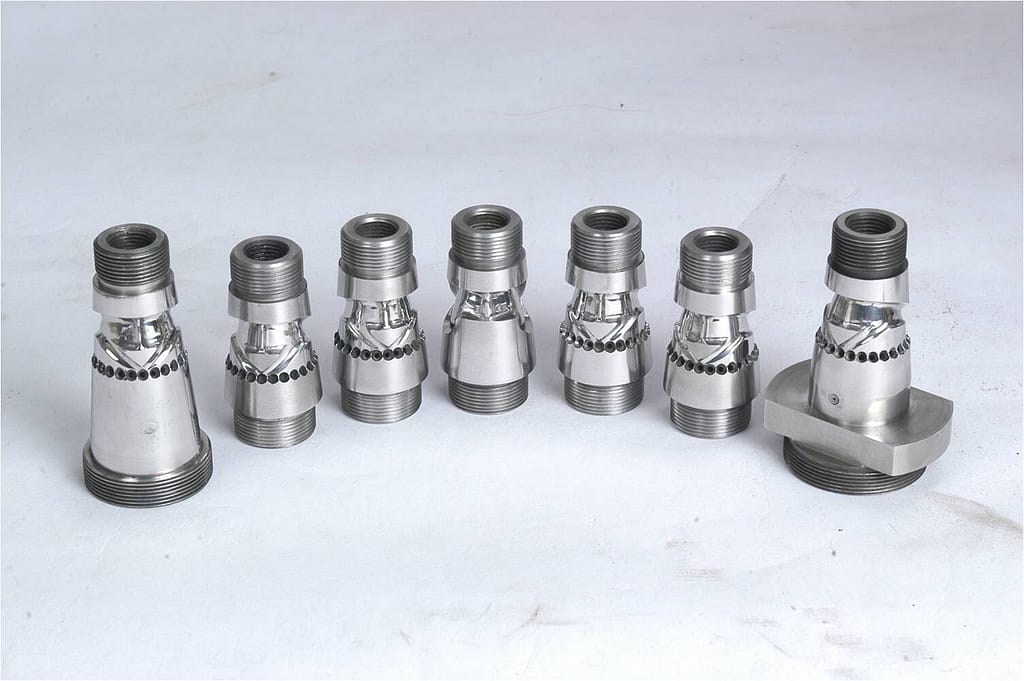
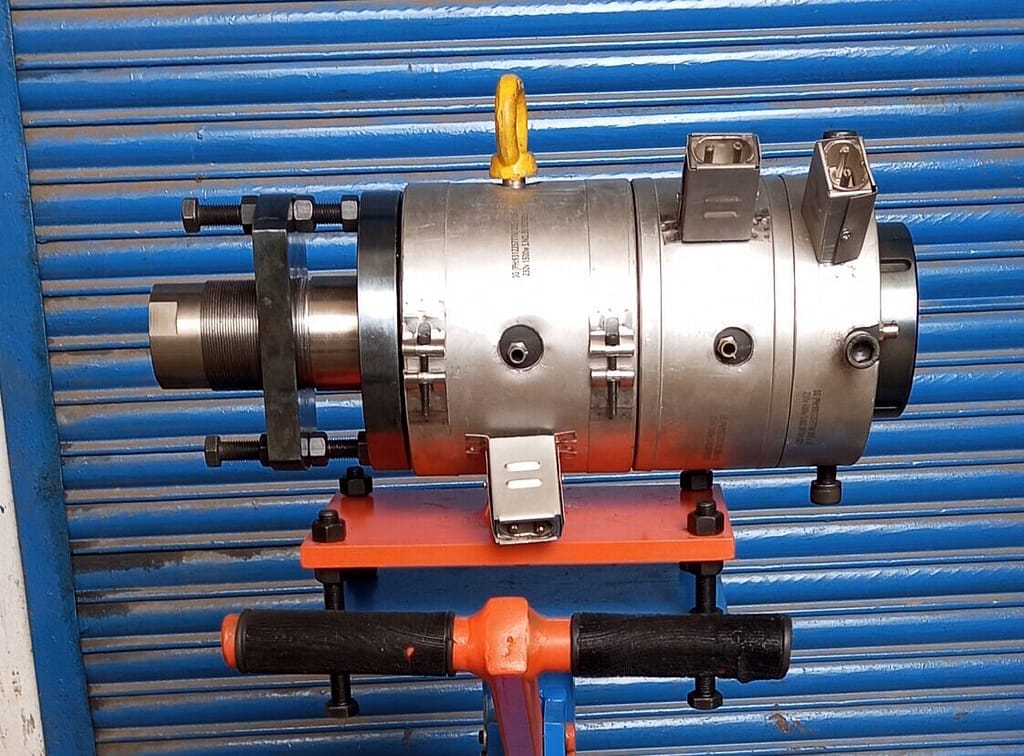
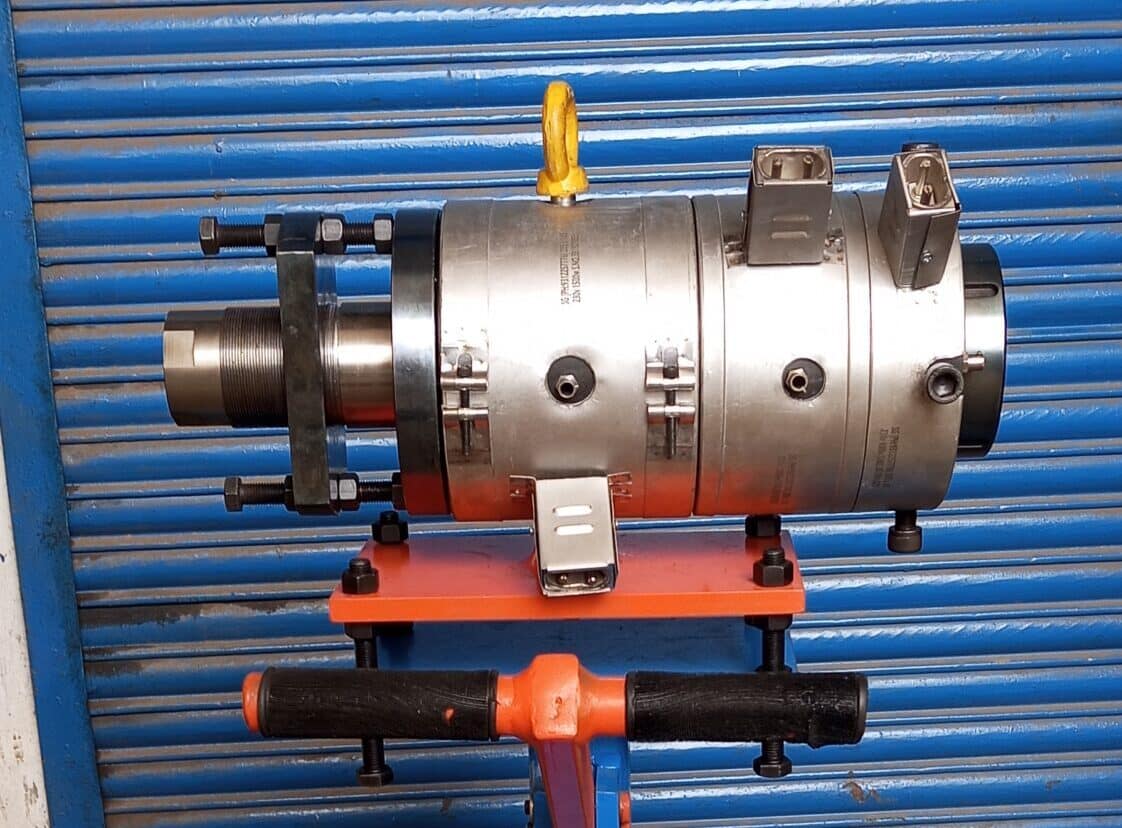
The 60–80 Skin Layer × Head Crosshead is a critical component used in wire and cable extrusion lines to ensure uniform insulation and precise material flow. Designed for high-performance extrusion processes, this crosshead plays a key role in achieving consistent wall thickness, concentricity, and surface finish in cables.

What is a 60–80 Skin Layer Extrusion Crosshead?

In wire and cable manufacturing, the 60–80 skin layer refers to the surface hardness range of the crosshead, achieved through controlled heat treatment or surface hardening. This hardness range offers an ideal balance between wear resistance and toughness, allowing the crosshead to withstand continuous exposure to molten polymers without deformation or premature wear.

The × head (crosshead) design ensures the polymer melt flows evenly around the conductor before insulation or sheathing is applied.

Role in Wire & Cable Extrusion

The extrusion crosshead directs molten material—such as PVC, XLPE, PE, or rubber compounds—around the wire or conductor. A properly engineered 60–80 skin layer crosshead helps:

  • Maintain uniform insulation thickness
  • Improve concentricity control
  • Reduce melt turbulence and pressure drop
  • Deliver smooth, defect-free cable surfaces

This directly impacts product quality and production efficiency.

Key Features

  • Hardened 60–80 skin layer for long service life
  • Precision-machined flow channels
  • Stable performance at high extrusion temperatures
  • Compatible with PVC, XLPE, and PE compounds
  • Suitable for single-core and multi-core cables

These features make it ideal for continuous, high-speed extrusion lines.

Applications

The 60–80 skin layer × head extrusion crosshead is widely used in:

  • House wire and building cables
  • Automotive and appliance wiring
  • Power and control cables
  • Flexible and industrial cables

It supports both insulation and sheathing extrusion processes.

Advantages in Production

Compared to standard crossheads, this hardened design offers:

  • Reduced wear and maintenance downtime
  • Consistent cable dimensions
  • Improved output quality
  • Longer tooling life

Conclusion

A 60–80 Skin Layer × Head Crosshead is an essential extrusion tooling solution for wire and cable manufacturers focused on quality, efficiency, and durability. Its optimized hardness, precision flow design, and material compatibility make it a reliable choice for modern cable extrusion operations.

By Sai Extrumech Editorial Team  |  Published: January 12, 2026  |  Last Updated: April 10, 2026

Frequently Asked Questions

What is an extrusion crosshead and why does it matter for cable quality?

A crosshead guides molten polymer uniformly around the conductor at the end of the extruder barrel. Crosshead design directly affects cable concentricity (uniform insulation thickness) and surface finish. Poor concentricity causes failures under electrical stress and is a primary quality rejection reason in cable manufacturing.

What is a skin layer crosshead and when is it used?

A skin layer (or X-head) crosshead applies a thin outer layer of a different material over a base insulation layer in a single pass. The 60-80 mm skin layer crosshead is used for building wire, flexible cables, and specialty cables requiring dual-material insulation such as colour-coded outer sheaths over primary insulation.

What line speeds can modern cable extrusion machines achieve?

Modern single-layer insulation lines typically achieve 800–1,200 m/min for conductors under 2.5 mm². Multi-layer or larger conductor lines run at 200–400 m/min. Sai Extrumech's EEL 20 series achieves up to 1,200 m/min constructive line speed.

Can a cable extrusion line be customized for specific applications?

Yes. Sai Extrumech configures lines for specific cable types, conductor sizes, insulation materials, and line speeds — for automotive, power, solar, optical fibre, and building wire applications.

Is Your Extruder “Eating” Your Profits? The Truth About Material Wastage

In cable and pipe manufacturing, raw material (PVC, XLPE, or PE) is your biggest expense. If your extruder lacks precision, you aren’t just making cables—you are giving away free material with every meter produced.

The “Overweight” Problem

Most older or generic extruders struggle with Concentricity (keeping the wire perfectly centered in the insulation). To meet safety standards, operators often over-extrude insulation to compensate for poor centering.

  • Result: You use 10-15% more material than necessary.
  • Cost: That’s lakhs of rupees in wasted resin annually.

The Sai Extrumech Fix: Precision Engineering

At Sai Extrumech, we don’t just build machines; we build profit-savers. Our Self-Centering Cross Heads and precision-engineered Screw Barrels ensure:

  1. Perfect Concentricity: The conductor stays dead center.
  2. Thinner Tolerances: You can run closer to the minimum required thickness without breaching safety limits.
  3. Zero Start-up Scrap: Our high-speed lines stabilize instantly, reducing the pile of waste at the start of a run.

Stop Burning Cash on Resin

Your machinery shouldn’t be a liability. Whether you are running a 70mm High-Speed Line or a delicate Medical Tubing operation, accuracy is the only metric that matters for your bottom line.

Upgrade to precision. Upgrade to Sai Extrumech.

By Sai Extrumech Editorial Team  |  Published: November 27, 2025  |  Last Updated: April 10, 2026

Frequently Asked Questions

What is the difference between PVC and XLPE insulation in cable extrusion?

PVC (Polyvinyl Chloride) is the most common cable insulation, cost-effective and suited for low-voltage applications up to 70°C. XLPE (Cross-linked Polyethylene) offers superior performance at higher temperatures (up to 90°C continuous), better electrical properties, and is required for medium and high-voltage power cables above 1 kV.

What line speeds can modern cable extrusion machines achieve?

Modern single-layer insulation lines typically achieve 800–1,200 m/min for conductors under 2.5 mm². Multi-layer or larger conductor lines run at 200–400 m/min. Sai Extrumech's EEL 20 series achieves up to 1,200 m/min constructive line speed.

What is an extrusion crosshead and why does it matter for cable quality?

A crosshead guides molten polymer uniformly around the conductor at the end of the extruder barrel. Crosshead design directly affects cable concentricity (uniform insulation thickness) and surface finish. Poor concentricity causes failures under electrical stress.

How often should extrusion screws and barrels be replaced?

Under normal conditions with standard PVC, quality hardened screws and barrels last 3–7 years. Abrasive or high-temperature compounds like XLPE accelerate wear. Signs: reduced output at the same RPM, increased pressure variation, inconsistent melt quality.

Can a cable extrusion line be customized for specific applications?

Yes. Sai Extrumech configures lines for specific cable types, conductor sizes, insulation materials, and line speeds. Custom elements include extruder diameter and L/D ratio, crosshead design, cooling trough length, and capstan configuration — for automotive, power, solar, optical fibre, and building wire.

Get Ready for Wire Expo 2024 in Bombay!

Get Ready for Wire Expo 2024 in Bombay!

Cable Extrusion Industry - Sai Extrumech

Introduction

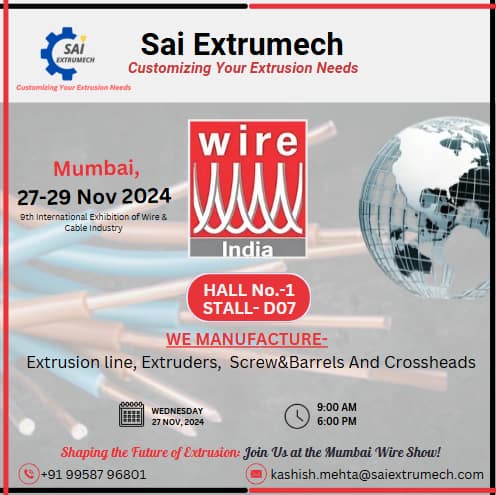
We are excited to announce that Sai Extrumech will be participating in Wire Expo 2024, taking place from November 27th to 29th in Bombay. This premier event is a cornerstone for the cable and wire industry, and we are eagerly preparing to showcase our latest innovations and connect with industry leaders.

What to Expect at Our Booth

Join us at booth [Booth Number] to explore our cutting-edge technologies designed to enhance efficiency and quality in wire and cable production. We'll be showcasing a range of our top products, including:

  • Advanced Lab Extruders: Perfect for precision and reliability in research and development.
  • Innovative Crossheads: Ensuring uniform coating and precise dimensions.
  • High-Performance Screws and Barrels: Built for durability and efficiency.
  • Comprehensive Machine Accessories: Tailored to optimize every step of your extrusion process.

Engage with Industry Experts

Wire Expo 2024 is an excellent opportunity to engage with professionals from the cable and wire industry. At our booth, you'll have the chance to:

  • Discover Our Innovations: Learn about our latest advancements in wire and cable extrusion.
  • Meet Our Team: Our experts will be on hand to discuss your specific needs and demonstrate our products.
  • Network: Connect with industry peers, share insights, and explore potential collaborations.

Why Visit Sai Extrumech?

Visiting our booth at Wire Expo 2024 offers several benefits:

  • Interactive Demonstrations: See our products in action and understand their benefits firsthand.
  • Expert Advice: Gain valuable knowledge from our experienced team.
  • Networking Opportunities: Build connections with other industry professionals and explore new opportunities.

Save the Date

Mark your calendars for November 27th to 29th, 2024, and join us in Bombay for an informative and engaging experience at Wire Expo 2024. Stay tuned for more updates as we get closer to the event. We look forward to welcoming you to our booth and showing you how Sai Extrumech can help you achieve your goals.

Wire Extrusion Equipment - Sai Extrumech

Participating in Indo-German Business Partnerships Programme (IGBPP)

Participating in Indo-German Business Partnerships Programme (IGBPP)

Introduction

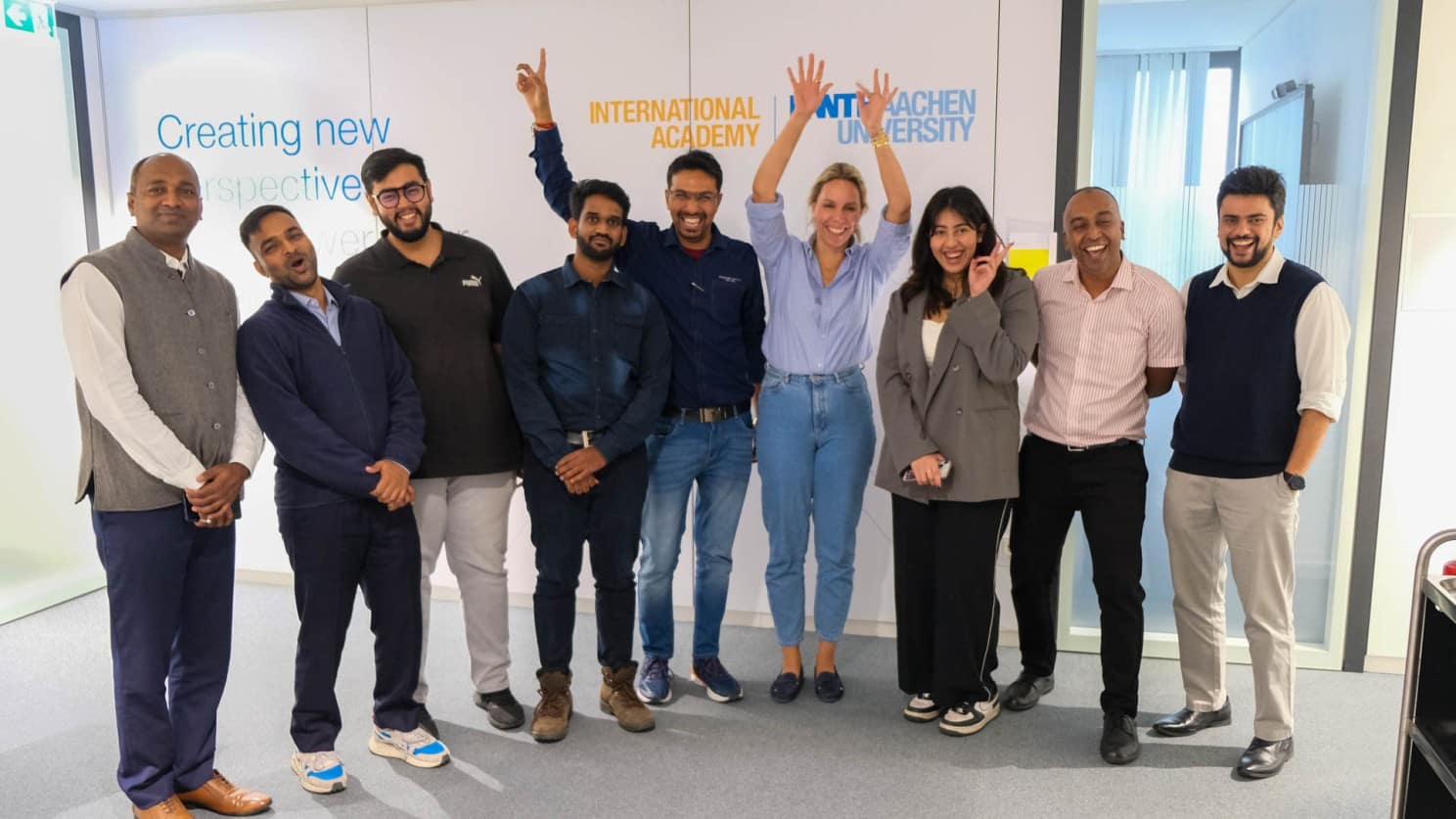
Sai Extrumech recently had the honor of participating in the esteemed Indo-German Business Partnerships Programme (IGBPP), organized by RWTH International Academy and DEUTSCHE GESELLSCHAFT FUR INTERNATIONALE ZUSAMMENARBEIT (GIZ) GmbH in Germany. This year's program focused on the crucial theme of the Green Circular Economy, highlighting the integral role of sustainable practices and eco-friendly innovations in shaping the future of global industry.

Our journey began with an engaging introductory session in Delhi, where participants had the opportunity to present their cooperation ideas while exploring the foundational principles essential for navigating the German market. This initial gathering established a strong framework for meaningful partnerships, fostering a collaborative spirit from the very beginning.

The program then transitioned into an online phase that included a comprehensive array of training sessions covering cultural nuances, pricing strategies, sustainable practices, and much more. This virtual segment offered a well-rounded understanding of the green circular economy, effectively aligning with Sai Extrumech’s vision of creating impactful Indo-German partnerships.

The experience reached its zenith in Germany, where participants applied their knowledge through a dynamic blend of classroom lectures, factory visits, and B2B meetings. This immersive phase allowed us to witness firsthand the latest advancements in green technologies and sustainable manufacturing practices, deepening our appreciation for Germany's innovative industrial landscape.

With over 20 companies participating from various sectors, the IGBPP facilitated invaluable exchanges of best practices and innovative ideas. Ms.Kashish Mehta, our International Marketing Manager, proudly represented Sai Extrumech, underscoring our commitment to cultivating international partnerships and advancing sustainable innovation.

Exploring the Theme: The Importance of the Green Circular Economy

The Green Circular Economy represents a transformative approach to economic development, emphasizing sustainability, resource efficiency, and environmental stewardship. Unlike the traditional linear economy, which operates on a "take-make-dispose" model, the circular economy seeks to establish a closed-loop system where products, materials, and resources are reused, repaired, and recycled. This paradigm shift not only reduces waste but also mitigates environmental impact and conserves precious natural resources.

By adopting circular economy principles, businesses can innovate their processes, enhance efficiency, and create sustainable value chains. This approach fosters resilience in the face of resource scarcity and environmental challenges, driving economic growth while safeguarding the planet. As industries worldwide confront climate change and resource depletion, the Green Circular Economy offers a promising pathway toward a sustainable and prosperous future.

Learning Through Diverse Training and Real-World Applications

Throughout the Indo-German Business Partnerships Programme, Sai Extrumech benefitted from a blend of structured training sessions and hands-on learning experiences. Classroom instruction and online courses allowed us to delve into the intricacies of the green circular economy, emphasizing resource management and sustainability. These theoretical foundations were further enriched through visits to leading German organizations, including the Innovation Center (Kex), Regascold, RWE, and PEM-eLab. By observing best practices in sustainable manufacturing at Fraunhofer IPT and NGI, we gained invaluable insights into cutting-edge technologies. Additionally, experiences with Omnivore Recycling and e.on highlighted advanced recycling methods and clean energy applications. Collectively, these experiences solidified our understanding of how circular economy principles can be effectively integrated across various industries.

Wire Extrusion Equipment - Sai Extrumech

Exchanging Ideas and Building Global Connections

The Indo-German Business Partnerships Programme served as an invaluable platform for Sai Extrumech to share innovative ideas and cultivate meaningful global connections. The program's diverse sessions and interactive activities enabled us to engage with industry leaders and peers, fostering a rich exchange of knowledge and best practices.

Our interactions with companies from various sectors highlighted the importance of collaboration in driving sustainable growth and technological advancements. This experience has strengthened our international network and reaffirmed our commitment to global partnerships, paving the way for future collaborations and shared success.

Extrusion Machine for Building Wire - Sai Extrumech

Key Takeaways for Strategic Growth

The insights gained from the Indo-German Business Partnerships Programme are poised to play a pivotal role in shaping Sai Extrumech’s approach to sustainability and innovation. Our exploration of Germany’s eco-efficient production methods, waste reduction strategies, and resource optimization techniques has uncovered new pathways for growth that align with the evolving demands of the industry. We recognize the significance of adapting these best practices to enhance our operational efficiency and environmental impact. This commitment positions us not only to meet market expectations but also to lead in the development of sustainable manufacturing processes. Embracing Sustainable Practices for the Future

Next Steps in Incorporating Circular Economy Principles into Our Operations

Sai Extrumech is dedicated to integrating circular economy principles into our operations. Our next steps include:

  • Audit and Assess: Evaluating current processes to identify opportunities for reducing waste and enhancing resource efficiency.
  • Sustainable Materials: Sourcing and utilizing eco-friendly materials in our manufacturing processes.
  • Waste Reduction: Implementing strategies to minimize waste and promote recycling efforts.
  • Employee Engagement: Educating and involving our team in sustainable practices to cultivate a culture of responsibility.
  • Collaborate: Partnering with stakeholders to create a cohesive circular economy network.

By taking these actionable steps, we aim to significantly reduce our environmental impact while driving sustainable growth within our organization.

Final Thoughts

The Indo-German Business Partnerships Programme has been a truly illuminating journey for Sai Extrumech. We showcased our unique value proposition to a diverse audience, striking a chord with many attendees and paving the way for future collaborations.

Our heartfelt thanks go to Deutsche Gesellschaft für Internationale Zusammenarbeit (GIZ) GmbH for organizing this enriching experience. At Sai Extrumech, we firmly believe that the future of business lies in partnerships that transcend borders. Our participation in IGBPP has reinforced this belief, and we eagerly anticipate more opportunities to connect, collaborate, and contribute to a brighter, more sustainable future together.

Here's to the ongoing success of Indo-German collaborations!

To connect with us, visit our website at saiextrumech.com or email us at [email protected].

Participation in wire and cable expo 2023

Participation in wire and cable expo 2023

Cable Extrusion Machine - Sai Extrumech

Introduction

A Heartfelt Recap of Sai Extrumech's Journey at the Cable and Wire Expo 2023

October 2023 was a remarkable month for Sai Extrumech as we proudly took part in the Cable and Wire Expo, one of the industry’s most anticipated events. Held in the vibrant heart of the city, the expo brought together a community of innovators, experts, and enthusiasts passionate about the cable and wire sector.

A Gathering of Minds and Technologies

Sai Extrumech's booth was a bustling hub of activity, reflecting our commitment to innovation and excellence. Visitors, both familiar faces and new acquaintances, were drawn to our display of cutting-edge solutions. From the latest in lab extruders to state-of-the-art crossheads, our showcase was a testament to the quality and ingenuity that define our products.

Wire Extrusion Line - Sai Extrumech

Showcasing Our Best

Throughout the event, we had the opportunity to demonstrate our latest advancements:

  • Precision Lab Extruders: Showcasing the meticulous engineering and reliability essential for R&D.
  • Innovative Crossheads: Highlighting our solutions that ensure precise and uniform extrusion.
  • Durable Screws and Barrels: Engineered for longevity and superior performance.
  • Versatile Machine Accessories: Designed to enhance efficiency and production quality.

Connecting with the Industry

The expo wasn’t just about our products. It was a platform for meaningful connections and insightful conversations. Our team engaged with industry professionals, exchanging knowledge and discussing the latest trends and challenges. These interactions were invaluable, providing us with fresh perspectives and ideas for the future.

Wire and Cable Extrusion - Sai Extrumech

Positive Feedback and Future Visions

The response from attendees was overwhelmingly positive. Many expressed admiration for our innovative solutions and expressed interest in potential collaborations. This feedback reaffirmed our position as a leader in the cable and wire industry and fueled our passion for continuous improvement.

Looking Forward

Reflecting on our successful participation, we are filled with excitement for what lies ahead. The insights and connections gained from the Cable and Wire Expo 2023 will undoubtedly propel us towards new heights. Sai Extrumech remains dedicated to advancing our technologies and delivering exceptional value to our clients.

Stay tuned for more updates on our future endeavors and innovations. A heartfelt thank you to everyone who visited our booth and supported us at the Cable and Wire Expo 2023. Here’s to many more successful events and continued excellence!